
French Roulette
 | Updated:
 The Ins and Outs of French Roulette
 The roots of roulette can be traced back to France. Nowadays, there are three main variations of the game, but French roulette is at the core of them all. The European variant is the most widespread around the world and, like French roulette, offers more favorable odds than American roulette. However, European and French roulette share similar rules. The two are often confused by amateur gamblers who have only just started playing roulette, as French roulette is played predominantly in France and Monaco and is therefore sometimes referred to as European roulette. Seasoned gamblers, however, are familiar with the differences between the two tables.
The French wheel is analogous to the European one. It consists of 37 numbered pockets, alternating between red and black. There is one green pocket, which represents zero. As with European roulette, the French version has a lower house edge because it has only one zero pocket. This results in a house edge of 2.70%, far lower than that of American roulette and clearly advantageous to the player.

-
 Sign Up Bonus
Up to $3500
350% Bonus!9.7 -
Sign Up Bonus
Up to $500
400% Bonus!9.4 -
Sign Up Bonus
Up to $2000
200% Bonus!9.3



The main goal of every player is to predict the numbered pocket in which the ball will settle. As the game starts, each player places bets on an exact number or a group of numbers. You must comply with the minimum and maximum betting limits, which differ from table to table and are noted on the edge of the table. The croupier then tosses the ball in the direction opposite to the wheel’s rotation. Once the ball lands in a pocket, the dealer announces the winning number. All players who guessed correctly are then paid.
Read on to learn more about the main differences between the French and American roulette varieties. We will also explain some peculiarities of the French variation and provide further details about several special French bets.


French Roulette: Odds, Payouts, and Unique Rules
French roulette stands out from other variations of the chance-based game because of its player-friendly rules, namely La Partage and En Prison. These rules reduce the house edge on even-money bets to just 1.35%.
- La Partage returns half of your even-money stake if the ball lands on 0.
- En Prison allows your even-money bet to remain active for the next spin if the ball lands on 0 instead of losing it immediately.
Here is a concise overview of the odds and payouts for French roulette. They mirror those of other single-zero variations, while the special rules provide an additional benefit on even-money bets:
| Bet Type | Bet Payout | Bet Probability |
|---|---|---|
| Straight | 35:1 | 2.7% |
| Split | 17:1 | 5.4% |
| Street | 11:1 | 8.1% |
| Corner | 8:1 | 10.8% |
| Column | 2:1 | 32.4% |
| Dozen | 2:1 | 32.4% |
| Red/Black | 1:1 | 48.6% |
| Even/Odd | 1:1 | 48.6% |
| Low/High | 1:1 | 48.6% |
French roulette’s rules provide a safety net for players who favor even-money bets by helping them limit their losses when the ball lands on zero. This makes French roulette particularly appealing to players seeking a variation with a lower house edge.
French vs. American Roulette
 It is easy to spot the difference between French and American roulette. Simply look at the wheel, and you will immediately notice that the American wheel has two zero pockets. This increases the house edge to 5.26% in the American variation of the game. French and European roulette offer better odds because their wheels have only one zero pocket.
Additionally, the numbers on the French and American wheels are arranged differently. On the American wheel, two consecutive numbers are placed opposite each other. The French wheel is identical to the European one. Interestingly, the numbers on the French and European wheels face the outside edge, while the numbers on the American wheel point toward the center.
French Peculiarities
 The French variant features two additional rules that are also available at some European tables. Whether these rules apply at a given European table is determined by the casino. They are related to the zero pocket and are highly advantageous to players. At a French table, you may avoid losing your entire even-money bet when the ball lands in the zero pocket. Here are the two possible options:
The En Prison rule effectively means that your bet is “in jail”. Your stake is not lost immediately. Instead, it stays on the same even-money bet for the next spin. If the ball lands on zero again, you forfeit the stake. Otherwise, the bet is resolved as normal, giving you the usual chance to win.
La Partage is the other rule that applies when the ball lands on zero. Under La Partage, the bet is split, and you receive half of your stake back. You may then wager again on the next spin.
Both rules improve the player’s chances. They apply only when you have placed an even-money bet and the ball lands in the green zero pocket. These rules reduce the house edge on even-money bets to 1.35%.
Another difference concerns the position of the wheel. In European roulette, the wheel is situated at one end of the table, whereas on a French table, it is located in the middle. The French layout is also doubled, allowing more participants to play at once.
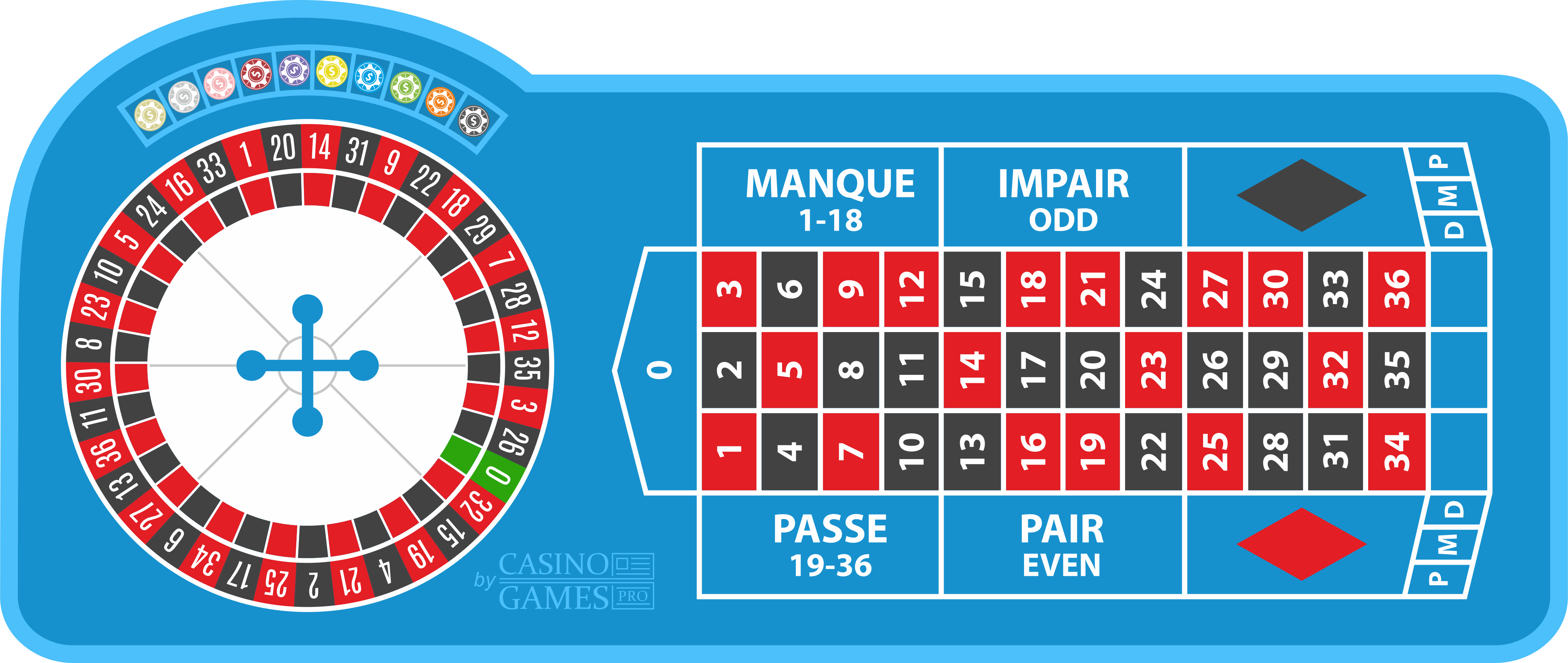
Another major difference is that the names of the bets are in French. This should not cause any difficulty, since the French layout is very similar to the European one. In short, if you know how to play European roulette, you can also follow the French version.
In the traditional French layout, all numbers are printed in red. This is purely a design choice and has nothing to do with the red/black bet or the game itself. Nevertheless, it is the first difference many players notice. However, designs can vary from one casino to another.
The betting options are another major difference. The betting layout is in French, and there are four additional wagers that set this variant apart. Known as “call bets” or racetrack bets, these wagers are associated with the French table. They allow players to bet on specific sections of the wheel. Apart from these differences, the fundamentals of the game remain the same.



Types of French Roulette Bets
 Even if you are not fluent in French, you should not avoid the French table. Many people assume the bets are more complicated than usual, but all the regular “inside” and “outside” bets found on American and European tables are also available on the French table.
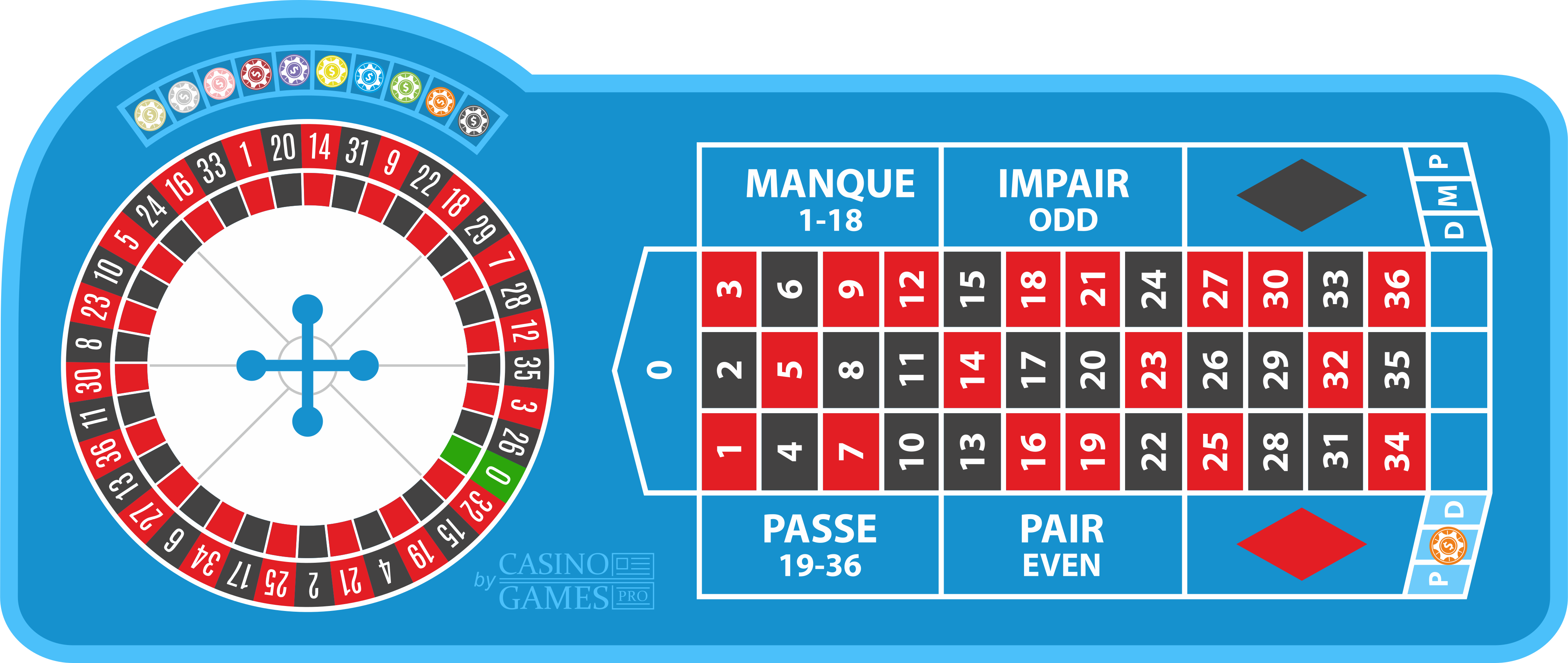
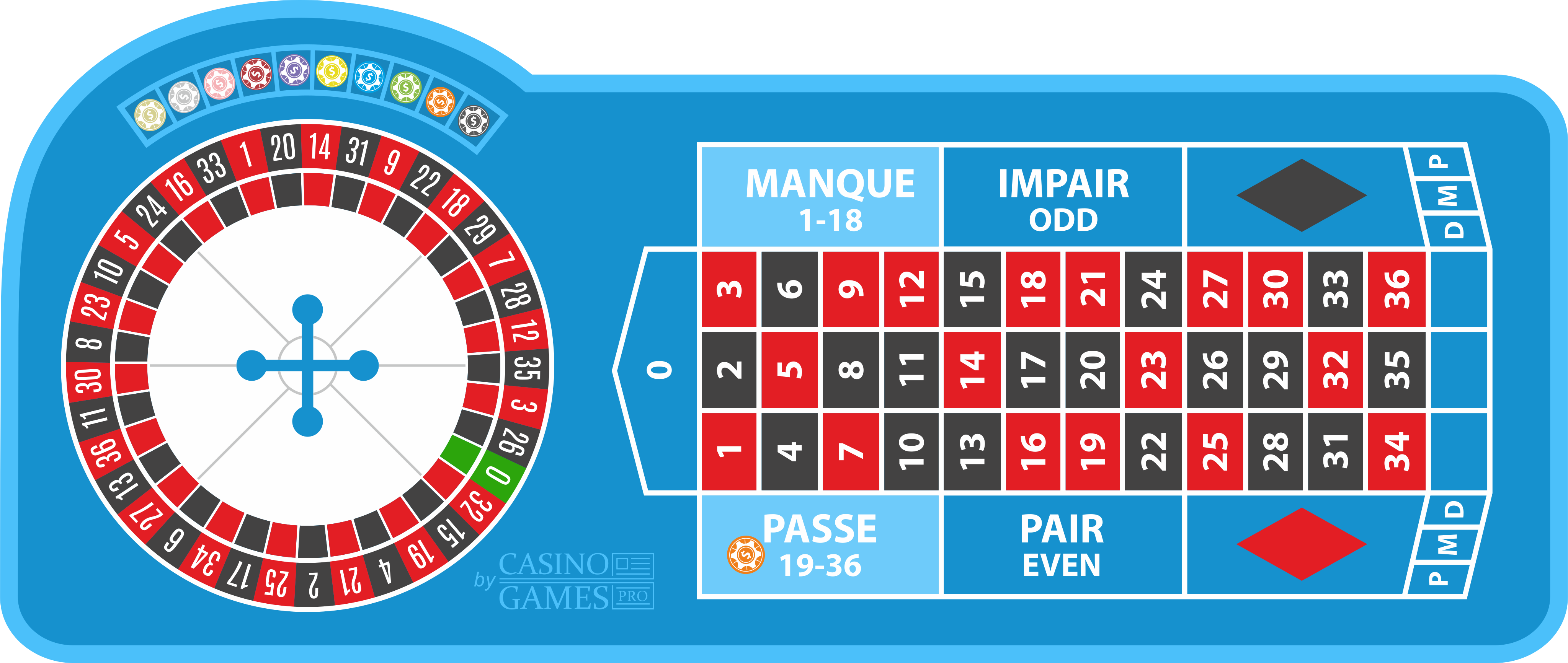
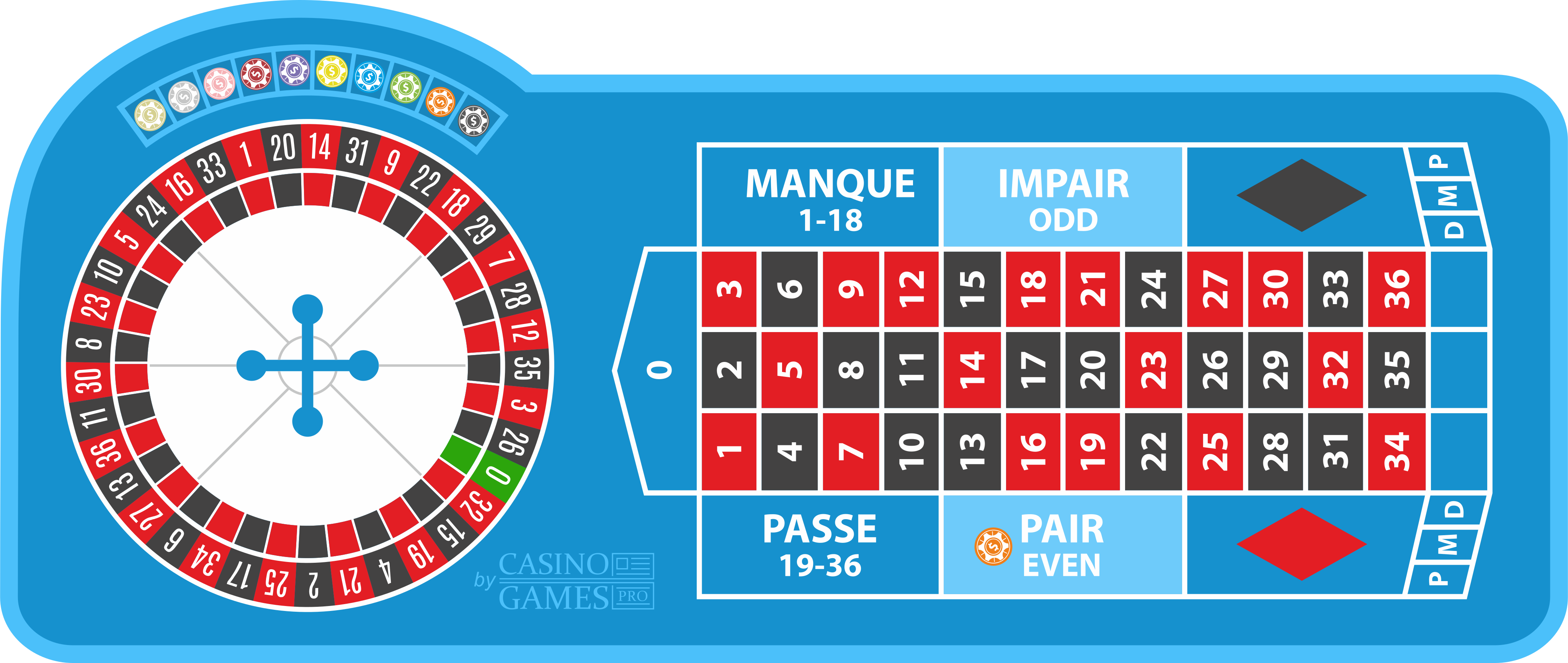
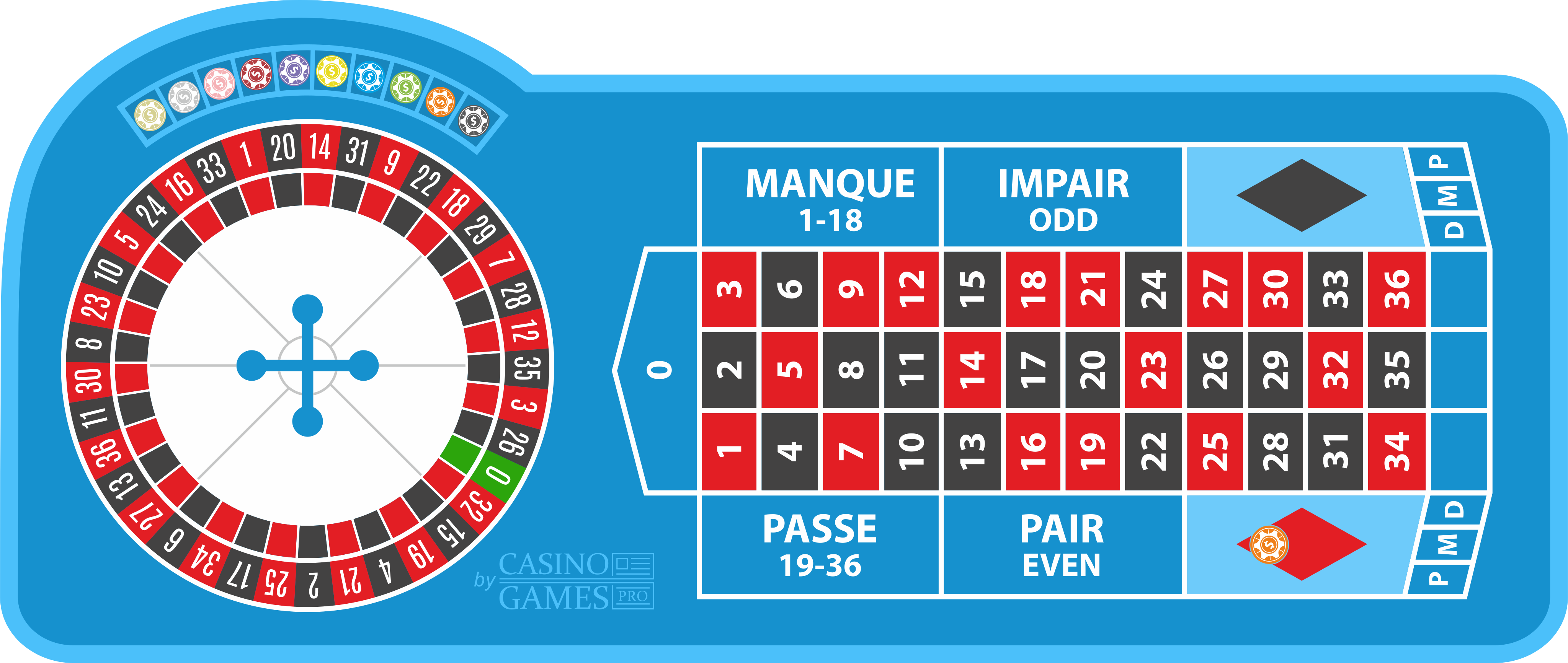
Outside Bets in French Roulette
Outside bets are represented in the two split layouts of the French table. These are wagers on an entire group of numbers. For example, you might bet on all even numbers or all red numbers. Here are the different types of outside bets:
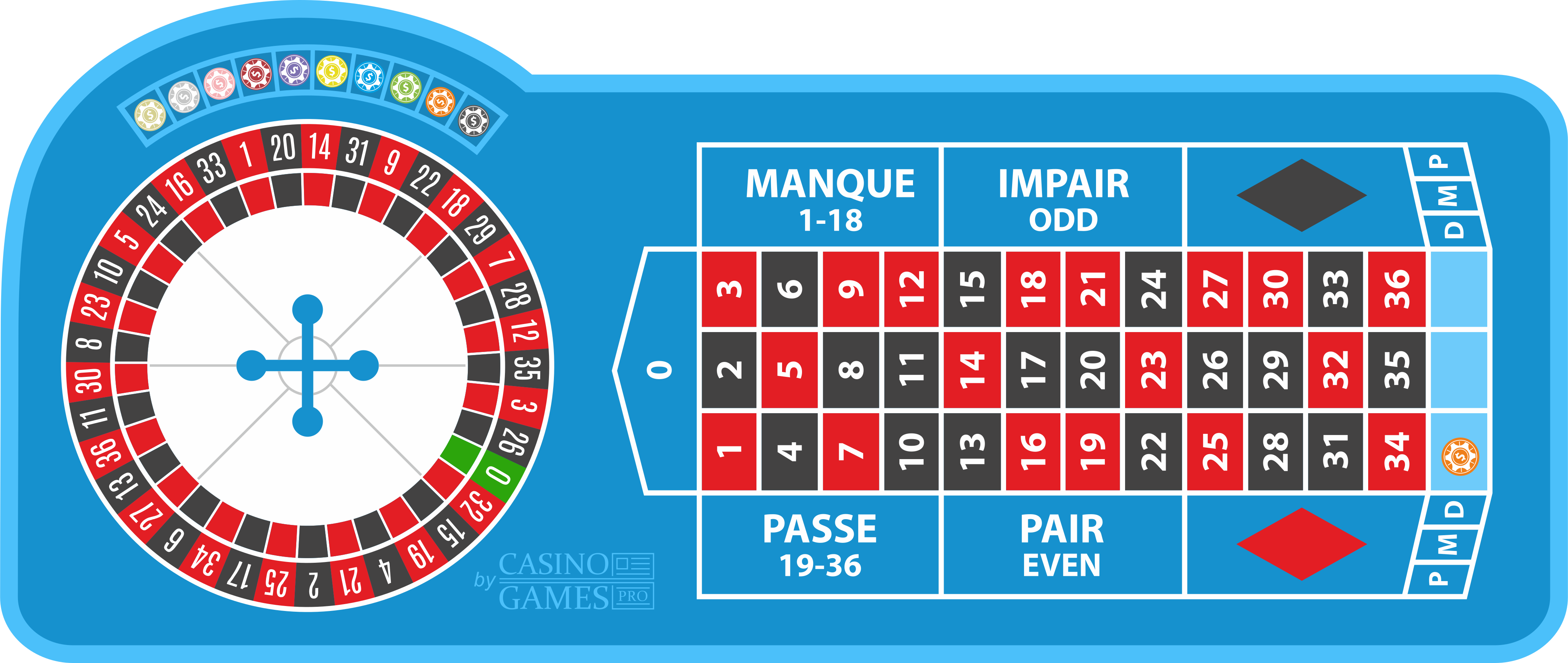
Colonne
This corresponds to the column bet on the European table. You bet on all numbers contained in one of the three columns in the betting area. To place this bet, position your chips on the box at the end of the chosen column. The payout is 2:1.
Douzaine
This corresponds to the dozen bet in the European game. You wager on all numbers in the first (1-12), second (13-24), or third (25-36) section of the layout. Place your chips in the appropriate dozen box. The payout is 2:1.
Passe/Manqué
This equates to the high/low bet on the European table. You wager on a high (19-36) or low (1-18) winning number by placing your chips in the respective box. The payout is 1:1 (even money).
Impair/Pair
This is the odd/even bet. You wager on whether the winning number will be odd or even by placing your chips in the odd or even box. The payout is 1:1.
Noir/Rouge
This is the black/red bet. You wager on whether the winning number will be red or black by placing your chips in the corresponding box. The payout is 1:1.
Inside Bets in French Roulette
Placing an inside bet means wagering on an individual number or a small group of numbers. This type of bet uses the numbered section of the layout. Here are the different types of inside bets:
En plein
This is the straight bet. You wager on a single, specific number and win if the ball lands in that pocket. The payout is 35:1.
À cheval
This is the split bet. You wager on two adjacent numbers by placing your chips on the line between them. You win if the ball lands on either number. The payout is 17:1.
Transversale pleine
This is the street bet. You wager on three numbers in a horizontal row by placing your chips on the outer edge of that row. The payout is 11:1.
En carré
This is the corner bet. You wager on four adjoining numbers that form a square by placing your chips at the intersection of the four numbers. The payout is 8:1.
Transversale simple
This is the line bet. You wager on six numbers across two adjacent rows by placing your chips at the intersection of the edge lines of those rows. The payout is 5:1.

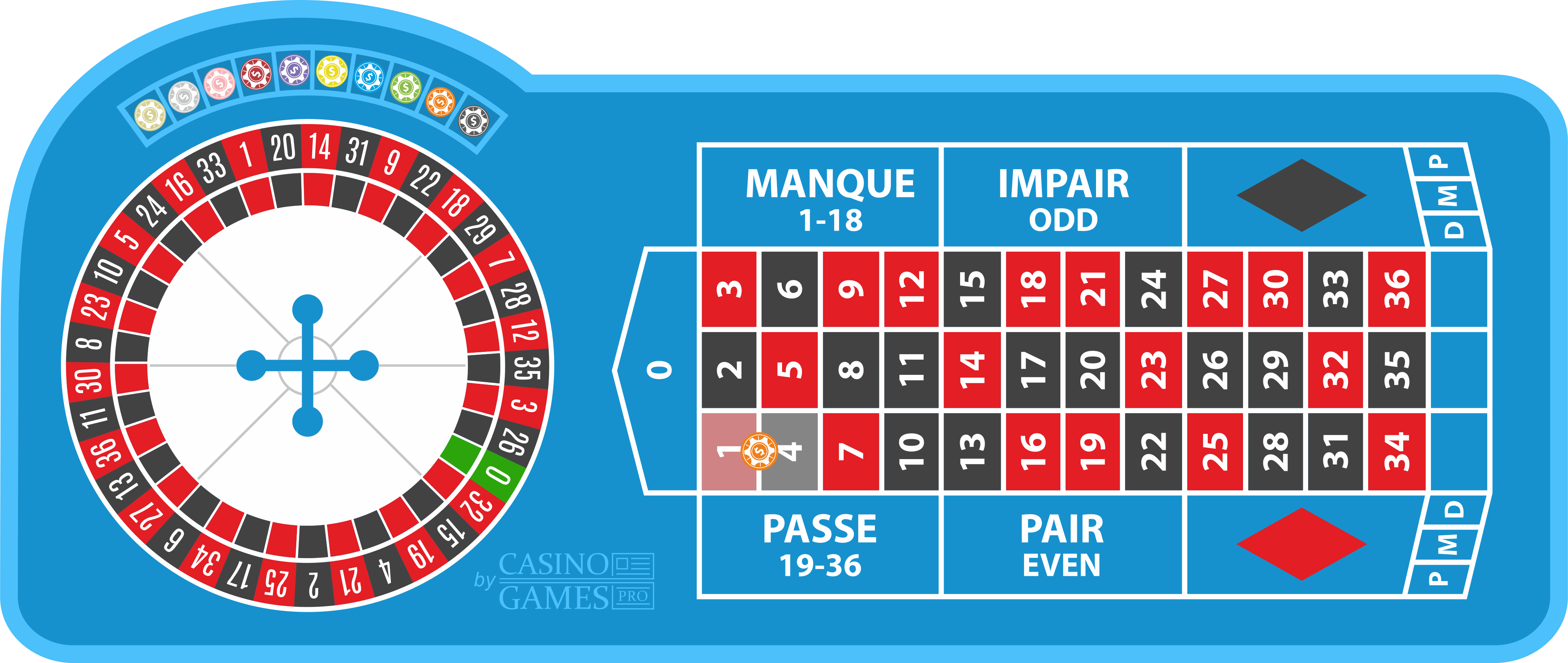
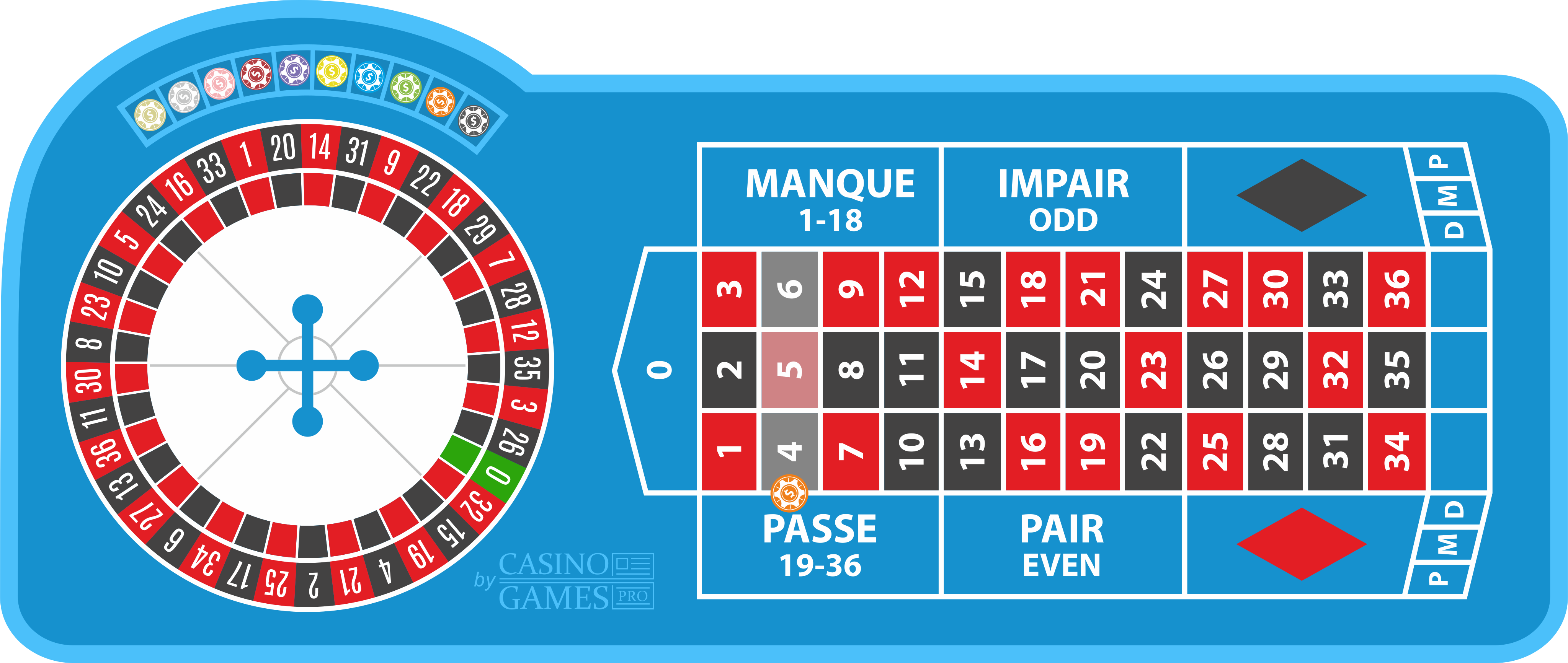
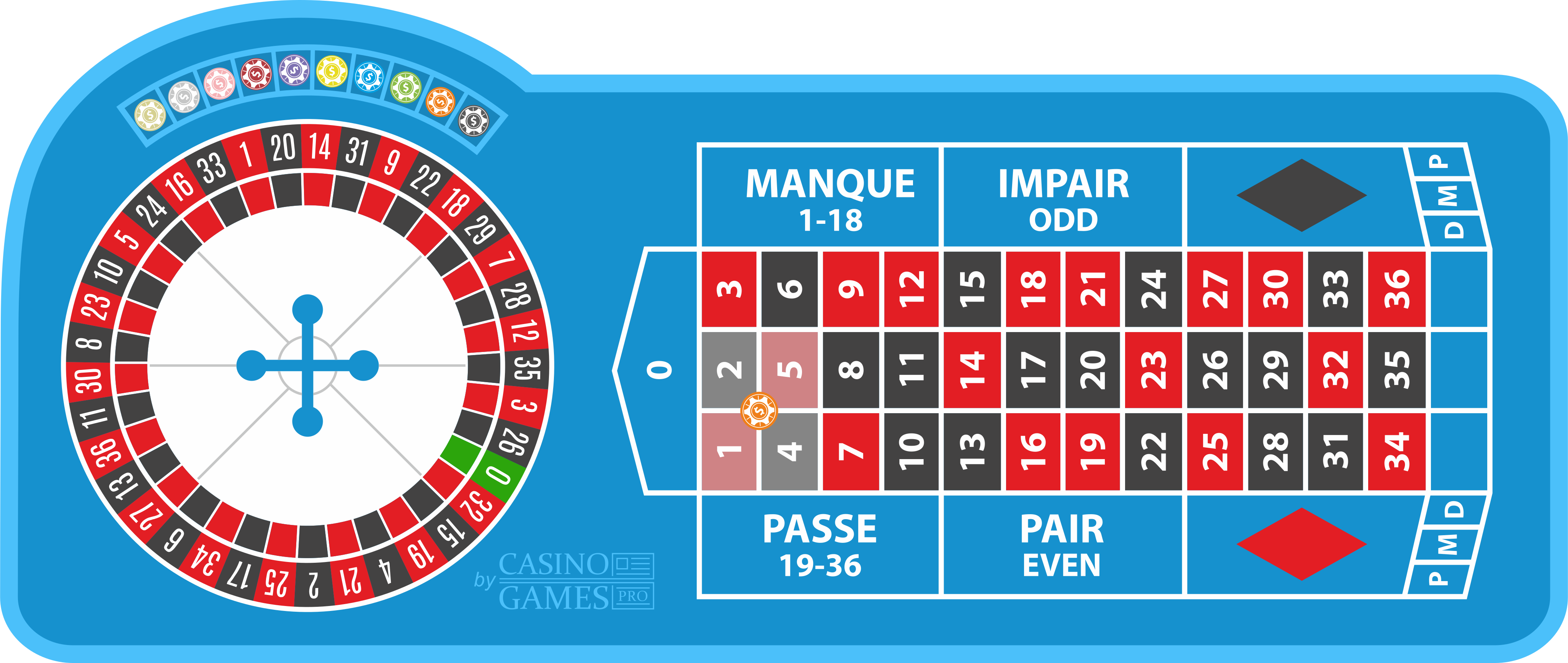
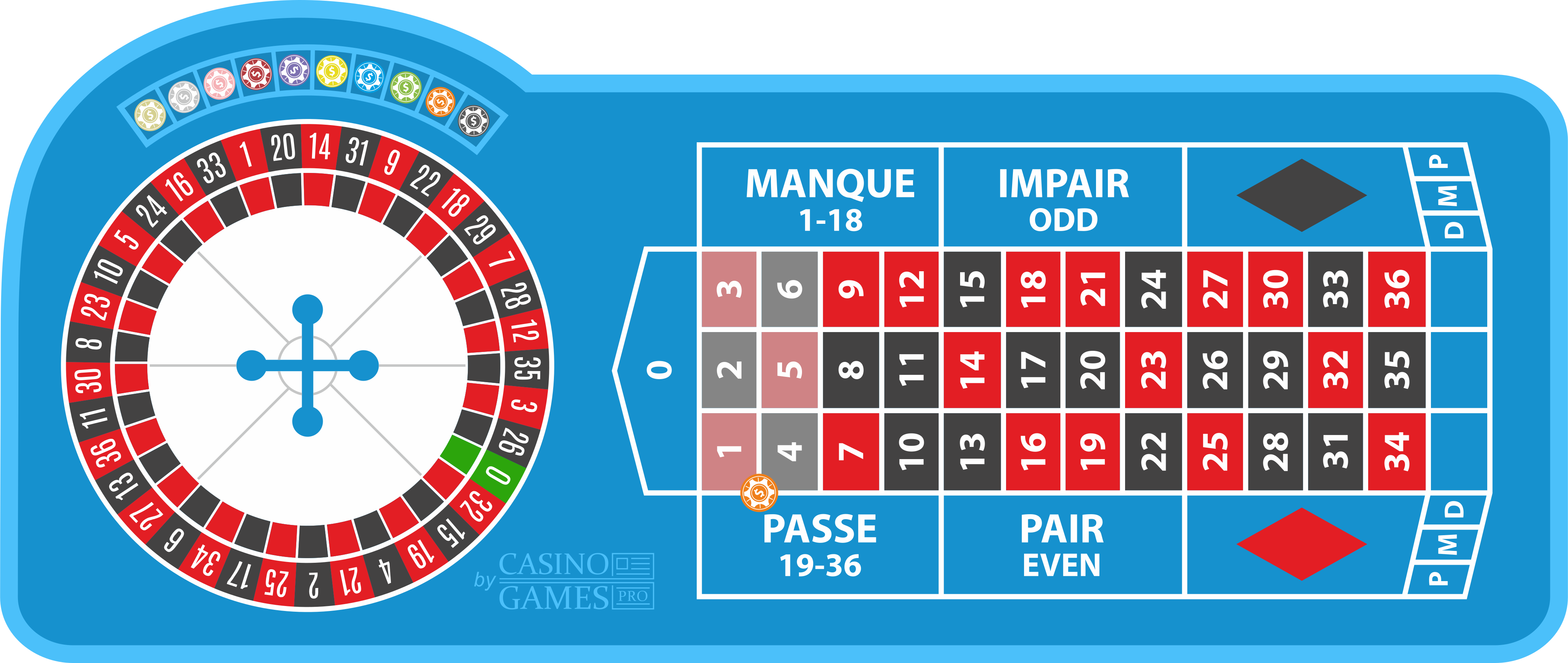
The payout ratio shows the profit you receive if you guess correctly. For instance, an en plein bet pays 35 times your stake as profit.
Special French Bets
 These French bets are sometimes considered exotic because of their French names, but they are easy to follow once you understand how they work. Experienced gamblers refer to them as “announced” or “call” bets. Although these terms are often used interchangeably, there is a subtle difference.
An “announced bet” involves telling the dealer that you wish to place one of the special French bets and then positioning your chips accordingly. With a “called bet,” you simply declare the wager, and the croupier places the chips for you. You do not move them yourself. Because called bets are effectively made on credit, not all casinos allow them.
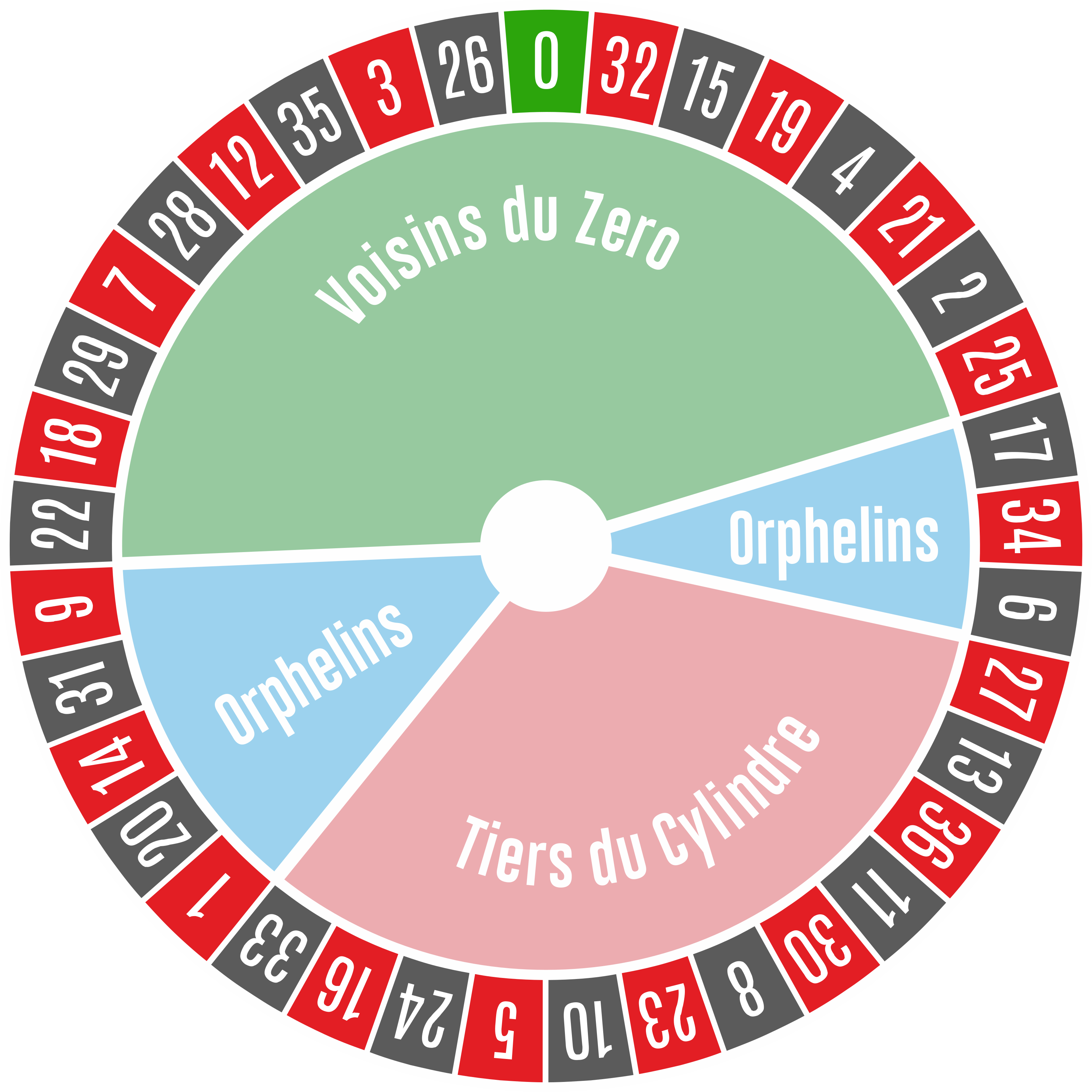
French bets cover specific sections of the wheel. The wheel is divided into three principal sections, each corresponding to a distinctive French bet. Read on to learn more.
Voisins du Zéro Bet
The name translates to “neighbors of zero.” It accurately describes the bet, since you place your wager on the 17 numbers on both sides of the zero pocket. The bet combines split and corner wagers covering these numbers: 22, 18, 29, 7, 28, 12, 35, 3, 26, 0, 32, 15, 19, 4, 21, 2, and 25. The wager costs nine chips. Two chips are placed on the trio 0/2/3 and two on the corner 25/26/28/29, while the remaining ten numbers are covered with five split bets of one chip each.
Tiers du Cylindre Bet
This bet covers roughly one-third of the wheel, namely the numbers opposite the Voisins du Zéro sector. It includes 12 numbers: 27, 13, 36, 11, 30, 8, 23, 10, 5, 24, 16, and 33. It is placed using six split bets and costs six chips.
Jeu Zéro Bet
This is the so-called zero game. The bet is placed on seven numbers: zero itself and the six numbers adjacent to it. It costs four chips, with one chip each on the splits 0/3, 12/15, and 32/35, plus a single straight-up chip on 26.
Orphelins Bet
Orphelins, meaning “orphans,” covers the numbers not included in either the Tiers du Cylindre or Voisins du Zéro sectors: 1, 6, 9, 14, 17, 20, 31, and 34. This bet is subdivided into:
Orphelins en Cheval Bet
It costs five chips: four chips on the splits 6/9, 14/17, 17/20, and 31/34, plus one straight-up chip on the number 1.
Orphelins en Plein Bet
It covers the same numbers but costs eight chips, as you place a straight-up chip on each number.
Finales en Plein Bet
This bet is placed on every number ending with a chosen digit. “Finales 6,” for instance, covers 6, 16, 26, and 36. It may appeal to gamblers who believe in lucky numbers. If your lucky number is 3, you would bet on all numbers ending in 3. A Finale 3 therefore wagers on four numbers and pays 35:4. A Finale 8 covers three numbers and pays 35:3.
Finales à Cheval Bet
This wager covers every number ending with either of two selected digits. “Finales 3/4” means betting on 3, 4, 13, 14, 23, 24, 33, and 34. It is more complex and tends to appeal to experienced players. The bet combines split and straight wagers on numbers ending in the chosen digits and can cost three, four, or five chips, depending on how the numbers pair.
French roulette can be easy to follow once you understand its specific bets and rules. You can also review a betting system before deciding whether to use it. Even if you do not speak French, you can play without worrying about the language. Remember to follow the house rules, which can vary from one casino to another.
FAQ
French Roulette is unique due to its single-zero wheel, like European Roulette, offering a lower house edge (2.70%) compared to American Roulette (5.26%). Key distinctions include the table layout and special rules like “La Partage” and “En Prison” which can further reduce the house edge on even-money bets to 1.35%.
Both rules decrease the house edge on even-money bets when the ball lands on zero. “La Partage” returns half of your losing bet, while “En Prison” allows your bet to stay for the next spin, potentially saving your stake or resulting in a loss if the subsequent spin doesn’t go your way.
French Roulette offers call or announced bets that cover specific sections of the wheel, like “Voisins du Zero,” “Tiers du Cylindre,” and “Orphelins.” These bets allow you to wager on numbers grouped on the wheel, not on the table layout, offering more betting diversity.
Yes, French Roulette is suitable for beginners due to its player-friendly rules and lower house edge. The additional betting options might require some learning, but they provide more strategies and fun once understood. The key French terms for bets are easy to learn and add to the game’s charm.
Beginners should start with even-money bets (red/black, odd/even, high/low) to take advantage of the lower house edge, especially with “La Partage” or “En Prison” rules in play. Learning and experimenting with the additional French bets can also enhance your understanding and enjoyment of the game.