American Roulette
 | Updated:
 Introduction to American Roulette
 Roulette is one of the most popular and widespread casino games. It is a table game with several variants. It was introduced in American casinos during the 18th century by immigrants fleeing the French Revolution. They brought the French version of the game with them, but it was not welcomed with open arms because it was considered too advantageous to players. The game was modified several times, eventually resulting in the American version played today. Three major forms of roulette are recognized: American, French, and European.
The American variation of the game is most popular in American and Asian casinos. It follows the same basic rules: the croupier spins the wheel until the rolling ball drops into one of the numbered pockets. Correctly predicting where the white ball will land earns the player a payout based on the specific bet.
This article provides roulette fans with a detailed overview of the American variation and compares it with the hugely popular European version. It also covers the inside and outside bets players can place.

-
 Sign Up Bonus
Up to $3500
350% Bonus!9.7 -
Sign Up Bonus
Up to $500
400% Bonus!9.4 -
Sign Up Bonus
Up to $30000
100% Bonus!9.3







American Roulette Odds and Payouts: A Closer Look
American roulette remains a popular casino game despite its higher house edge. What sets it apart is its wheel, which features a single-zero (0) pocket and a double-zero (00) pocket. This additional pocket increases the house edge compared with single-zero roulette.
Understanding the odds and payouts helps players compare the available bets and make informed decisions. Here are two important points to consider:
- The House Edge: This percentage represents the casino’s mathematical advantage over the player. In American roulette, the additional 00 pocket nearly doubles the house edge compared with European roulette.
- Odds and Payouts: Each roulette bet has a different probability of winning, with payouts reflecting the level of risk involved.
The following table lists the main bets available on an American roulette layout:
| Bet Type | Player Odds | Payout |
|---|---|---|
| Straight (single number) | 2.6% | 35 to 1 |
| Split (two numbers) | 5.3% | 17 to 1 |
| Street (three numbers) | 7.9% | 11 to 1 |
| Corner (four numbers) | 10.5% | 8 to 1 |
| Column | 31.6% | 2 to 1 |
| Dozen | 31.6% | 2 to 1 |
| Red/Black | 47.4% | 1 to 1 |
| Even/Odd | 47.4% | 1 to 1 |
| Low/High | 47.4% | 1 to 1 |
The additional 00 pocket gives the house a greater advantage, but players can still choose from bets with different odds and payouts. A straight-up bet offers a 35-to-1 payout but has a low probability of winning, while bets on colors, parity, or number ranges win more frequently and pay 1 to 1.
American vs. European Roulette
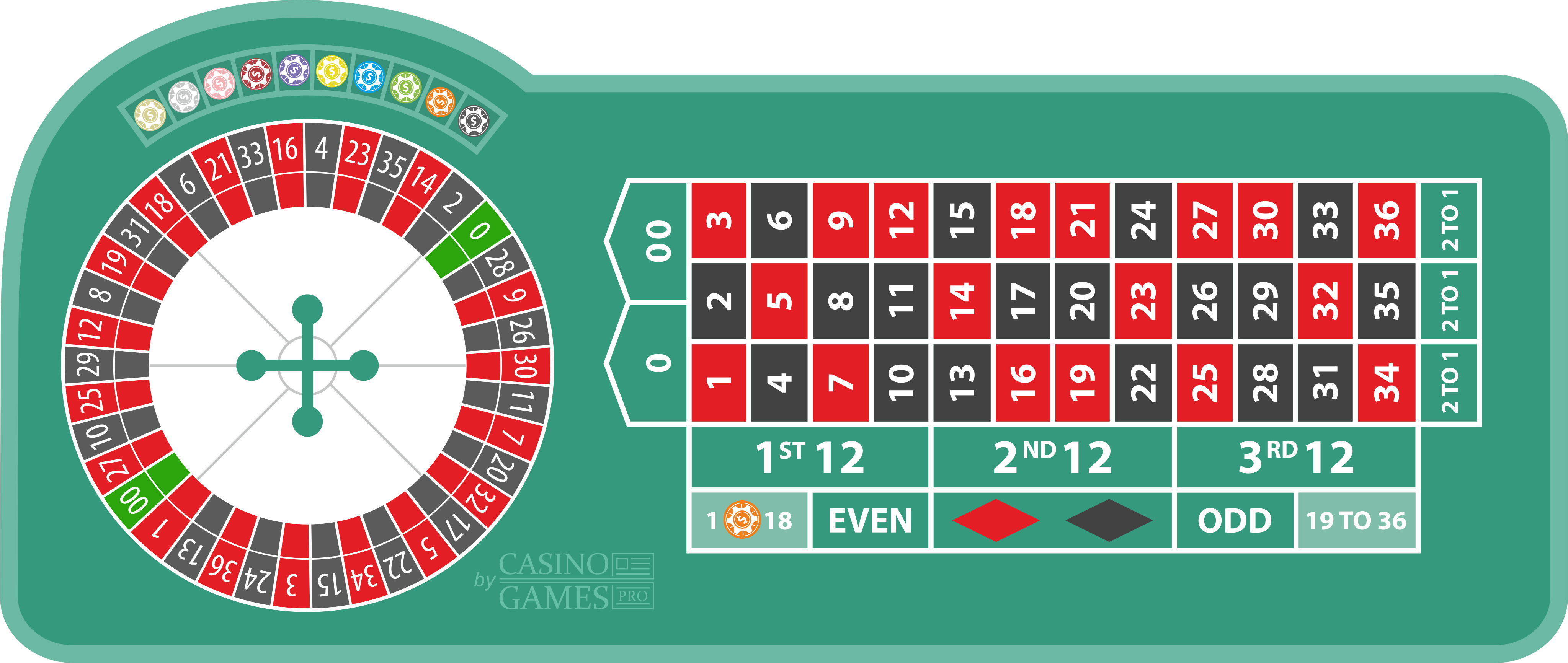
 The main difference is that American roulette has 38 numbered pockets, which makes it more difficult for players to predict the winning pocket. The American wheel features numbers from 1 to 36, a zero, and a double-zero pocket. The numbered pockets are red and black, while the zero pockets are green. The numbers are arranged in a specific sequence, with consecutive numbers such as 1 and 2 positioned on opposite sides of the wheel.
The difference in the house edge arises from the extra pocket. If the ball lands in either zero pocket, bets that do not cover the winning pocket lose. This additional possible outcome gives the casino a larger advantage. Unlike the European wheel, which carries a 2.7% house edge, the American version has a 5.26% edge. Some casinos apply the surrender rule, under which a player with an even-money bet receives half of the wager back if the winning number is 0 or 00. The bets to which this rule may apply include red/black, even/odd, and high/low.
The surrender rule has been available at many brick-and-mortar casinos across the USA for decades. It can also be found in some roulette variants available online and at certain land-based casinos in Europe. Without this rule, wagers that do not cover 0 or 00 generally lose when the ball lands in either zero pocket.
American roulette has 38 pockets, and a winning straight-up bet pays 35:1. With even-money bets, a winning $5 wager produces a $5 profit, in addition to the return of the original stake. Considering that the house edge is 5.26%, the casino theoretically retains an average of $5.26 for every $100 wagered over time.
The surrender rule benefits players by reducing the house advantage on qualifying bets from 5.26% to 2.63%, thereby lowering expected losses. As a result, the effect of the house edge on a player’s bankroll is smaller when playing double-zero roulette with the surrender rule.
In some single-zero roulette versions, players may benefit from the En Prison rule, which also reduces the house advantage when the ball lands on 0. The house edge decreases from 2.7% to 1.35%. At a land-based casino, qualifying bets are locked on the table rather than collected, and the dealer leaves them in place for the next round.
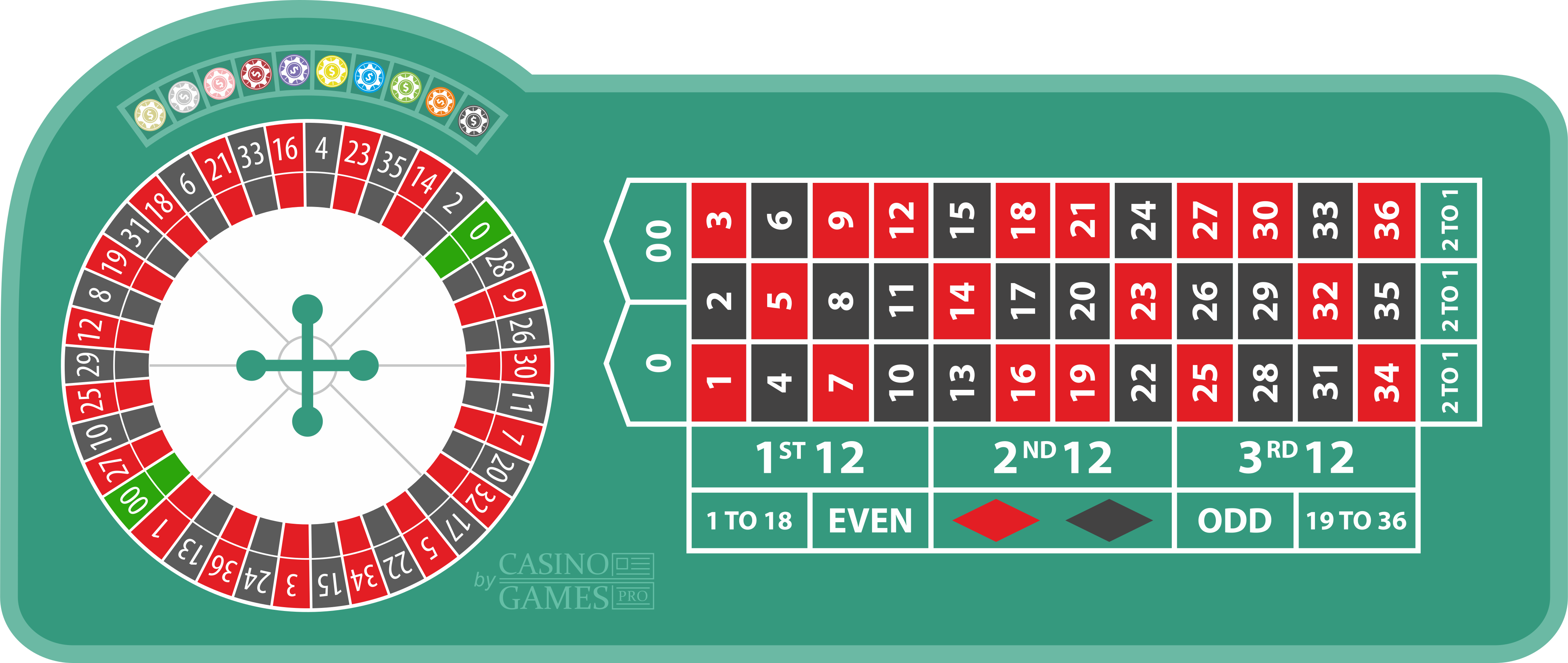
The wheel’s numbered pockets alternate between red and black, with black numbers positioned opposite red ones. The double-zero pocket is placed between two red pockets, while the single-zero pocket is between two black pockets.
The table layout is the area where players place their chips. The main difference between the European and American layouts is that the American version has an additional betting box covering the double-zero pocket. The French layout also provides bets covering entire sections of the wheel, while the American layout lacks this option.
Another characteristic of American roulette is the use of colored chips. Players buy roulette chips directly at the table, and each player receives a different color, making it easier to distinguish between their bets. Another slight difference is that the croupier in American roulette handles the chips by hand, whereas a special stick is used for this purpose in European roulette.


Types of Bets in American Roulette
 After receiving your chips, you can begin placing bets. The betting limits define the minimum and maximum amounts that may be wagered. These limits differ between tables and are posted at the table’s edge. Players may place multiple bets at the same time, provided that the total does not exceed the maximum table limit. Place a bet by positioning your chips on the roulette table. Even after the croupier has spun the wheel, you may change your bets until no more bets are accepted. Once the roulette ball lands in a numbered pocket, the croupier marks the winning number and removes all losing bets. The winnings are then paid, and players may place new bets while the next round is prepared.
Inside Bets
The term “inside bets” is literal because these wagers are placed on the inner section of the betting layout. This area consists of small boxes containing all the numbers on the wheel. Inside bets offer a lower probability of winning but higher payouts. The available inside bets include:
Straight Bet
This bet covers a single number and is placed by positioning chips in the middle of its square on the betting layout. The probability of winning is low because the player must predict one particular number out of 38 possible outcomes. The payout is 35:1.
Split Bet
This bet covers two adjacent numbers and is placed by positioning chips on the line between them. It may cover horizontally or vertically adjacent numbers. Compared with a straight bet, it doubles the probability of winning but offers approximately half the payout. The payout is 17:1.
Street Bet
This bet covers three numbers in a row and is placed by positioning chips on the edge line at the end of the row. It may also cover 0-1-2 or 0-2-3. The payout is 11:1.
Corner Bet
This bet covers four adjacent numbers and is placed by positioning chips at the intersection of the four numbers. For example, chips may be placed in the middle of the square formed by the numbers 1, 2, 4, and 5. The payout is 8:1.
Five Bet
This bet covers 0, 00, 1, 2, and 3 and is placed by positioning chips at the intersection of the relevant rows. These are the only numbers covered by the Five Bet. However, this wager carries the highest house edge of all roulette bets, so it is generally best avoided. The payout is 6:1.
Six-Line Bet
This bet covers six numbers across two adjacent rows. Chips are placed at the intersection between the two rows. For example, to cover the numbers from 1 to 6, place the chips on the left edge between 1 and 4. The payout is 5:1.
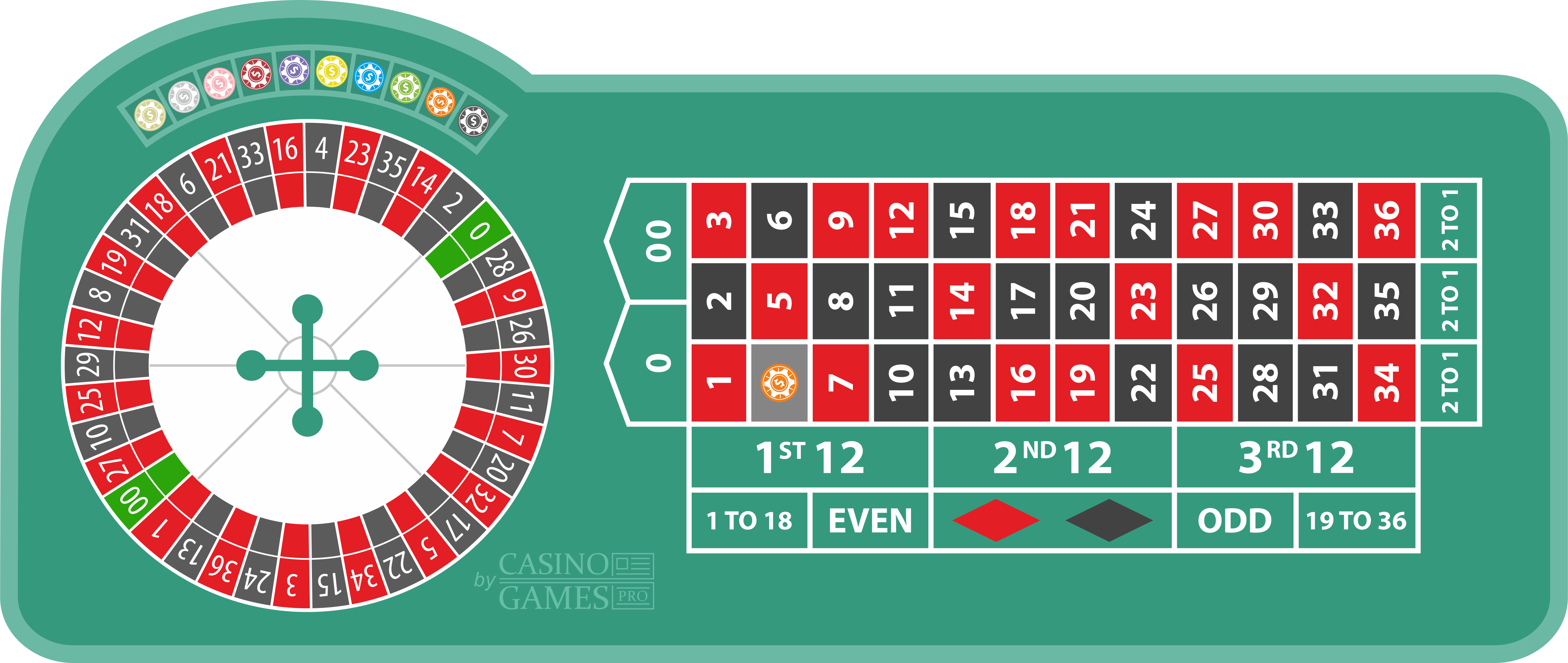
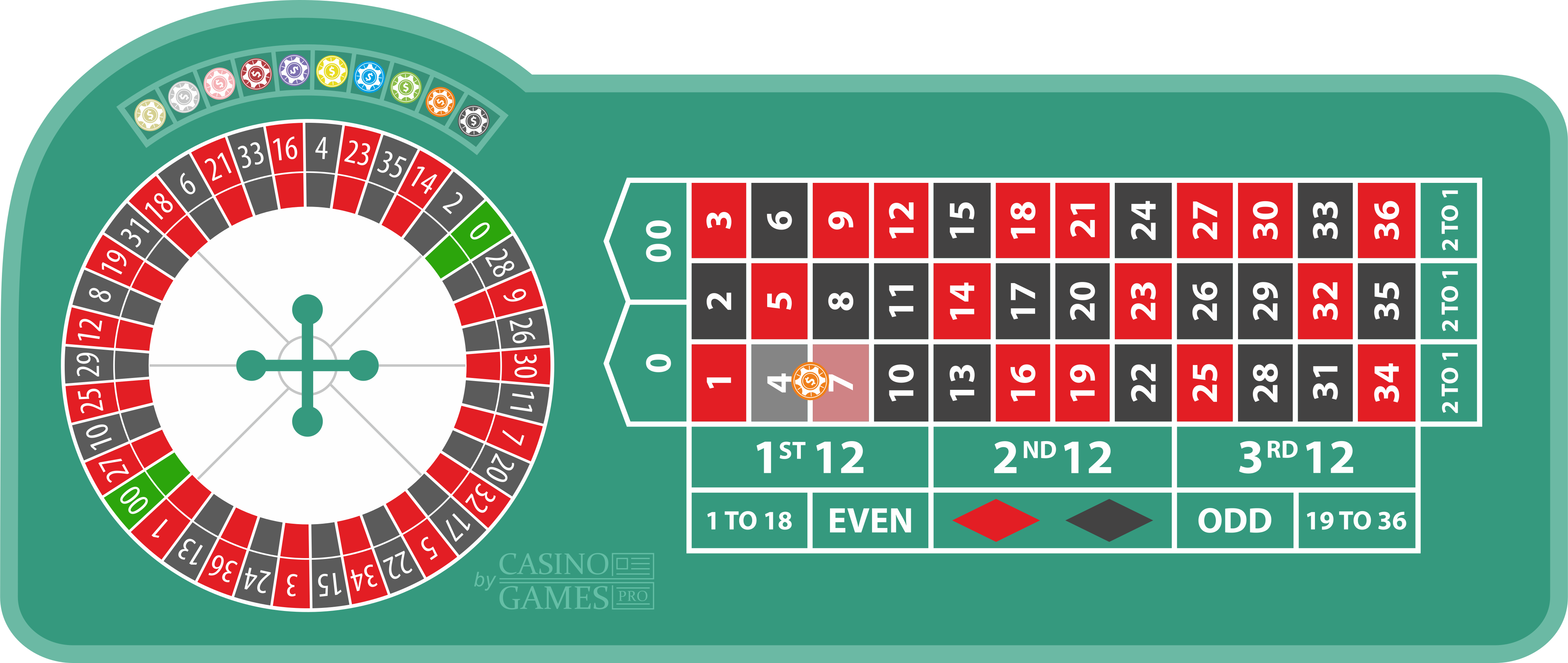
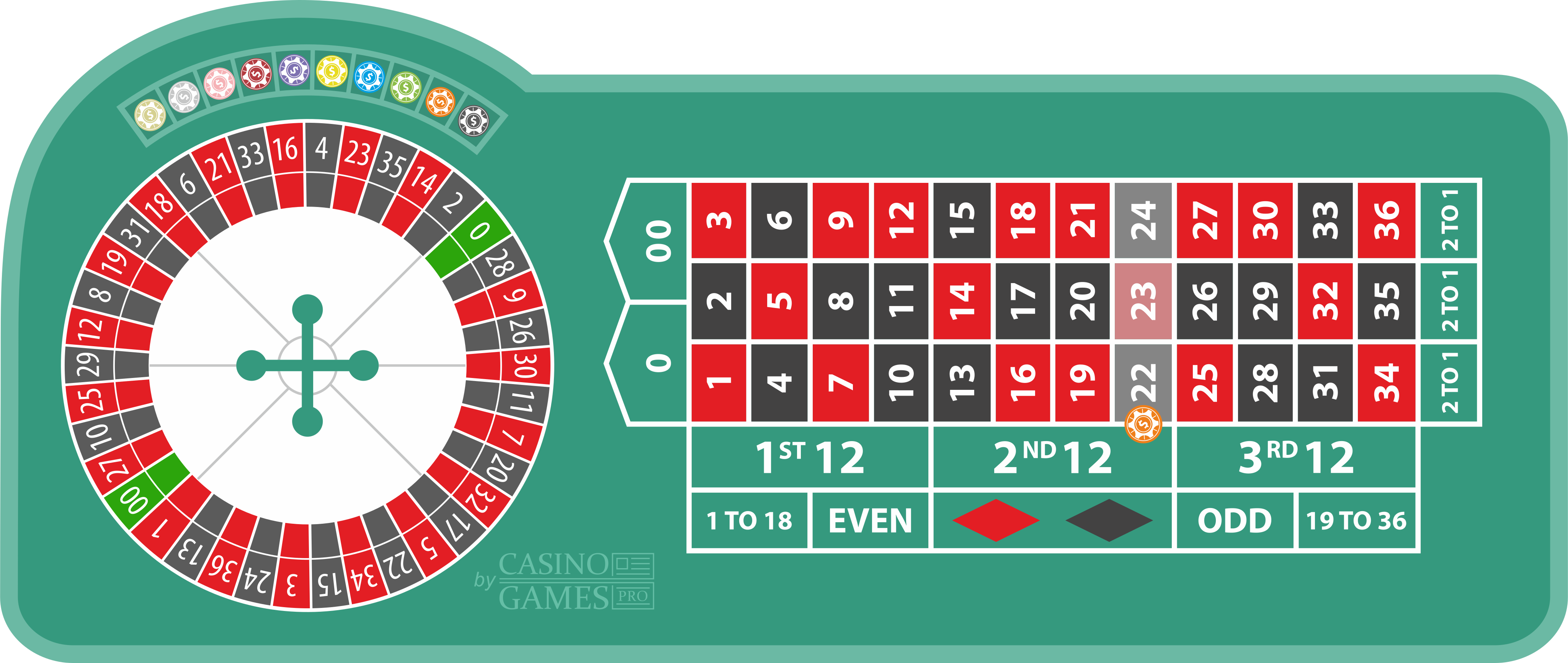
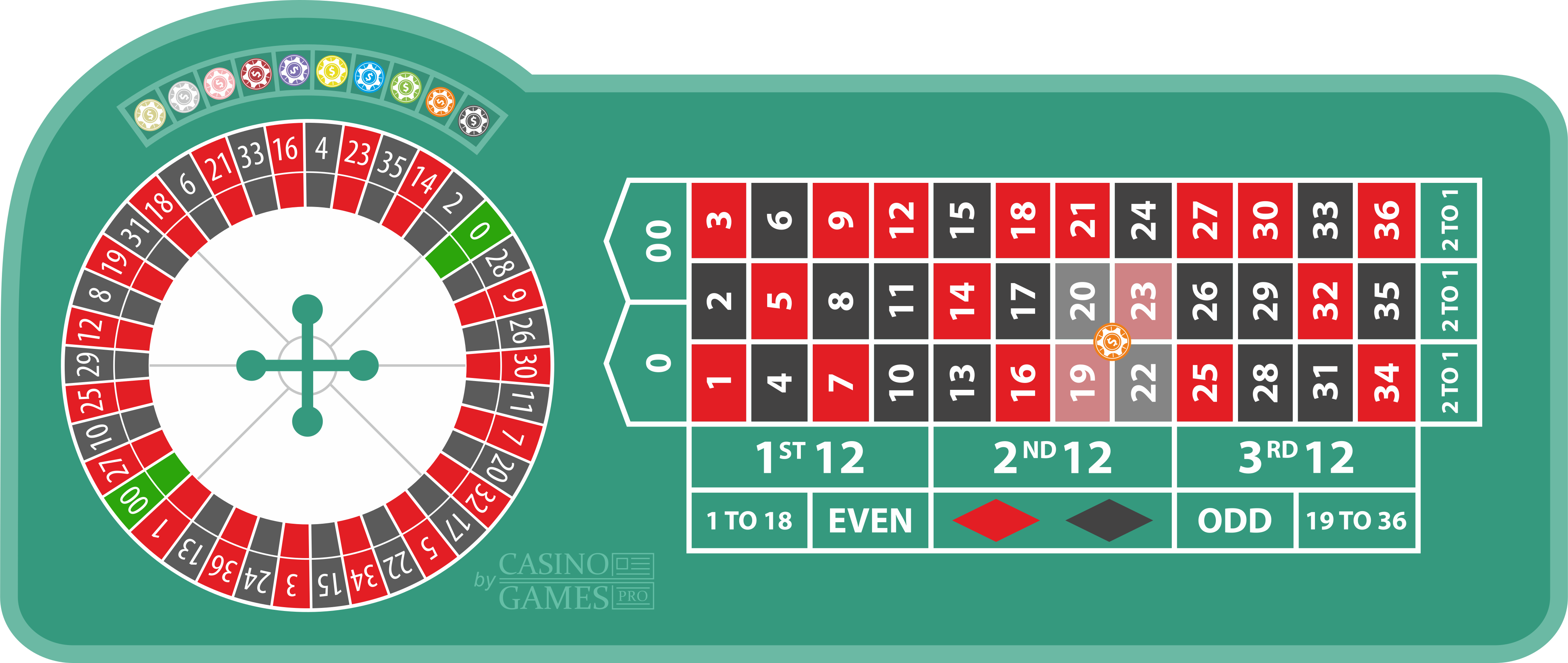
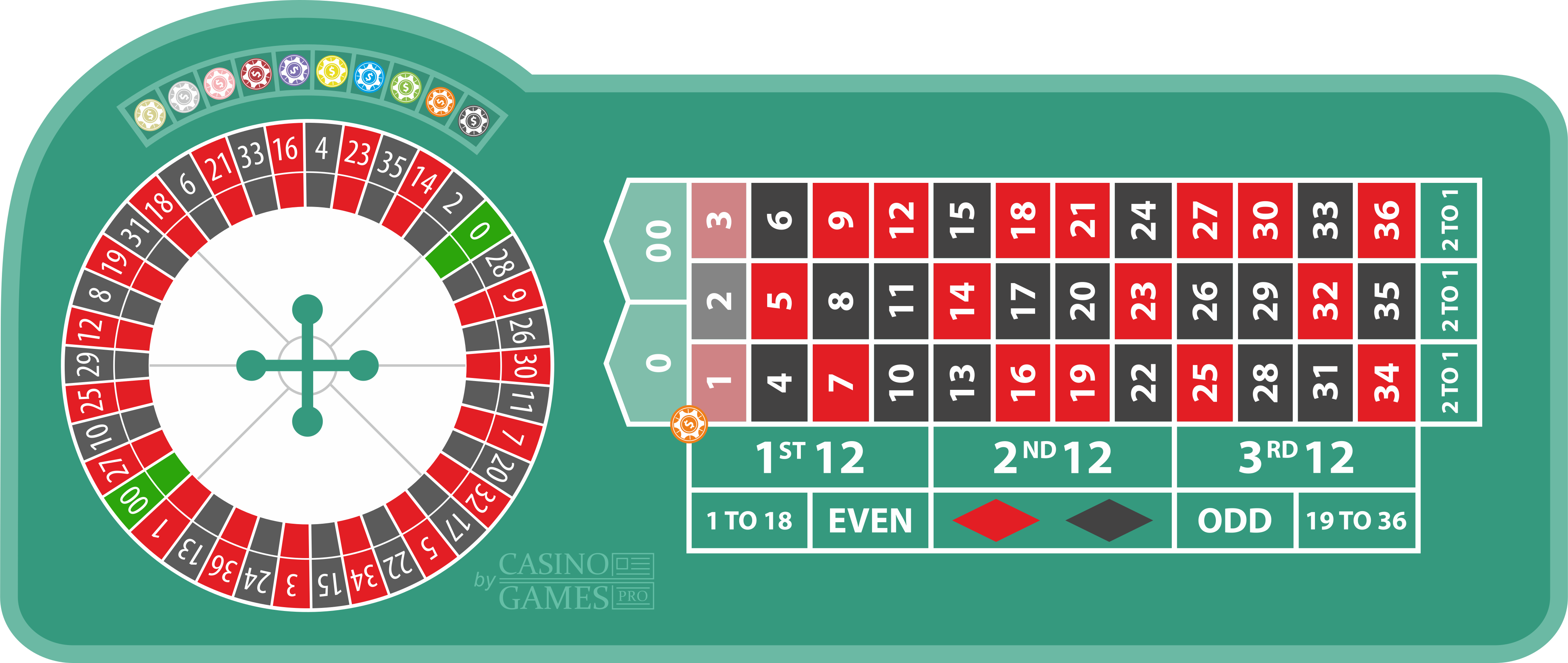
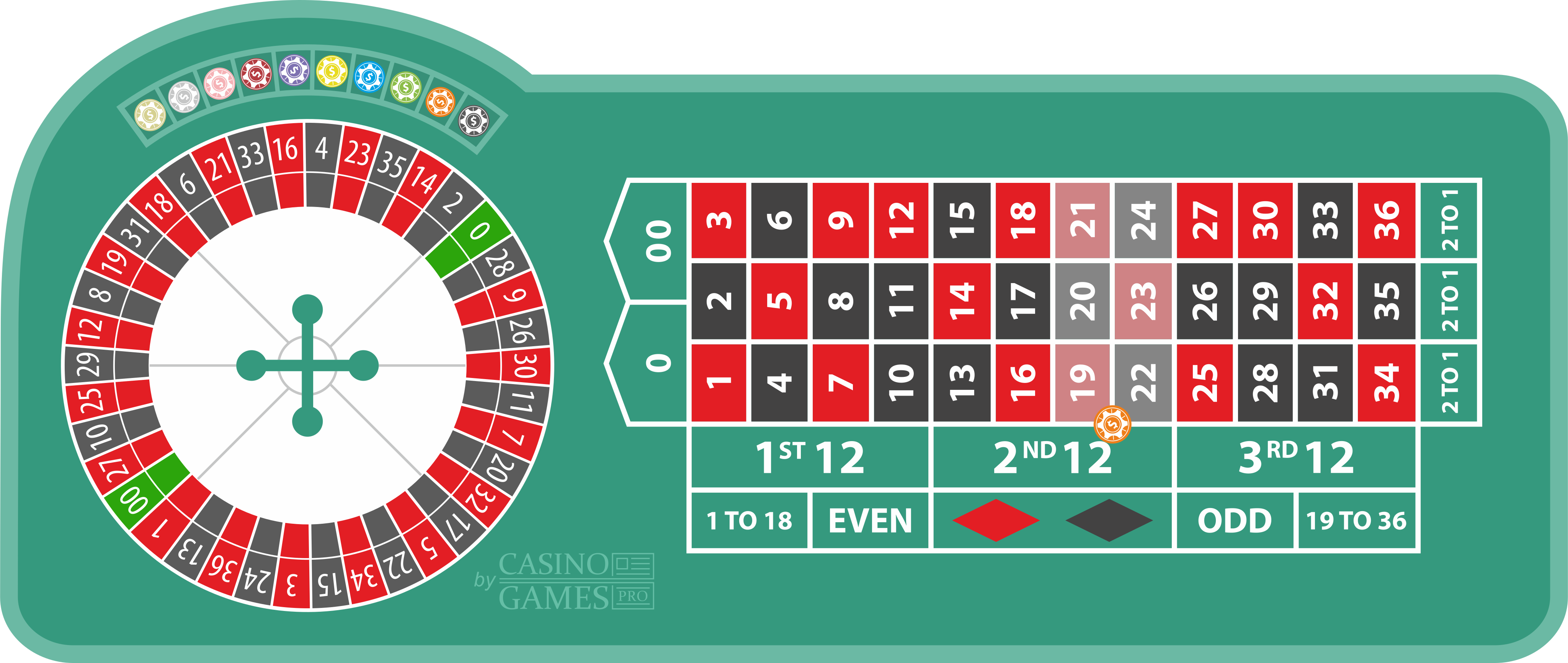
The payout ratio is the amount of profit paid to the winner relative to the initial bet. For example, with a payout of 5:1, a winning $10 bet produces a $50 profit and a total return of $60.
Outside Bets
Outside bets are placed on the peripheral section of the betting layout. The available types include:
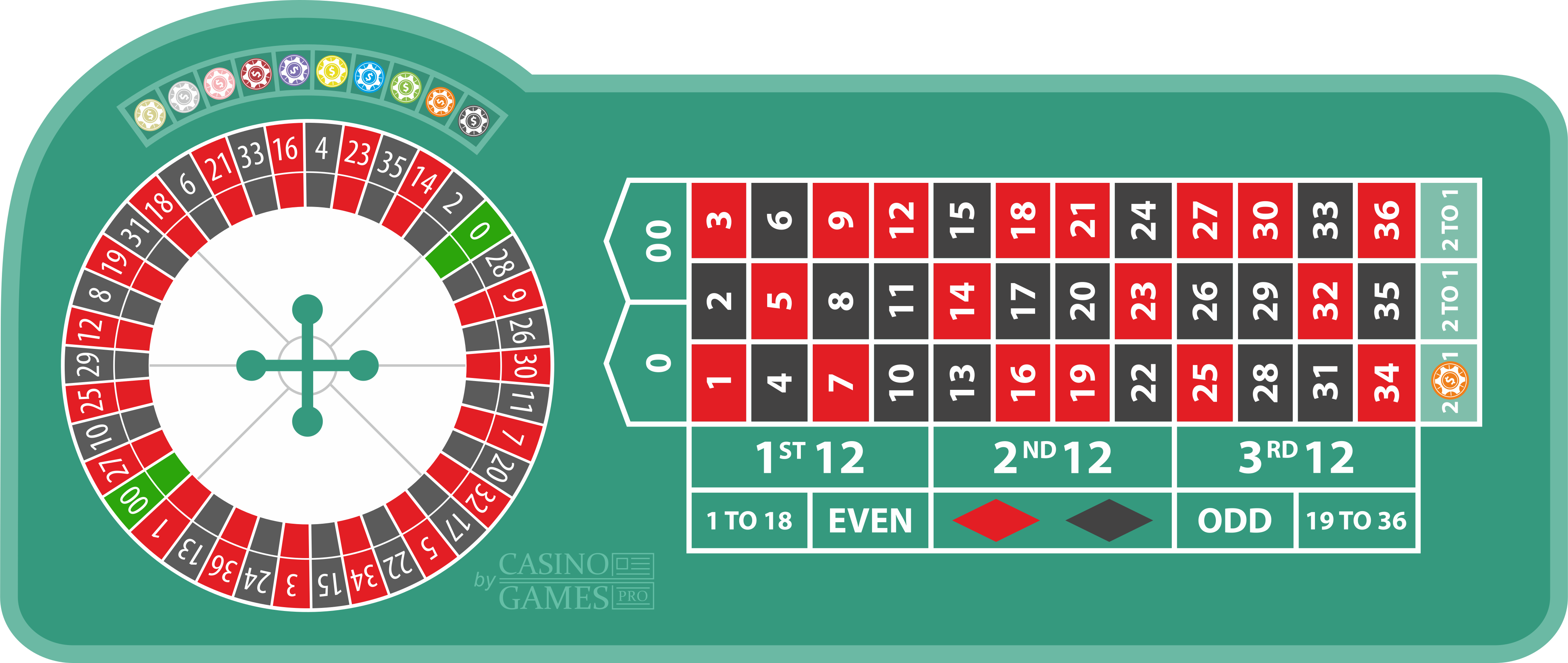
Column Bet
This bet covers all the numbers in one of the three columns and is placed by positioning chips on the box at the end of that column. If the winning number is in the selected column, the bet wins. The payout is 2:1.
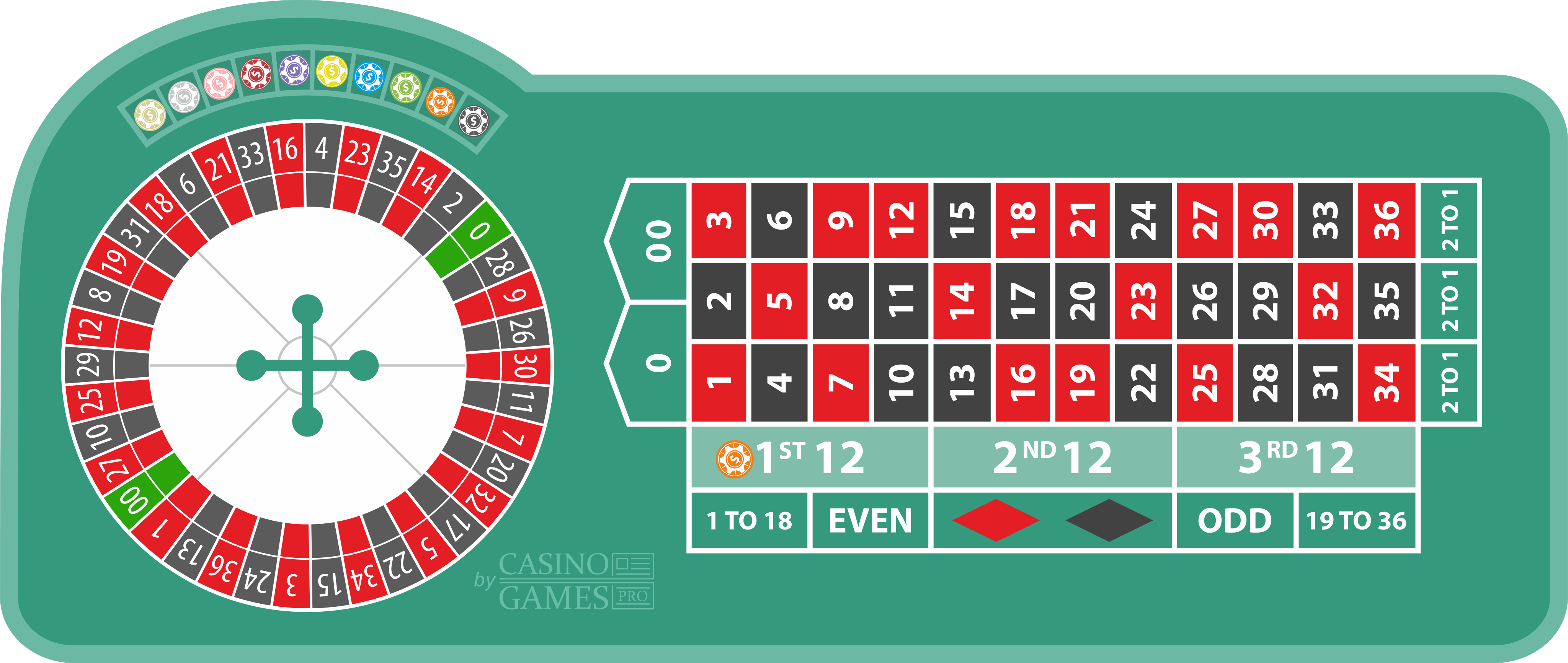
Dozen/Group Bet
This bet covers all numbers in the first (1-12), second (13-24), or third (25-36) dozen. It is placed by positioning chips on the corresponding dozen bet box. The payout is 2:1.
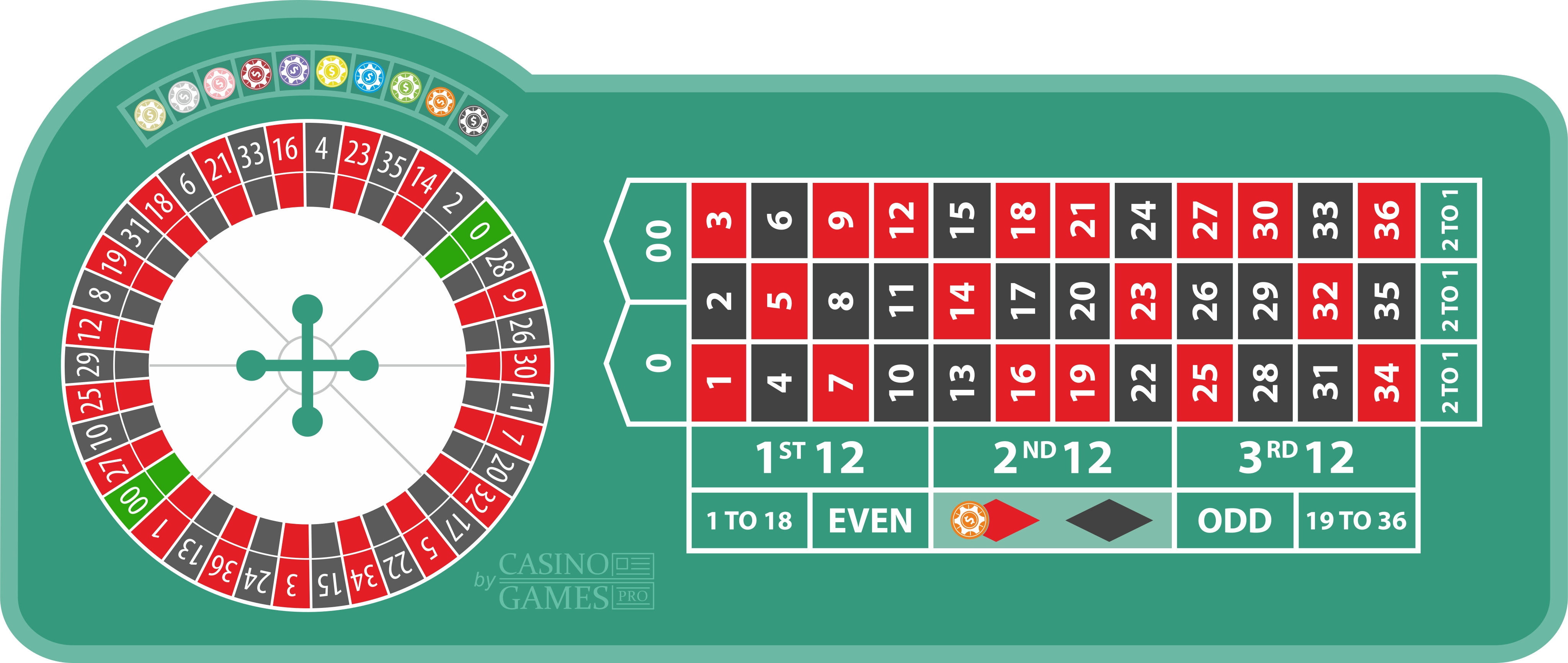
Red/Black Bet
This bet covers either the red or black numbers and is placed by positioning chips on the corresponding color box. The payout is 1:1.
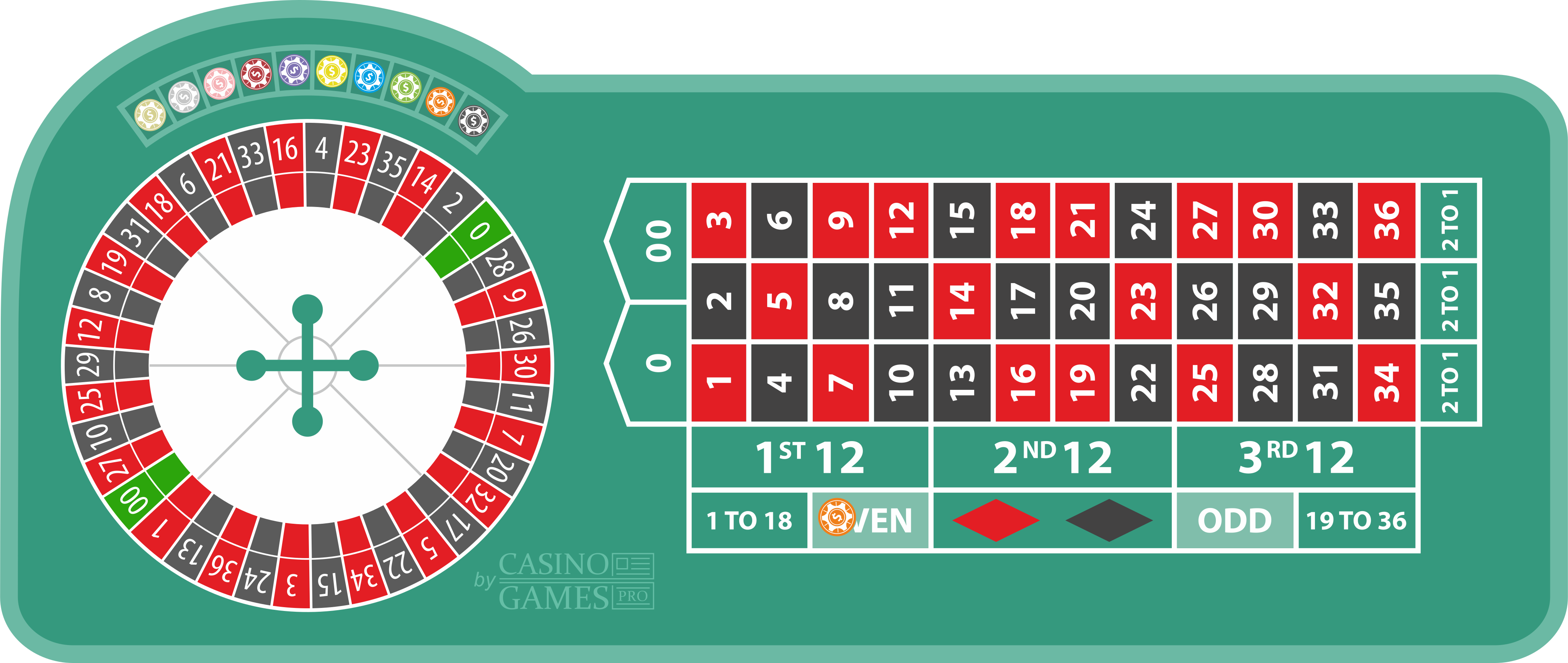
Odd/Even Bet
This bet predicts whether the winning number will be odd or even. It is placed by positioning chips on the odd or even box. The payout is 1:1.
High/Low Bet
This bet predicts whether the winning number will be low (1-18) or high (19-36). It is placed by positioning chips on the low or high box. The payout is 1:1.
Winning Strategies
 As mentioned above, the American wheel has one more zero pocket than the European wheel. This reduces the player’s probability of winning. When both versions are available, European roulette offers the lower house edge. The second zero pocket is disadvantageous because it increases the number of possible losing outcomes.
Outside bets have a higher probability of winning because they cover multiple numbers rather than a single number. Regardless of the strategy used, roulette remains a game of chance. Understanding the available bets and managing your bankroll can help you make more informed decisions.
FAQ: How to Play American Roulette
American Roulette features an additional double-zero (00) pocket, increasing the total number of pockets to 38. This addition increases the house edge to 5.26%, making it tougher for players to win compared to European Roulette, which yields a lower house edge (2.70%) as it has a wheel with 37 numbers only.
Betting on zero or double-zero straight up can result in high rewards as winning wagers on single numbers pay 35:1. However, like most inside bets in roulette, this one is riskier due to its low probability of winning (2.63%).
Yes, the “surrender” rule, when available, allows you to recoup half of your even-money bets if the ball lands on zero or double-zero. This effectively reduces the house edge on those bets, making them less costly over time.
Outside bets, such as red/black, odd/even, and high/low, are considered more beginner-friendly due to their higher probability of winning. These bets have nearly a 50% chance of winning, making them a safer choice for new players looking to extend their gaming sessions.
The betting layout in American Roulette, with its additional double-zero, influences strategy by requiring players to factor in the higher house edge. Focusing on bets that offer better long-term returns, and leveraging rules like “surrender” when available, can help mitigate some of the risks associated with the double-zero layout.