
Slot Machines
 | Updated:
 The Ultimate Guide to Playing Slot Machines on the Web
 Slots have become the epitome of casino gaming and are often the first thing that comes to mind when someone hears the word “casino.” For most people, it is impossible to imagine a casino, whether land-based or online, without slots. Their characteristic sounds and flashing lights have become an inseparable part of the casino floor’s atmosphere.
The immense popularity that slots enjoy worldwide can easily be attributed to their inherent simplicity and considerable winning potential. Slots are exceptionally easy to play, especially when we consider that there is nothing players can do to influence the outcome. Whether a spin pays out is based entirely on chance. While this may put some people off, one cannot deny that slots are a popular alternative to classic table games for players of all experience levels.

-
 Sign Up Bonus
Up to $3500
350% Bonus!9.7 -
Sign Up Bonus
Up to $500
400% Bonus!9.4 -
Sign Up Bonus
Up to $3000
300% Bonus!9.3



The technological progress of the last two decades has enabled the launch of hundreds of online casinos where slot fans can enjoy their favorite games on tablets, smartphones, and desktop computers. Spinning the reels online offers several advantages, including a wide variety of themes, slot types, betting ranges, and exciting features. The following guide introduces players to everything they need to know about this entertaining casino game. If you are curious about the history of slots, how they are played, the slot variants available in online casino lobbies, and more, continue reading to begin exploring the intricacies of slot games.
 Rules of Play
 Types of Slots
 Slots Paytable
 Jackpot Slots
Brief History of Slots
 Before moving forward, let us briefly discuss how and when slots came into existence. The first machine of this type was invented by San Francisco mechanic Charles Fey in 1895 and was called the Liberty Bell. Its name came from the highest-paying symbol on its three reels, which was a bell. The Liberty Bell also featured card suits and horseshoes as symbols and had a single payline across the middle of the reels.
At the turn of the century, manufacturer Herbert Mills upgraded the Liberty Bell by replacing its symbols with various fruits, including lemons, cherries, and plums. The improved slot machine became an overnight sensation, leading to further developments such as multi-coin bets, double jackpots, and flashing lights.
Slots Objective and Rules of Play
 As mentioned previously, learning to play slots is straightforward. The objective is to land a combination of matching symbols across the reels. For a player to collect a payout, the symbols must align on an active payline. The more paylines a slot uses, the more opportunities there are to hit winning combinations. The number of paylines varies by game and can range from one to a hundred.
Before pressing the Spin button, players should examine their chosen slot’s paytable to see the payouts for matching symbols. The paytable also contains useful information about how the paylines work, including whether winning symbol combinations pay from left to right or in both directions. By checking the paytable, players can learn about the slot’s additional features and find out how and when bonus games and free spins are awarded.
Once players have inspected the paytable, they can adjust their bet size using the buttons below the reels. First, they need to adjust the coin denomination, which typically varies between 0.01 and 2.00, although the available range depends on the slot. Adjusting the bet level, or the number of coins wagered on the activated paylines, is equally important. For instance, if you select a denomination of 0.02, a bet level of 3 coins, and 25 active paylines, each spin will cost 1.50 credits.
Some slots allow players to choose which paylines to activate and bet on. However, inactive lines do not pay, even if matching symbols align on them. The number of paylines a player activates should depend on the size of their overall bankroll for the betting session. Covering more paylines provides more opportunities to land winning combinations. Some slots have fixed paylines, which means players must bet on all of them with each spin of the reels.
Once you have adjusted the bet level, coin denomination, and number of paylines you intend to play, you are ready to begin. Press the Spin button to start the reels, then wait for them to stop and reveal the result. The slot’s Random Number Generator (RNG) determines whether the spin results in a win or a loss. These programs ensure random outcomes so that all players have the same chance of landing a payout.
Types of Slots
 Slot fans around the world can hardly complain about a lack of options. Well-known online gambling operators offer numerous slot titles, each with its own theme and features. Slots are usually categorized according to the number of reels and paylines they have, although progressive and 3D titles are often placed in separate categories.
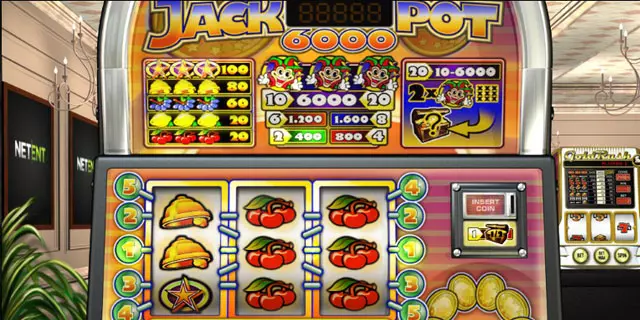
The category of classic slots comprises games that use only three reels, which are rotating sections containing symbols. In most cases, classic slots have a single payline that runs across the middle of the three reels. Nevertheless, some online classic slots have between one and five paylines. These games are usually less elaborate in terms of visuals and features, although some classic slots offer scatters, wilds, nudges, and a Hold feature. A few even include free-spin rounds, but these are relatively uncommon.
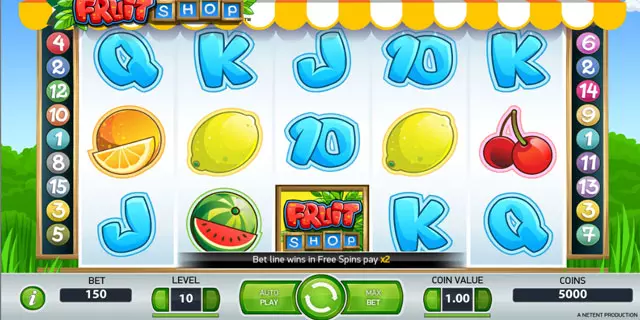
Most online casinos offer hundreds of video slots, which are more advanced than their classic counterparts. Video slots commonly have five reels, although players may occasionally encounter titles with more than seven. More importantly, 5-reel video slots offer a greater number of paylines, providing players with more opportunities to land winning combinations. The number of paylines may range from 9 to 100. Some titles provide 243 or even 1,024 Ways to Win and are highly popular among players.
Video slots are known for their high entertainment value. These variations stand out not only for their advanced graphics and immersive sound effects but also for their additional features. These can include wild, scatter, and bonus symbols; multipliers applied to winning spins; bonus games with guaranteed rewards; and rounds of free spins.

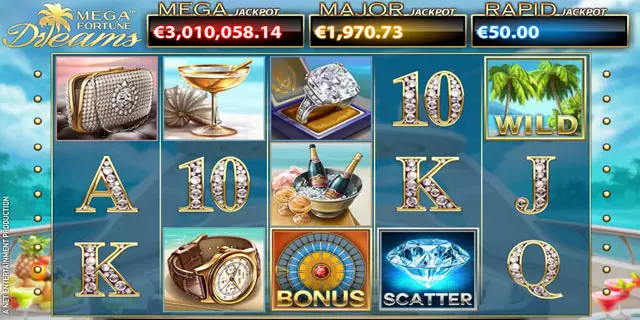
Another category comprises 3D slots, which resemble regular video slots in terms of gameplay and interface. The main difference lies in the depth and quality of the graphics. The visuals and animations in these slots are three-dimensional, clearer, and more detailed than those in standard video slots. In addition, 3D slots typically incorporate more complex storylines, with players completing different achievements to progress through the game and unlock its bonus features.
Progressive slots are among the most popular titles in the catalogs of established online casinos. Their popularity is understandable, given that these slots can potentially award life-changing prizes. Progressives are usually linked to jackpot networks, with a portion of each wager placed on these games contributing to their constantly growing prize pools. You can read more about the different progressive jackpot networks in the section below.
The Paytables of Slots
 Players can usually access the paytable by clicking the icon in the lower corner of the base-game screen. This opens a separate screen containing information about the selected slot. The paytable informs players about the game’s winning combinations and paylines, as well as the payouts for matching symbols.
Generally, the symbols on the reels are divided into high-paying and low-paying symbols. Players need to match three, four, or five identical symbols on an active payline to receive a payout, although the amount depends on the number and type of matching symbols.
High-paying symbols usually correspond to the slot’s overall theme, while low-paying symbols are often represented by high-card ranks such as Kings, Queens, Jacks, Tens, and Aces. All winning payline combinations are listed in the paytable. It also explains how bonus, scatter, and wild symbols work and how free spins and bonus games are activated.
The paytable may also serve as a general guide to what players can expect from the slot in terms of average returns. The larger the flat jackpot for the highest-paying symbol combinations, the higher the game’s variance is likely to be. In other words, games with large payouts generally have a lower hit frequency. You can read more about this in the next section.
Odds, Return to Player Percentages and Variance in Slots
 When choosing an online slot to play for real money, players should check its Return to Player percentage (RTP) and consider its variance. Unlike table games, calculating the probability of landing a particular winning combination on a slot can be difficult for the average player. This is because advanced video slots have a greater number of reels, paylines, and symbols.
For this reason, the odds of slots are commonly discussed in terms of average player return percentages, or RTP. This term expresses the percentage of all money wagered on a given online casino game that is returned to players over time. For example, if a slot’s return percentage is set at 97.85%, the game is programmed to return an average of $97.85 for every $100 wagered collectively by players. It is important to note that it takes tens of thousands of spins for the results to approach the specified RTP, so players should not expect to receive that amount each time they wager $100.
The RTP varies depending on the slot but usually ranges between 86% and 99.9%. Players should check this percentage in advance and may prefer to choose slots with an RTP above 96%. The house edge, or the casino’s mathematical advantage, is directly related to the average return percentage. It can be calculated by subtracting the slot’s listed RTP from 100%. Continuing with the example above, a slot with an RTP of 97.85% would have a house edge of 2.15%.
Variance is another factor to consider when choosing a slot. Also referred to as “volatility,” variance indicates how frequently a slot tends to award winning symbol combinations and the typical size of its payouts. Slots are generally divided into two categories: low variance and high variance.
High-variance slots have a lower hit frequency, meaning they pay less often, but their payouts are usually larger. Such games provide less frequent wins but often include bonus features intended to maintain player interest. Low-variance slots are the opposite, as they pay more frequently, but their payouts tend to be modest.
Jackpot Slots
 As mentioned earlier, progressive slots are among the main attractions at online casinos because they can potentially award life-changing prizes. This is possible because their progressive jackpots grow incrementally with each bet placed on a given slot.
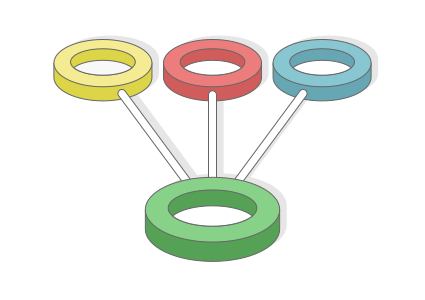
Some slots fall into the category of wide-area progressives because several games are connected to a global jackpot network. This means that the prize pool accumulates across multiple casinos powered by the same software developer. Such a setup allows the pot to reach millions of dollars or the equivalent in other currencies. The jackpot is awarded at random, after which the prize pool begins accumulating again from a base amount known as the pool’s “seed.”
Other slots are linked to a local jackpot network, meaning the prize pools accumulate across several titles available at a single online casino. The prizes are smaller than those of wide-area progressives but can still reach six-figure sums.
Finally, there are standalone progressive slots, where the jackpot accumulates from a single title that is not linked to any other slots in the casino’s portfolio. Because fewer players contribute to the pool, these prizes usually reach five-figure sums. Even so, they can still be substantial.
Slot Tournaments
 One advantage of spinning the reels at trusted online casinos is the opportunity to participate in slot tournaments, which offer a way to add variety to the gaming experience.
Slot tournaments work in roughly the same way as poker tournaments. A set number of slot players sign up for a tournament announced and promoted in advance by the gambling operator. The rules and entry fees depend on the type of tournament. After paying the entry fee, players are usually given the same number of credits and compete on the same slot for a set number of rounds of equal duration. Those who finish in the highest positions receive larger shares of the prize pool. Some tournaments, known as freerolls, do not require an entry fee. Others, such as reloader tournaments, allow players to re-enter after paying a re-buy fee.
Players who plan to spin the reels for real money and want to learn more about slots are encouraged to explore the rest of this guide. It provides extensive information about slot rules and payouts, the most common types of slots, progressive jackpots, and tips for managing betting sessions.