
Craps
 | Updated:
 Beginner’s Guide to the Intricacies of Craps
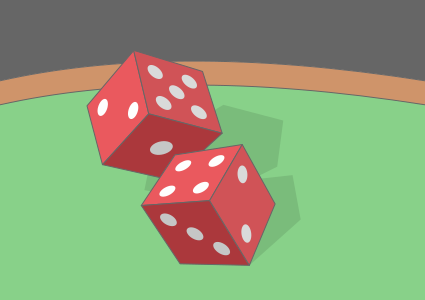 Craps is an exciting casino game played with two dice, and the objective is to correctly predict the outcome of the dice toss. At first glance, craps may seem like a simple game because it is based entirely on chance. However, less experienced players often struggle to understand how the different bets work and how they pay out. The jargon and etiquette players are expected to observe at the craps table can make any novice’s head spin. The good news is that beginners can master the game at their own pace from the comfort of their homes, as craps is available in many reputable online casinos.
If you are new to craps, we suggest taking a look at the articles that follow. There, you will find extensive information on the rules of craps, the available bets, their payouts, and more. But first, let us take a quick look at the origins of the game.

-
 Sign Up Bonus
Up to $100
100% Bonus!9.7 -
Sign Up Bonus
Up to $30000
100% Bonus!9.4 -
Sign Up Bonus
Up to $1000
200% Bonus!9.3





The Origins of Craps
 Tracing the origins of the game is certainly not an easy task. Evidence suggests that a similar game was played in Ancient Rome, where legionnaires would carve pig knuckles into small cubes to use as dice.
According to some historians, craps evolved from a simplified version of the game of “hazard”, which was allegedly invented by an English nobleman named William of Tyre. Craps started to gain popularity during the Middle Ages, especially among the nobility of France and England.
At the beginning of the 18th century, craps traveled to the New World when the French established the colony of Acadia in what is now Nova Scotia, Canada. After France lost control of Acadia, the French settlers moved south, bringing the dice game to Louisiana. It quickly spread throughout the continent aboard Mississippi steamboats, and by the mid-19th century, the name “craps” had become established.
The rules of play we follow today were outlined at the start of the 20th century. The Don’t Pass bet was introduced to prevent players from using dice control to manipulate the outcome of the rolls. After the end of World War II, craps spread across the globe and quickly became a casino classic worldwide, a status it maintains to this day.
Table Layout
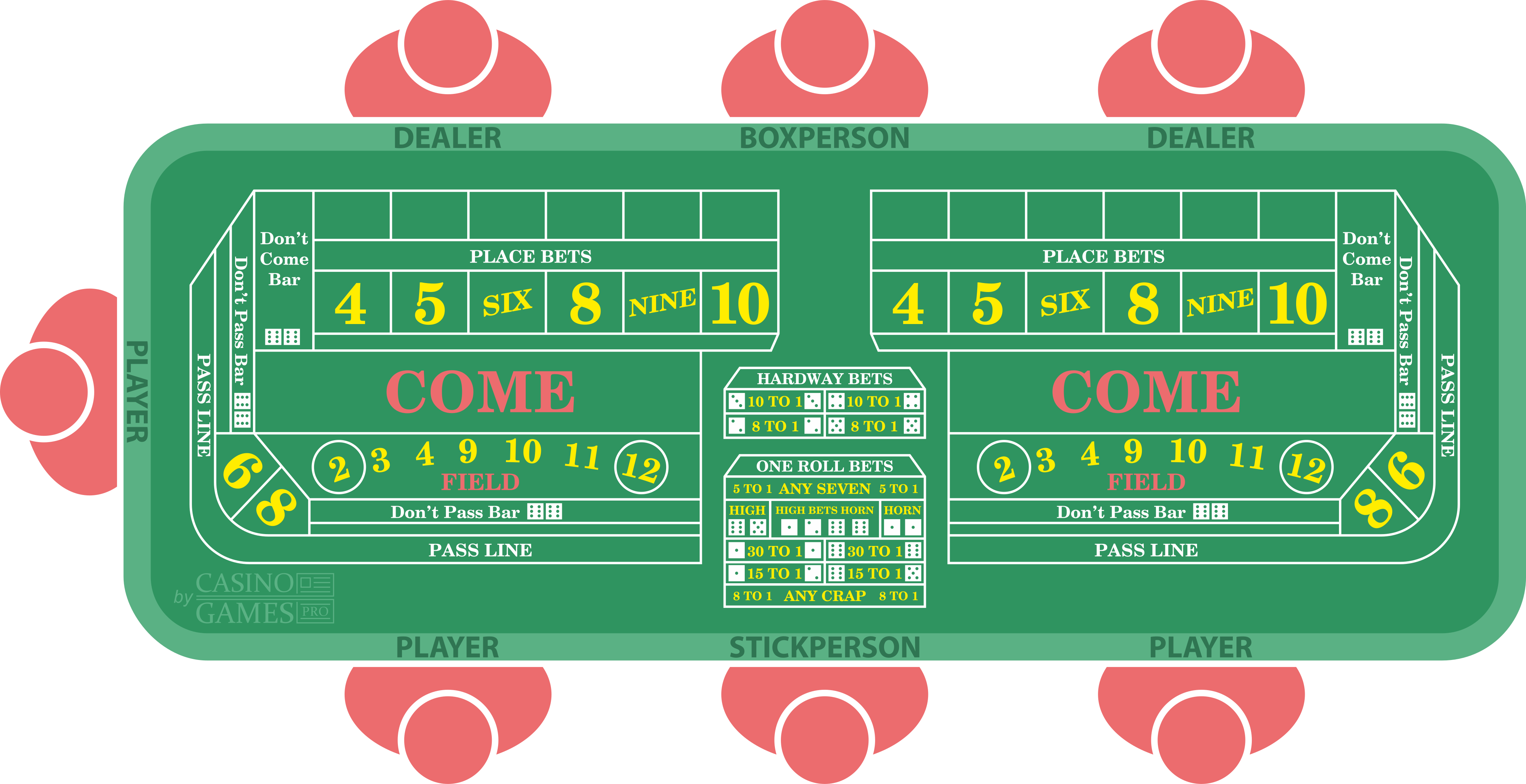
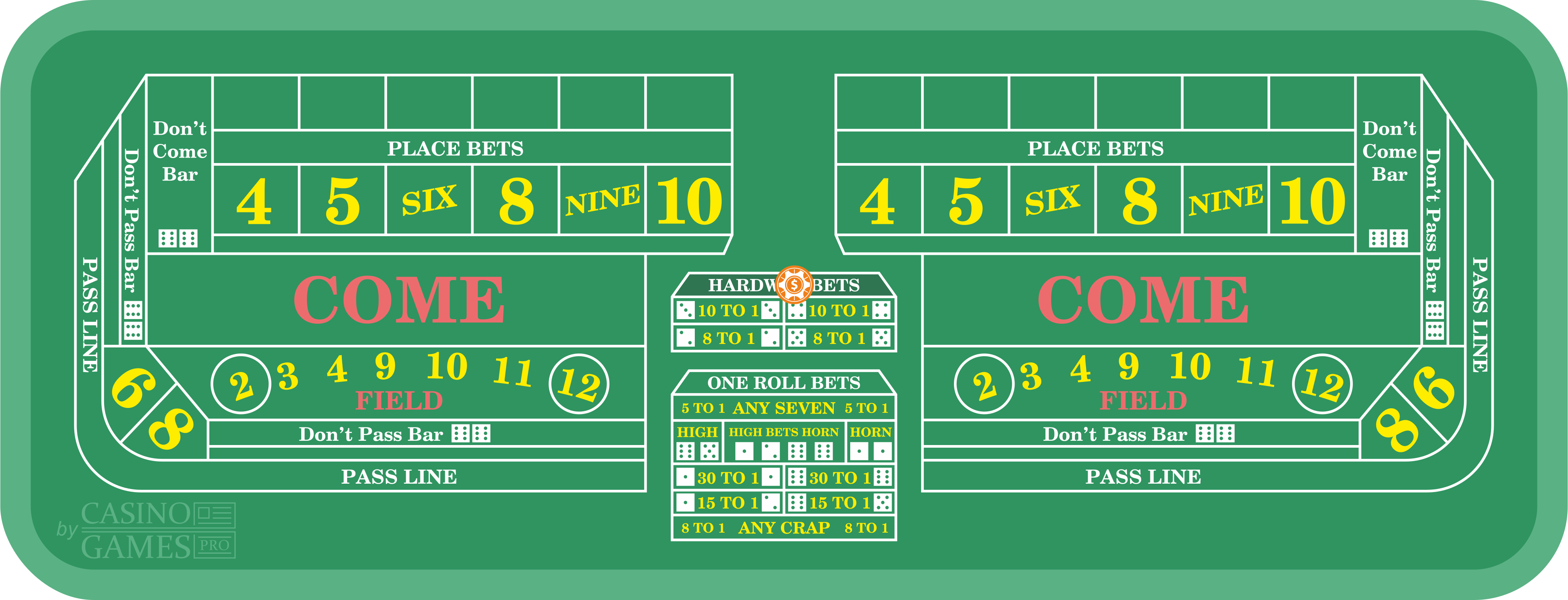
The layout can be divided into three separate sections. Two of them are identical and positioned on each side of the table to accommodate a greater number of players. This is where the chips for Pass/Don’t Pass, Come/Don’t Come, Place, Field, Big 6, and Big 8 bets are placed.
The center section of the table houses the grid where the so-called proposition bets are placed. These include Any 7, Any Craps, and the Hardways, which fall into the category of one-roll bets and offer higher payouts.
The table is staffed by several casino employees. There are two base dealers on each side of the table. One is in charge of the puck that indicates whether a new round is about to start, while the other collects chips from losing bets and pays out winnings. The two base dealers also place chips for Lay, Buy, Place, and Free Odds bets in the appropriate boxes on the layout.
The stickman is in charge of the dice and moves them around the table. Another part of the job is to call out the outcomes of the rolls and place Big 6, Big 8, and Proposition bets for players. The boxman is in charge of the casino’s bankroll and observes everything that happens at the table. This person exchanges players’ cash for chips and vice versa and resolves any disputes that may arise. Finally, there is the floorman, who oversees the boxmen at two to four tables, tends to the players’ needs, and authorizes credit for them on the spot.
Basic Rules of Play
 The rules of play in craps are quite simple; it is the bet types that most novices struggle with. The two dice used in the game are rolled by one of the players at the table, who is referred to as the shooter. Once the shooter’s turn ends, another player can roll the dice.
Players take turns shooting in a clockwise direction. Sometimes, the shooter is allowed to roll the dice for several rounds in a row. More importantly, players are permitted to place bets even if they are not shooting the dice during a particular round. For a roll to be valid, the dice must hit and bounce off the opposite wall of the table.
Each round starts with what is called a come-out roll, which is the first toss of the dice. Before the come-out roll, the puck on the table reads “Off” to indicate that no point has been established. If the shooter throws 7 or 11 on the come-out roll, the Pass Line bets win, and the round is over. Throwing any of the craps numbers 2, 3, or 12 on the come-out roll results in a loss for Pass Line bettors. If 4, 5, 6, 8, 9, or 10 is thrown, the respective number becomes the point. The dealer then turns the puck so that it reads “On” and places it above the box containing the point number. The shooter continues to throw the dice until they either roll the point or lose by rolling 7.
These are the basic rules of play in craps. What makes the game more complex is the large number of available bets. You can find more information about the types of bets in craps and their respective payouts below.





Types of Bets in Craps
The bets in craps can be divided into two major categories, depending on how many rolls it takes to resolve the outcome. Multiple-roll bets often require the shooter to toss the dice several times in a row to determine the outcome. By contrast, one-roll bets win or lose after a single toss of the dice.
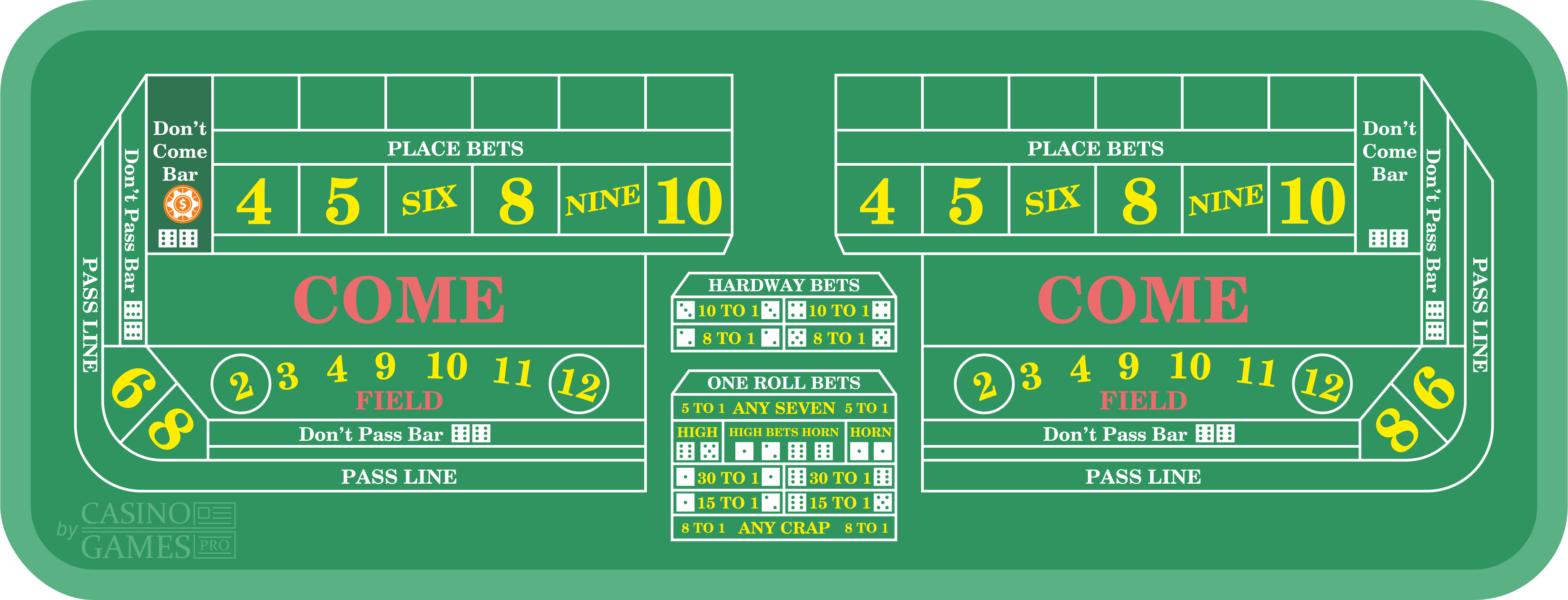
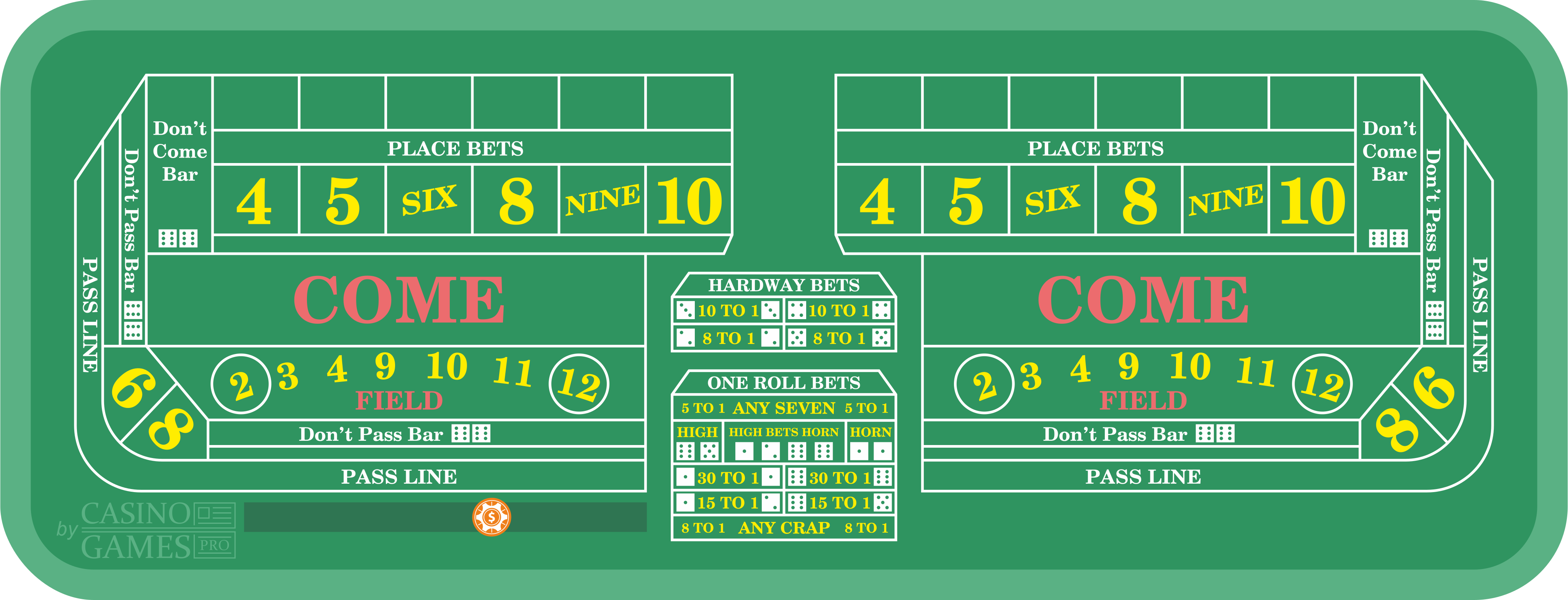
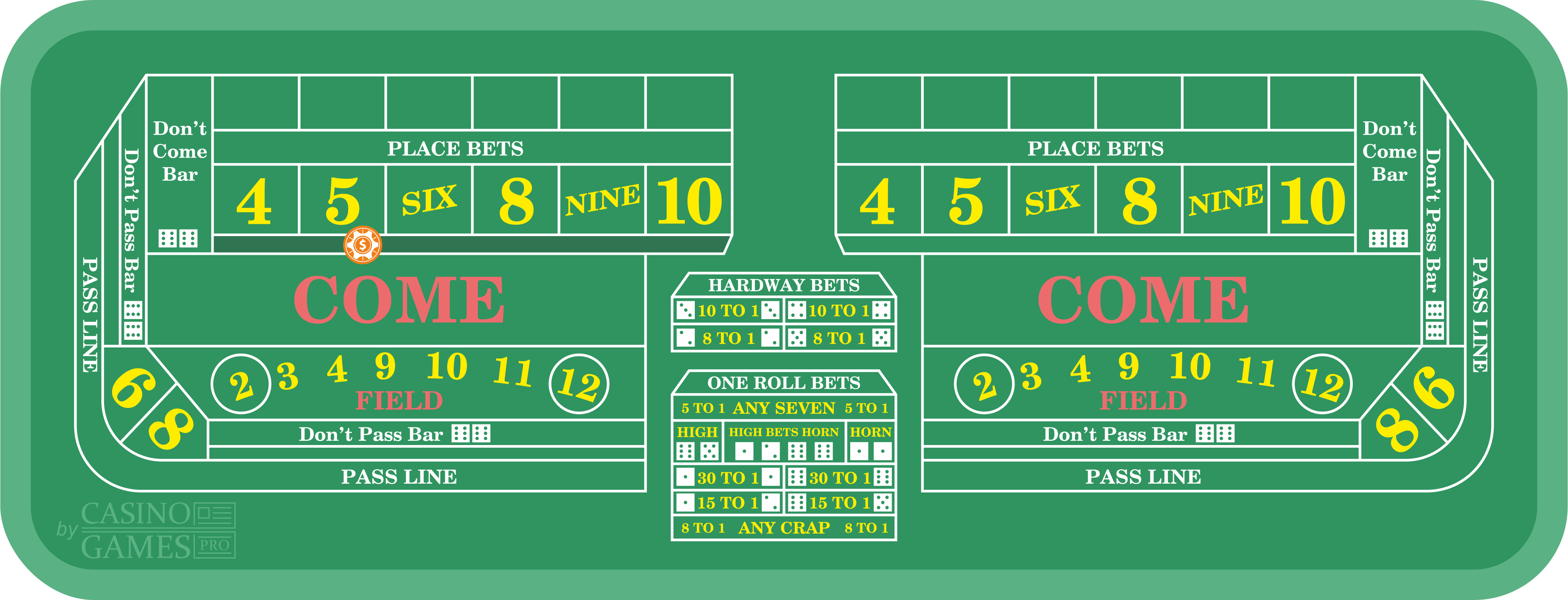
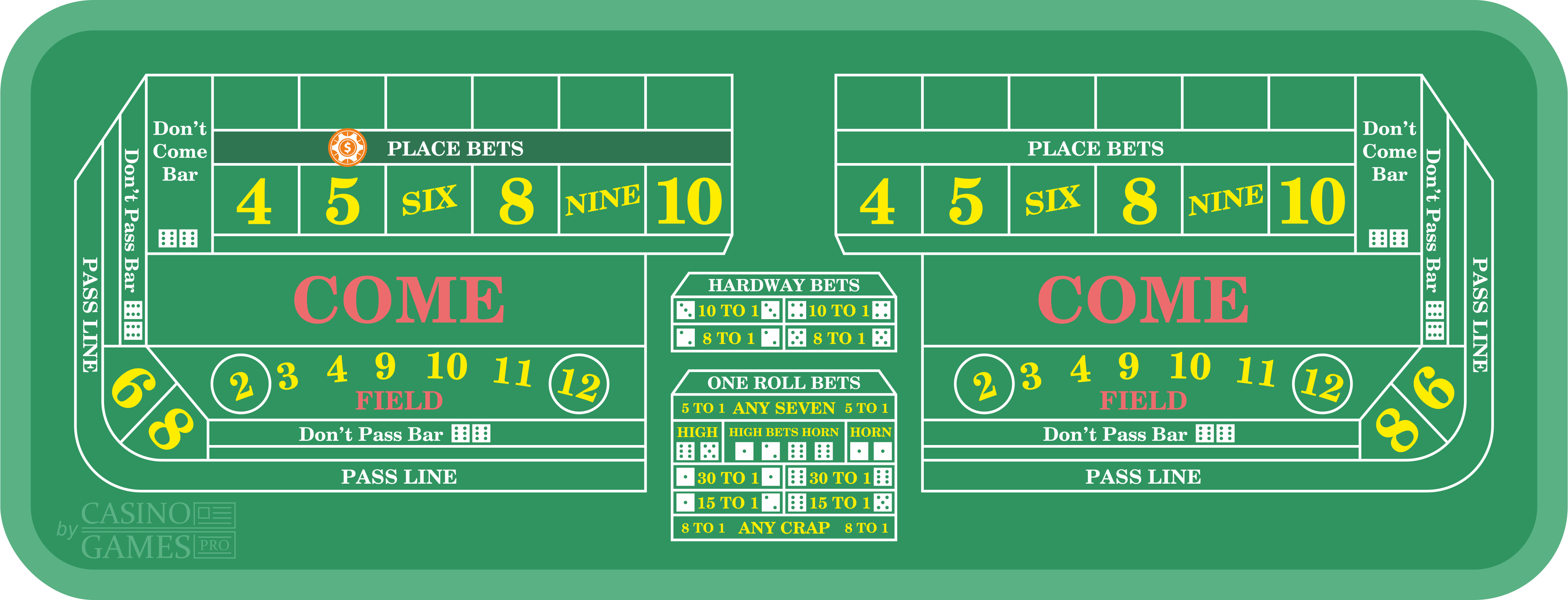
Pass Line Bets
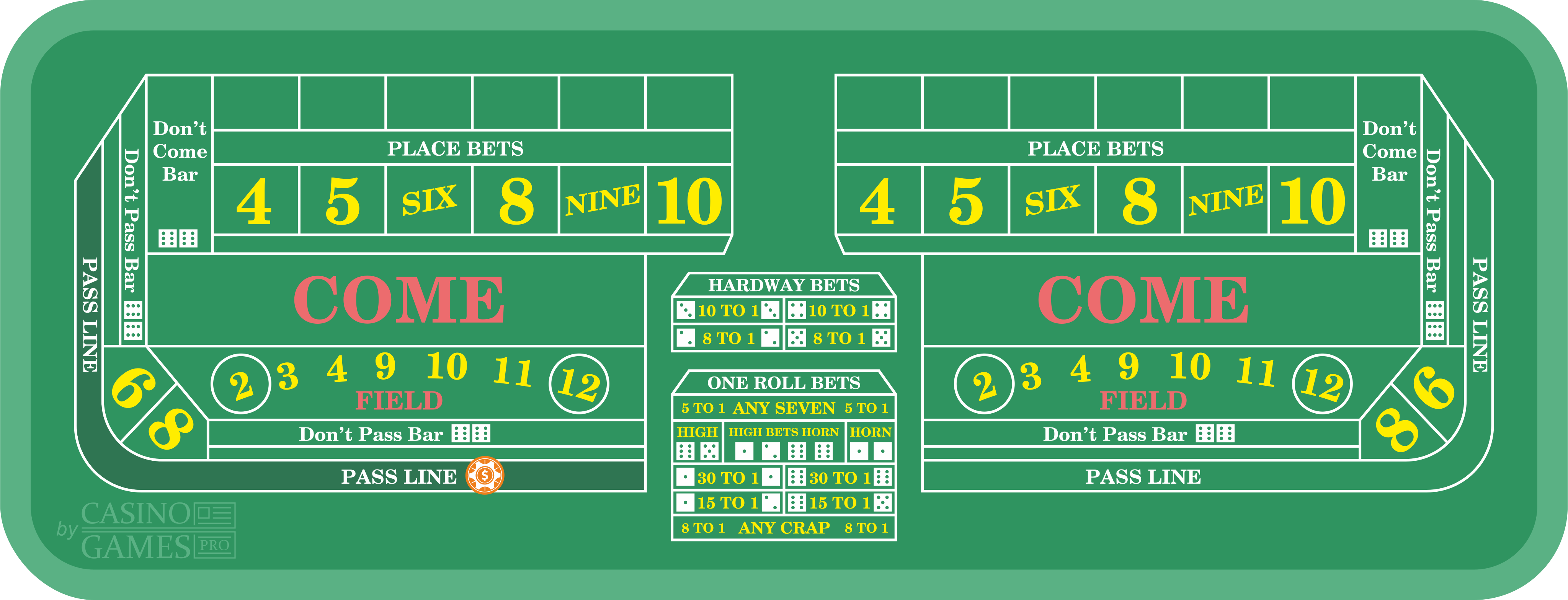
Pass Line bets are among the most fundamental multiple-roll wagers in craps. They win whenever the shooter throws 7 or 11 on the come-out roll and lose if one of the craps numbers, 2, 3, or 12, is rolled. If 4, 5, 6, 8, 9, or 10 is rolled, the corresponding number becomes the point, and Pass Line bets win if it is rolled again before 7 appears. Pass Line bets pay even money and carry a house edge of 1.41%.
Don’t Pass Bets
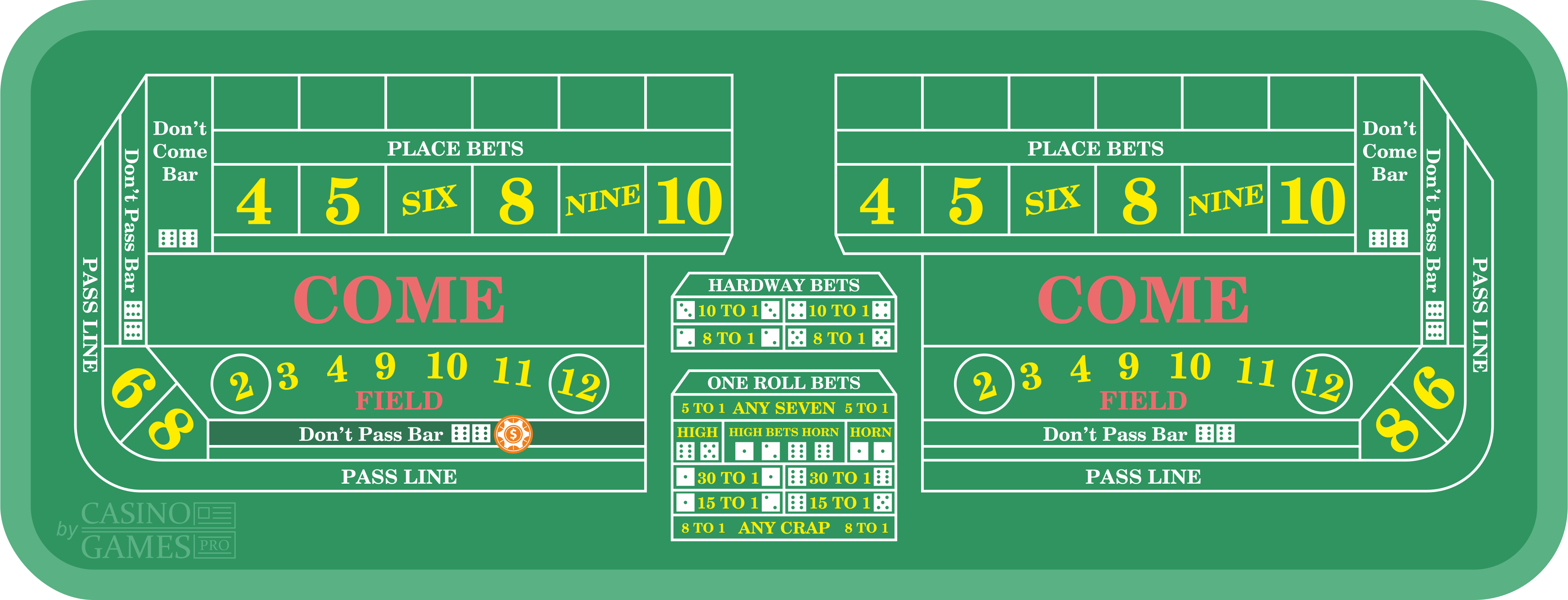
This multiple-roll bet is the opposite of the Pass Line bet. It wins when 2 or 3 is thrown on the come-out roll and loses if 7 or 11 is rolled. A toss of 12 results in a push. If the shooter establishes a point, the Don’t Pass bet wins if 7 appears before the point number. This bet also pays even money and offers a house edge of 1.36%.
Come Bets
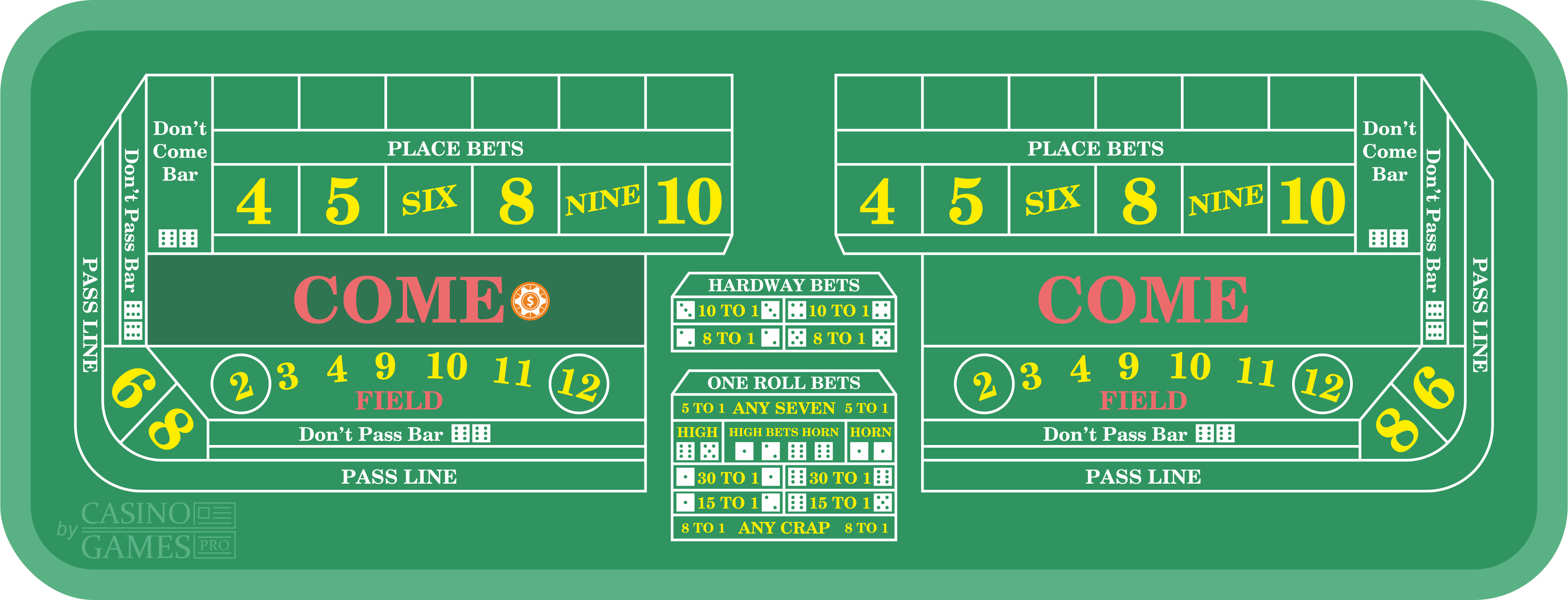
This wager is an extension of the Pass Line bet and can be placed at any time, provided a point has been established. It wins when 7 or 11 is rolled on its own come-out roll and loses when 2, 3, or 12 is thrown. When the shooter establishes a point on the come-out roll, Come bets pay one to one if that point is rolled again before 7. The house edge for these bets stands at 1.41%.
Don’t Come Bets
Don’t Come bets are similar to Don’t Pass bets in that they win when 2 or 3 is tossed on the come-out roll and lose on 7 or 11. A roll of 12 is a push, and the bet neither wins nor loses. If a point is established, the bet wins if the shooter fails to throw the point before 7. Players can reduce or take down their Don’t Come bets at all stages of the game. The house edge is 1.36%.
Free Odds Bets
Players can take odds on their Pass Line/Come wagers by placing a side bet. Winning Pass Line/Come bets pay even money, while the side bets pay at the true odds, which reduces the overall house edge. Another option is to lay odds on Don’t Pass/Don’t Come bets, which works in the same way. Both the side bet and the Don’t Pass/Don’t Come bet win if the shooter sevens out, but the former pays at the correct odds while the latter pays even money.
Place Bets
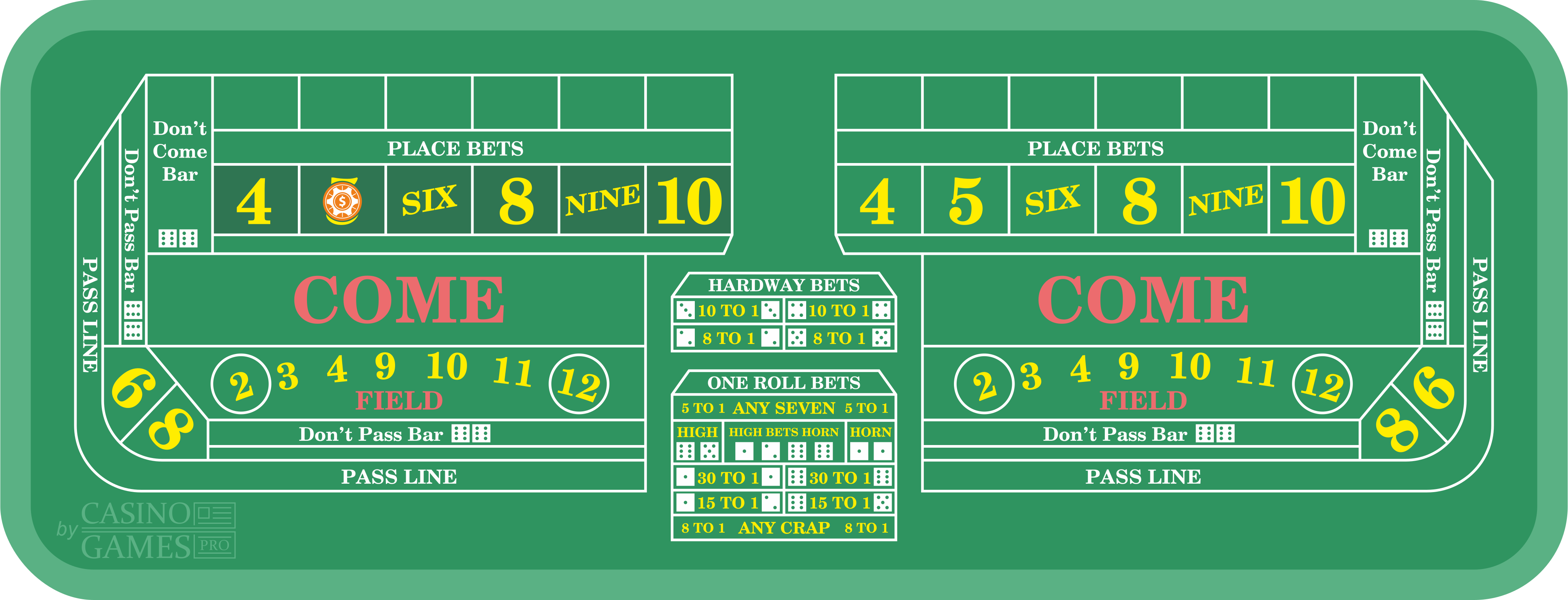
These are multiple-roll bets placed by the dealer on individual numbers 4, 5, 6, 8, 9, or 10 after a point has been established. The chosen number must be rolled before 7 appears. Rolls of 4 and 10 pay out 9 to 5, rolls of 5 and 9 pay out 7 to 5, and rolls of 6 and 8 have a payout of 7 to 6.
Place Bets to Lose
These wagers are placed against the shooter and win when 7 is thrown before the respective point number. Their payouts are as follows: 5 to 11 for bets against 4 or 10, 5 to 8 for bets against 5 or 9, and 4 to 5 for bets against 6 or 8.
Field Bets
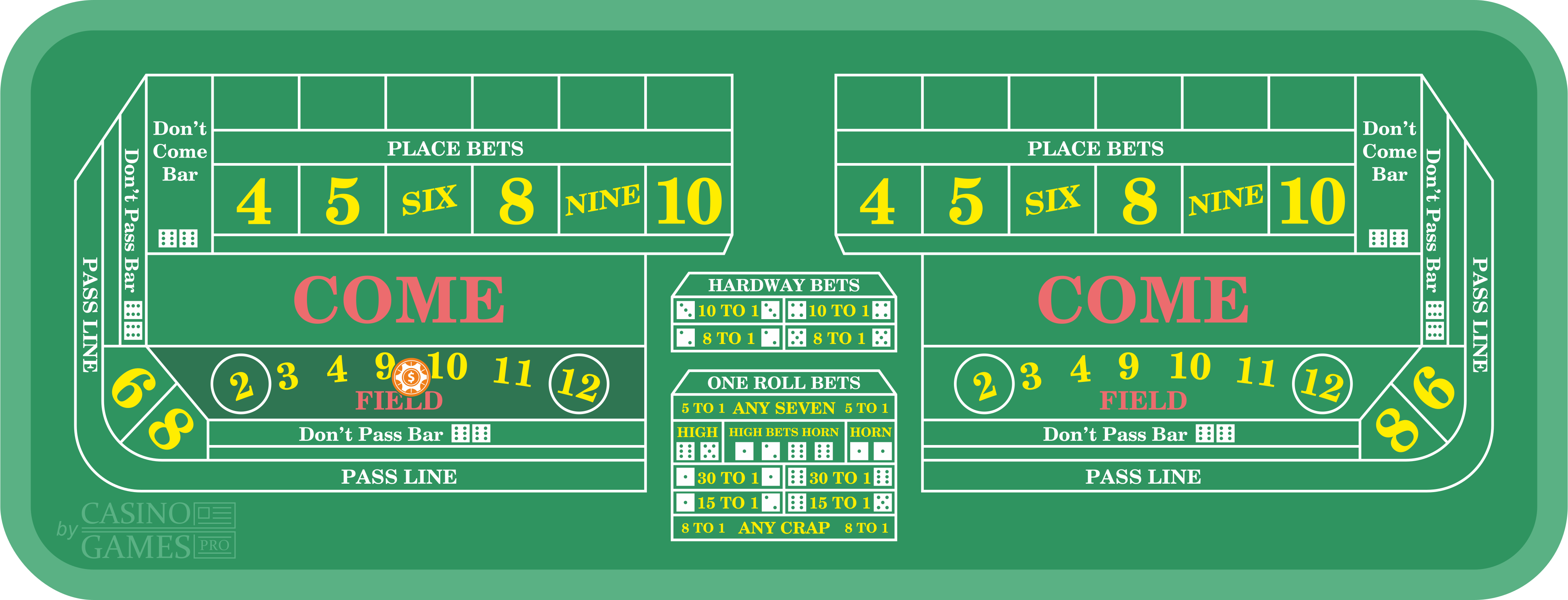
This is a one-roll bet that covers the numbers 2, 3, 4, 9, 10, 11, and 12. Rolls of 5, 6, 7, and 8 result in a loss for Field bettors. A roll of 12 pays 3 to 1, and a roll of 2 pays 2 to 1, while the numbers 3, 4, 9, 10, and 11 pay even money.
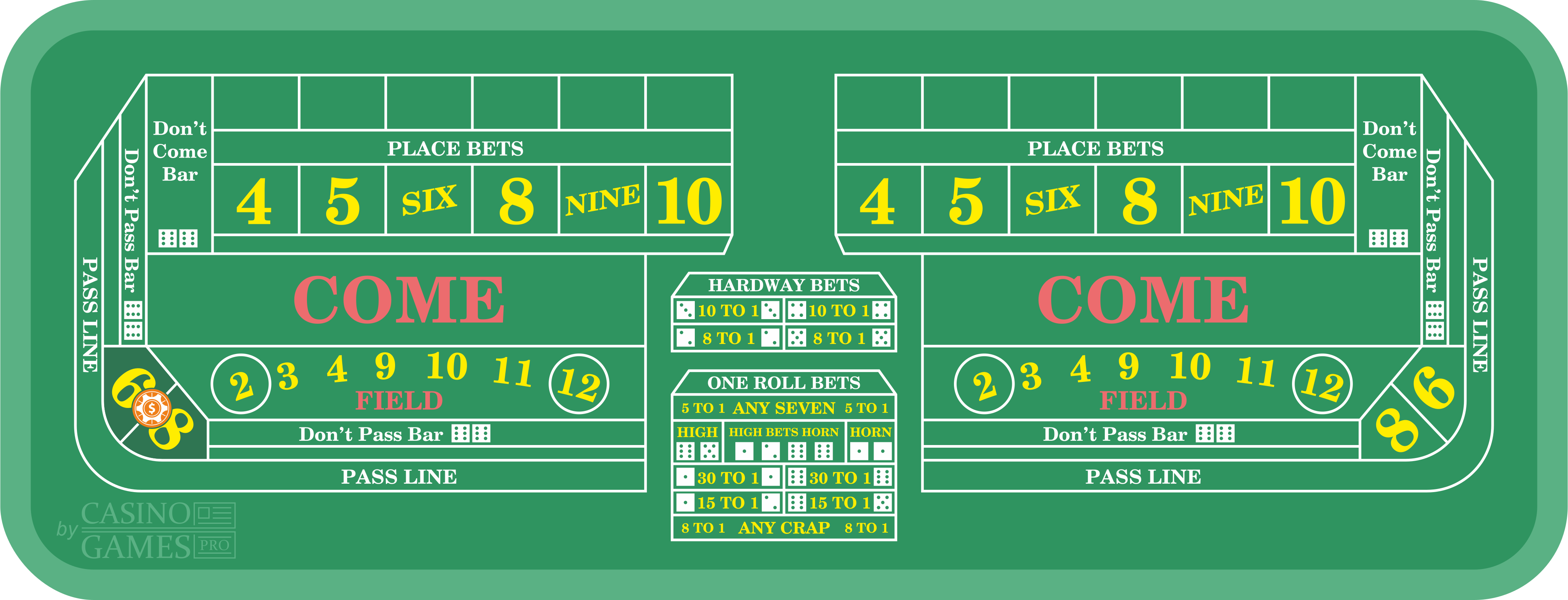
Big 6/Big 8 Bets
These multiple-roll bets win whenever the shooter rolls 6 or 8, respectively, before throwing 7. They are considered two of the worst bets in craps, as they have a substantial house edge of 9.09% yet pay only even money.
Buy Bets
These are multiple-roll bets on individual numbers 4, 5, 6, 8, 9, or 10. They pay at the true odds if the chosen number is rolled before 7, but players must pay a 5% commission on their winning bets. The payouts for Buy bets are as follows:
2 to 1 for 4 and 10, 3 to 1 for 5 and 9, and 6 to 5 for 6 and 8. The house edge stands at 4.76%.
Lay Bets
This group consists of wagers against the individual point numbers 4, 5, 6, 8, 9, and 10, with a 5% commission on all winning bets going to the house. The player wins if 7 appears before the point number they are betting against. Winning Lay bets pay out 1 to 2 against 4 and 10, 2 to 3 against 5 and 9, and 5 to 6 against 6 and 8. The house edge fluctuates depending on the number against which the bet is laid.
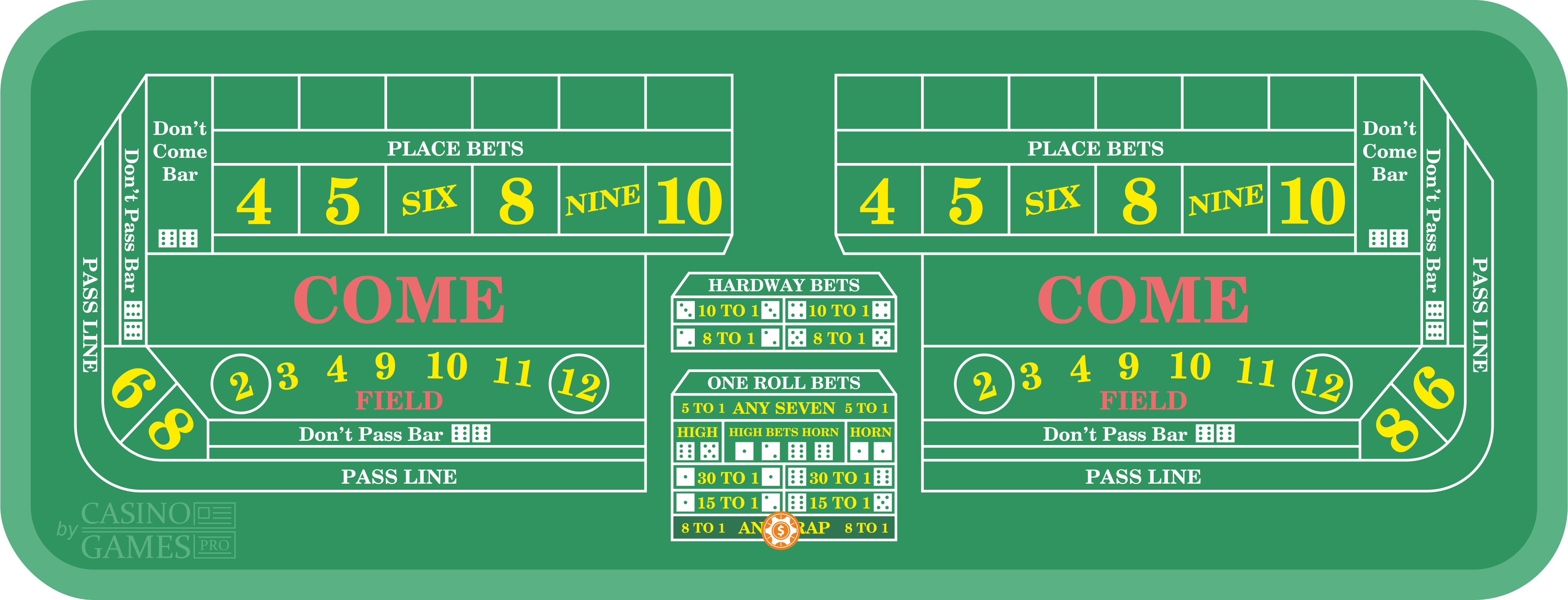
Any Craps Bets
This is a single-roll proposition bet that pays out 7 to 1 if any of the craps numbers, 2, 3, or 12, is rolled on the next toss of the dice. All other numbers result in a loss for Any Craps bettors. This wager comes with a house edge of 11.11%.
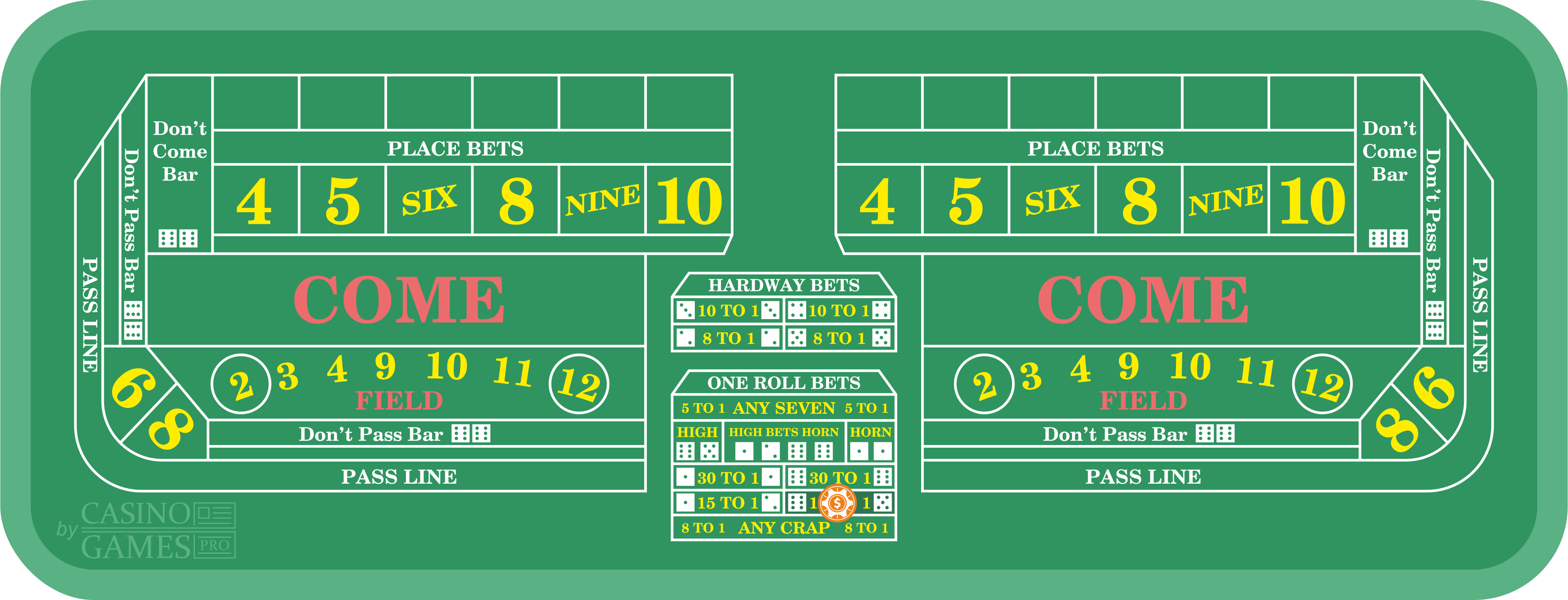
Yo-leven Bets
Yo-leven is another one-roll bet that pays out 15 to 1 if 11 is rolled on the next throw of the dice. Its house edge stands at 11.11%.
Ace Deuce Bets
Ace Deuce is a one-roll bet with a payout of 15 to 1 if 3 is thrown on the next dice roll. The house edge coincides with that of the Yo-leven bet.
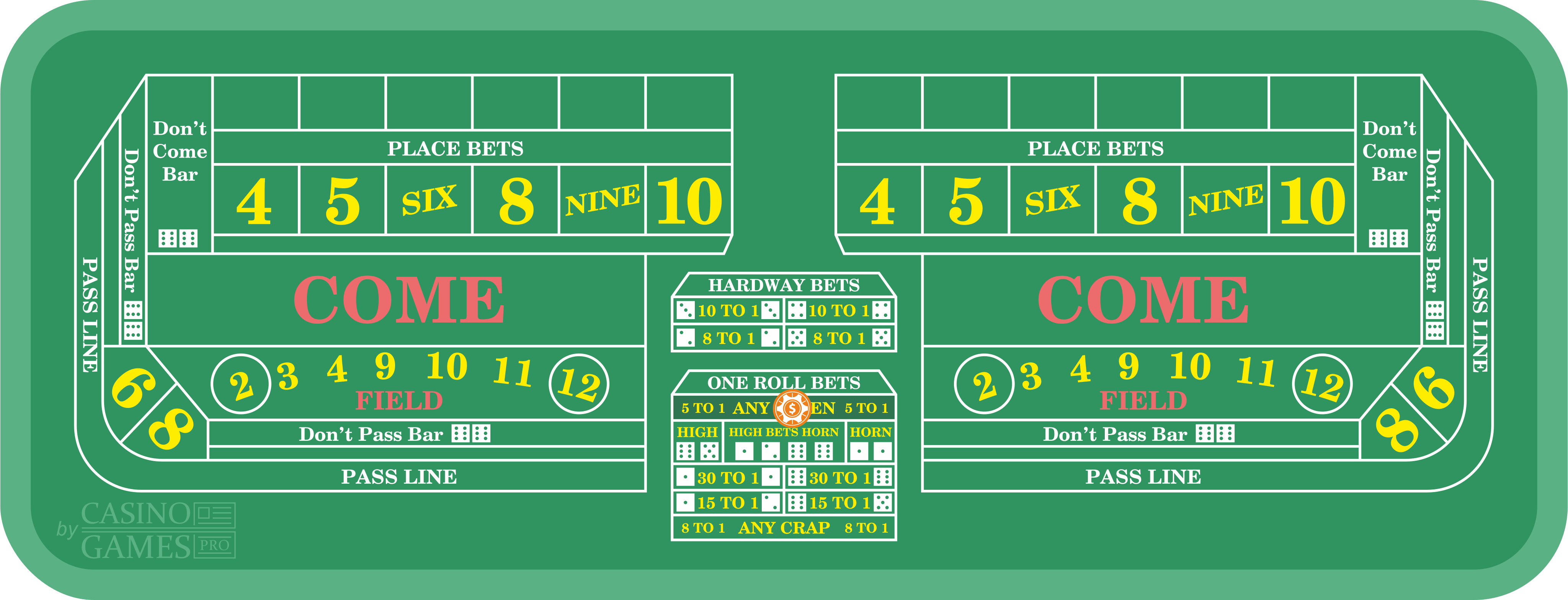
Big Red Bets
Big Red is a one-roll bet on 7, so it wins only if 7 is rolled on the very next throw of the dice. The payout is 4 to 1, with a house edge of 16.67%.
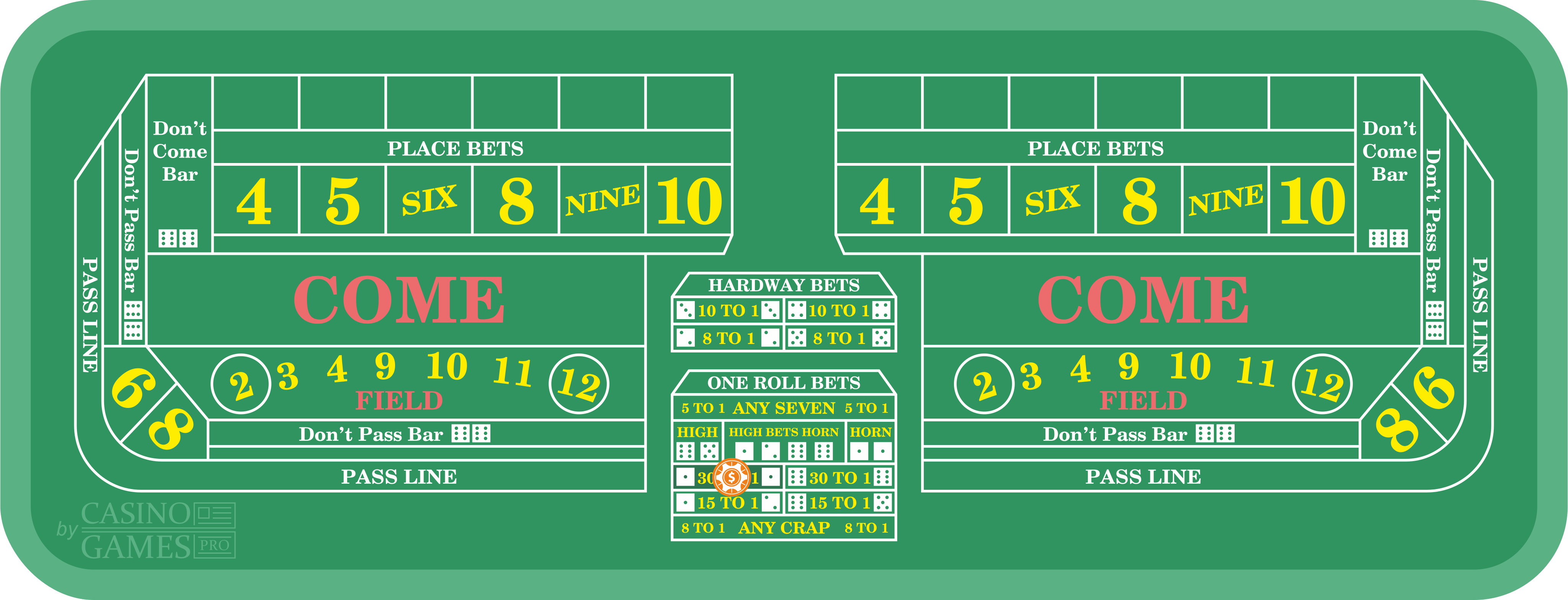
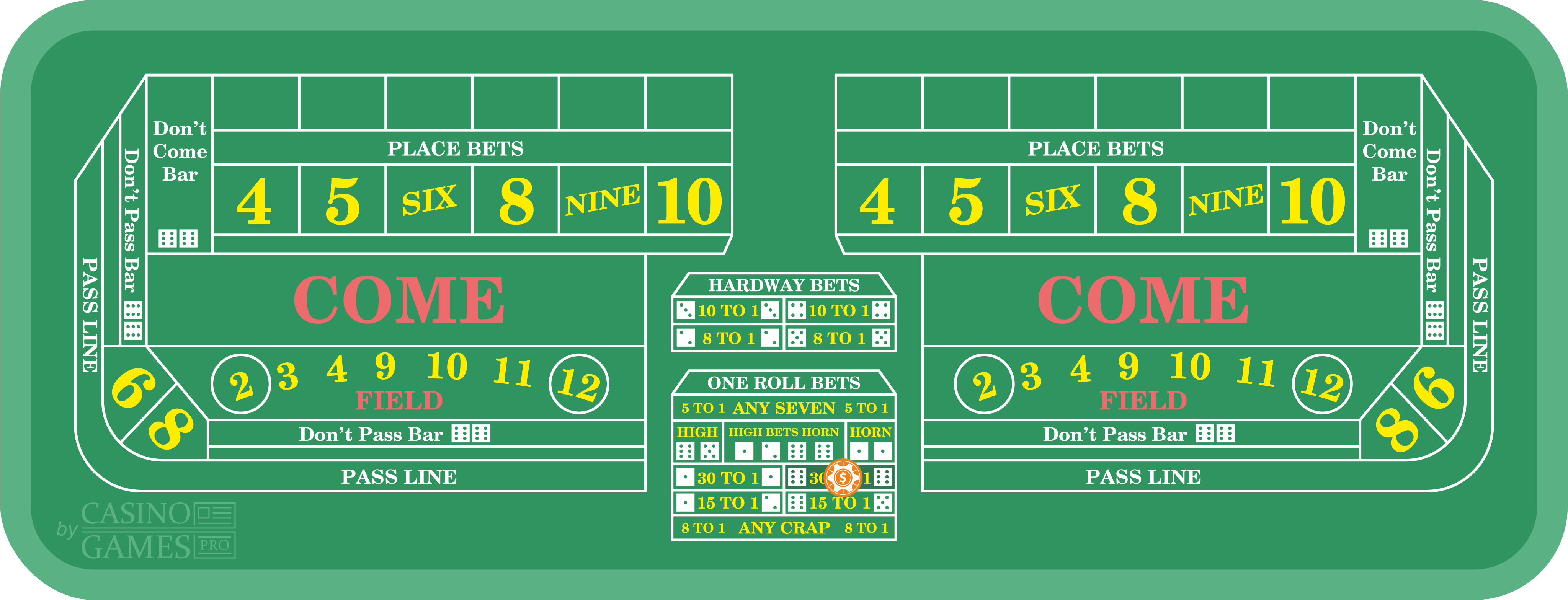
Aces Bets
The Aces bet wins if 2 is rolled on the next toss of the dice. It offers a higher payout of 30 to 1, with a house edge of 16.67%.
Boxcar Bets
This is a one-roll wager that wins if 12 is rolled on the next dice toss. The payout and house edge for Boxcar bets coincide with those of the Aces bet.
Hardway Bets
This is a subcategory of proposition bets that covers the individual numbers 4, 6, 8, and 10. Hard 6 and Hard 8 pay 9 to 1 when the next roll results in a combination of 3-3 or 4-4. The house edge for Hard 6/Hard 8 stands at 9.09%. Hard 4 and Hard 10 win when the dice show 2-2 or 5-5, respectively, and offer a payout of 7 to 1, with a house edge of 11.11%.
The House Edge in Craps
 The house edge is a key concept players need to understand before joining any casino table, whether they are playing blackjack, roulette, or craps. Understanding the house edge is especially important in craps because it enables players to make informed decisions about which bets to place and which to avoid.
The term house edge refers to the built-in advantage gambling establishments have over their players. It is typically expressed as a percentage that reflects the ratio of the expected loss to the player’s original wager. This is how casinos turn a profit over time. Most bets in craps are not paid according to the true odds of rolling a given outcome, giving the house a built-in advantage regardless of short-term results.
The house edge in craps varies widely depending on the type of bet players make. For instance, the edge in favor of the casino on Pass Line bets stands at 1.41%. This means that the house collects an average of $1.41 for every $100 wagered on the Pass Line. By contrast, bets such as Aces and Big Red have a house edge of 16.67%, meaning that $16.67 of every $100 wagered goes to the house. It goes without saying that players should steer clear of such wagers.
There is a way to reduce the house edge on Pass/Come bets and Don’t Pass/Don’t Come bets even further by taking or laying free odds on such wagers. If you do this, the edge on your bets drops almost to zero because the house pays free-odds bets at the true odds.
| Craps Bets Payout and House Edge | |||
|---|---|---|---|
| Type of Bet | Payout | True Odds | House Edge |
| Pass Line/Come Bet | 1 to 1 | 251 to 244 | 1.41% |
| Don’t Pass/Don’t Come Bet | 1 to 1 | 976 to 949 | 1.36% |
| Free Odds Bet on the Pass Line | 2 to 1 (4 or 10), 3 to 2 (5 or 9), 6 to 5 (6 or 8) | Same as Payout | 0.00% |
| Free Odds on Don’t Pass Bets | 1 to 2 (4 or 10), 2 to 3 (5 or 9), 5 to 6 (6 or 8) | Same as Payout | 0.00% |
| Free Odds on Come Bets | 2 to 1 (4 or 10), 3 to 2 (5 or 9), 6 to 5 (6 or 8) | Same as Payout | 0.00% |
| Free Odds on Don’t Come Bets | 1 to 2 (4 or 10), 2 to 3 (5 or 9), 5 to 6 (6 or 8) | Same as Payout | 0.00% |
| Place Bets on 4 and 10 | 9 to 5 | 2 to 1 | 6.67% |
| Place Bets on 5 and 9 | 7 to 5 | 3 to 2 | 4.00% |
| Place Bets on 6 and 8 | 7 to 6 | 6 to 5 | 1.52% |
| Place Bets to Lose 4 and 10 | 5 to 11 | 3.03% | |
| Place Bets to Lose 5 and 9 | 5 to 8 | 2.50% | |
| Place Bets to Lose 6 and 8 | 4 to 5 | 1.82% | |
| Field Bets on 3, 4, 9, 10, and 11 | 1 to 1 | 5.56% | |
| Field Bets on 2 and 12 | 2 to 1 | 5.56% | |
| Hardway Bets on 6 or 8 | 9 to 1 | 10 to 1 | 9.09% |
| Hardway Bets on 4 or 10 | 7 to 1 | 8 to 1 | 11.11% |
| Big 6 or 8 | 1 to 1 | 9.09% | |
| Lay Bets on 4 and 10 (5% Commission) | 1 to 2 | 2.44% | |
| Lay Bets on 5 and 9 (5% Commission) | 2 to 3 | 3.23% | |
| Lay Bets on 6 and 8 (5% Commission) | 5 to 6 | 4.00% | |
| Buy Bets on 4 and 10 (5% Commission) | 2 to 1 | 4.76% | |
| Buy Bets on 5 and 9 (5% Commission) | 3 to 1 | 4.76% | |
| Buy Bets on 6 and 8 (5% Commission) | 6 to 5 | 4.76% | |
| Big Red/Seven Bets | 4 to 1 | 5 to 1 | 16.67% |
| Any Craps Bets | 7 to 1 | 8 to 1 | 11.11% |
| Proposition Bets on 2 and 12 | 30 to 1 | 35 to 1 | 13.89% |
| Proposition Bets on 3 and 11 | 15 to 1 | 17 to 1 | 11.11% |
Craps Strategies
 Smart craps players can maximize their profits and minimize their losses through proper money management and strategic play. Money management involves several important considerations. The first thing novices need to do is determine the size of their bankroll, or the amount of money they have allocated for betting on craps over a specific period, such as a month. The overall bankroll is then divided into smaller amounts based on the number of betting sessions planned for the month.
Another aspect of money management is determining the size of your base betting unit, or the amount you bet per dice roll. As craps is a very dynamic game, a betting unit of about 1% of the overall session bankroll is generally recommended. Craps novices should also set a win goal and a loss limit. Knowing when to quit, regardless of whether you are winning or losing, is essential.
Following the principle of Guarantee and Excess is another option. Once players have achieved their win goal, they split their net profits in half. One half is set aside as their “guarantee”. The other half, or the “excess”, can be used for additional bets. This approach helps players protect part of their profits.
Following a betting system does not guarantee that you can beat this game. However, it may help with money management. Players are advised to avoid negative-progression systems in which bets are increased aggressively after each loss and reduced following a win, as this may exhaust their bankrolls quickly. If you choose to follow a system, consider one based on positive betting progression. In other words, bets are increased after a win and reduced after losing rolls.
Additionally, it is crucial to understand the rules, the different bet types, their payouts, and their respective house edges. Players should generally avoid placing bets with a house edge close to or above 3%. Combining Pass Line/Come bets with Don’t Pass/Don’t Come/Field bets is also presented as a smart move. Last but not least, do not succumb to the gambler’s fallacy. Remember, the outcome of each dice toss is neither influenced by previous rolls nor has any effect on subsequent rolls.