
Blackjack Rules
 | Updated:
 Blackjack Rules and Their Role in Strategic Play
 Many casino enthusiasts enjoy playing blackjack because the card game involves both skill and luck, leaving room for strategic decisions. Before learning the optimal playing strategy, you need to become familiar with blackjack’s rules, which are fairly straightforward. Although you may encounter different variations of the card game, the basic gameplay remains the same. This means that you will be able to play any blackjack variant once you master the basic rules of the game.
While blackjack rules are easy to understand, there are some nuances you should keep in mind. In this article, you will find a detailed explanation of the game’s rules, the decks used in blackjack, and other specific features of the card game. We will also cover the available player moves, helping you understand strategy charts and choose the optimal move for each hand.

-
 Sign Up Bonus
Up to $500
400% Bonus!9.7 -
Sign Up Bonus
Up to $3500
350% Bonus!9.4 -
Sign Up Bonus
Up to $3000
300% Bonus!9.3





Basic Rules of Blackjack
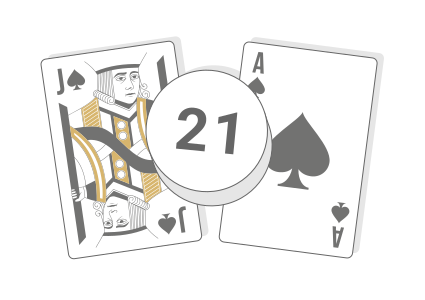 The main rules of blackjack are straightforward, making the game easy to learn. Although several players can participate at once, each competes only against the dealer. Each participant must form a hand whose total value is as close to 21 as possible without surpassing this number. For this reason, blackjack is also commonly known as twenty-one.
As in many other card games, blackjack assigns a specific value to each card. The suits are irrelevant because they do not contribute to the hand’s total value. Number cards count at their face value, while the face cards, King, Queen, and Jack, are worth ten points each. The card values in blackjack are as follows:
- All face cards, including Jack, Queen, and King, count as 10.
- Aces can count as either 1 or 11, depending on the hand.
- Number cards are worth their face value.
The Ace is one of the most valuable cards in the deck because it can count as either 1 or 11. This flexibility helps players form stronger hands without exceeding 21. A hand consisting of an Ace and a ten-value card is considered a natural blackjack. A hand containing an Ace that can count as 11 without pushing the total above twenty-one is called a soft hand.
Step-by-Step Guide: How to Play Blackjack
The Objective of Blackjack: Your goal as a blackjack player is to beat the dealer. It is not simply about reaching 21. You must finish with a stronger hand than the dealer without exceeding 21.
-
Understanding the Winning Criteria:
- Finish with a hand total higher than the dealer’s without surpassing 21.
- Remain in the game when the dealer busts by exceeding 21.
- Achieve a natural blackjack with your first two cards when the dealer does not have one.
-
When the Player Loses:
- If your hand total surpasses 21, you bust and lose the round.
- If your final hand total is lower than the dealer’s, you lose the round.
Decks of Cards in Blackjack
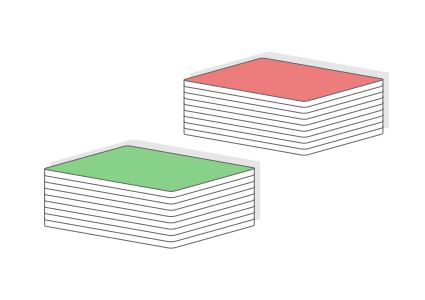 In blackjack, the number of decks used depends on the game variation and the casino. A game may use between one and eight standard decks, with many common blackjack variations using six to eight decks of 52 cards. The device from which the cards are dealt is called a shoe, a term also used in other table games. A shoe is a box designed to hold multiple decks of cards. The dealer places a blank plastic card, known as the cut card, toward the bottom of the shoe. Once the cut card is reached, the cards are reshuffled.
In general, the house edge is higher when the game uses more decks, provided the other rules remain the same. Blackjack was commonly played with a single deck in the past, but many modern games use multiple decks. Casinos began using more decks to make card counting more difficult and prevent card counters from gaining an advantage.
Understanding Hand Totals in Blackjack
Understanding Hand Values: To play blackjack successfully, you must know the value of your hand. The following breakdown explains how each card contributes to the total.
- The Basics of the Deck:
- Card suits are irrelevant because blackjack hands are valued by adding the cards’ numerical values.
- Cards 2 through 10 count at their face value.
-
Face Cards:
Jacks (J), Queens (Q), and Kings (K) all count as 10. -
The Ace:
An Ace can count as either 1 or 11, depending on which value produces the better valid hand total. This flexibility applies to both players and the dealer.
Players’ Moves
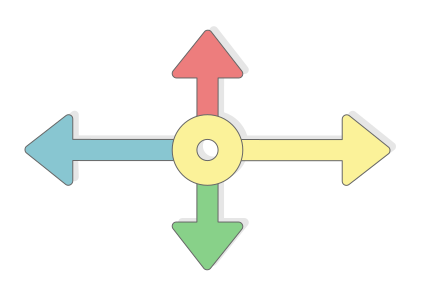 Once players have received their first two cards, they can choose whether to hit, stand, double down, or split, subject to the rules of the game. To indicate these moves, players must use an established hand signal or clearly state their choice to the dealer. Casino procedures may vary, so it is best to become familiar with the required signals before playing.
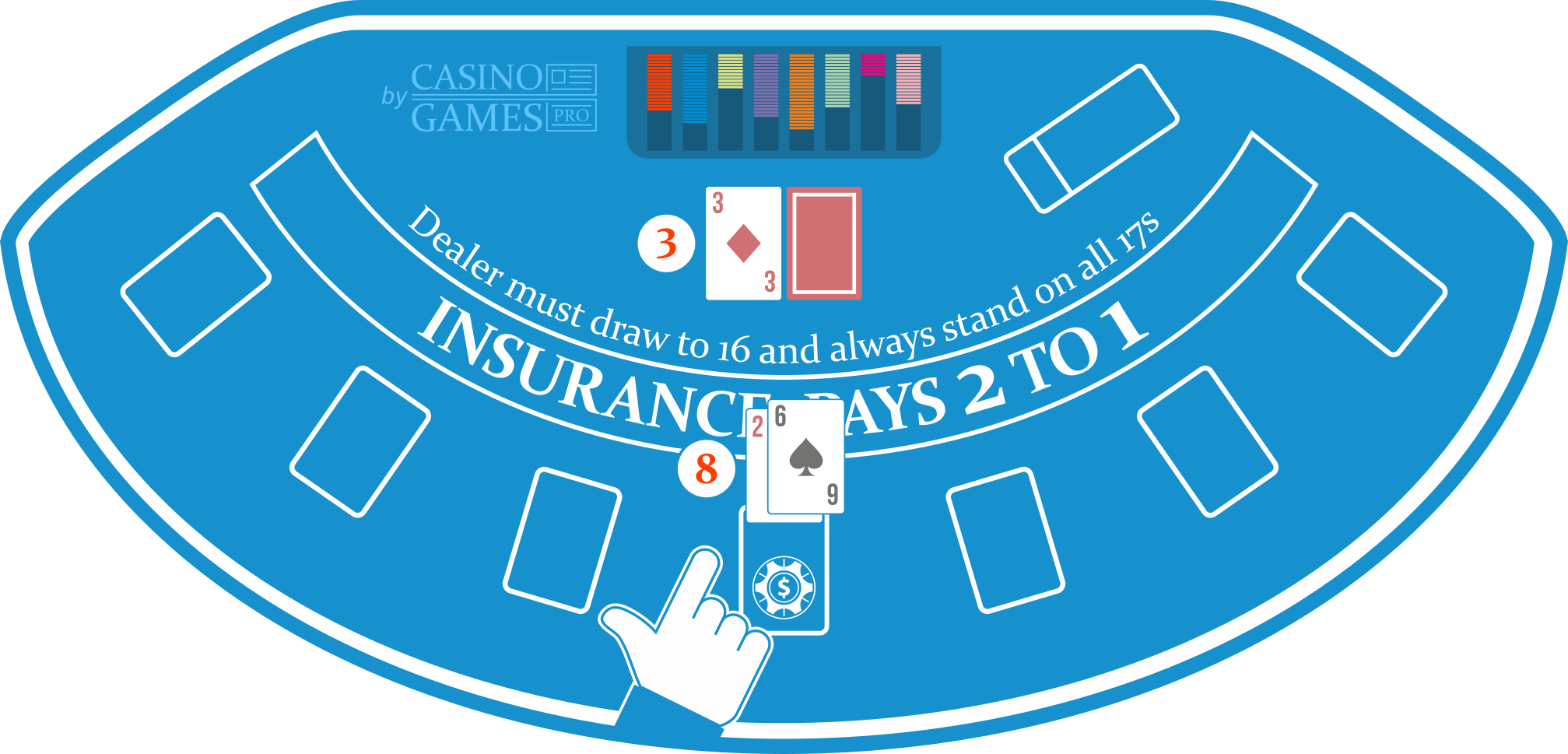
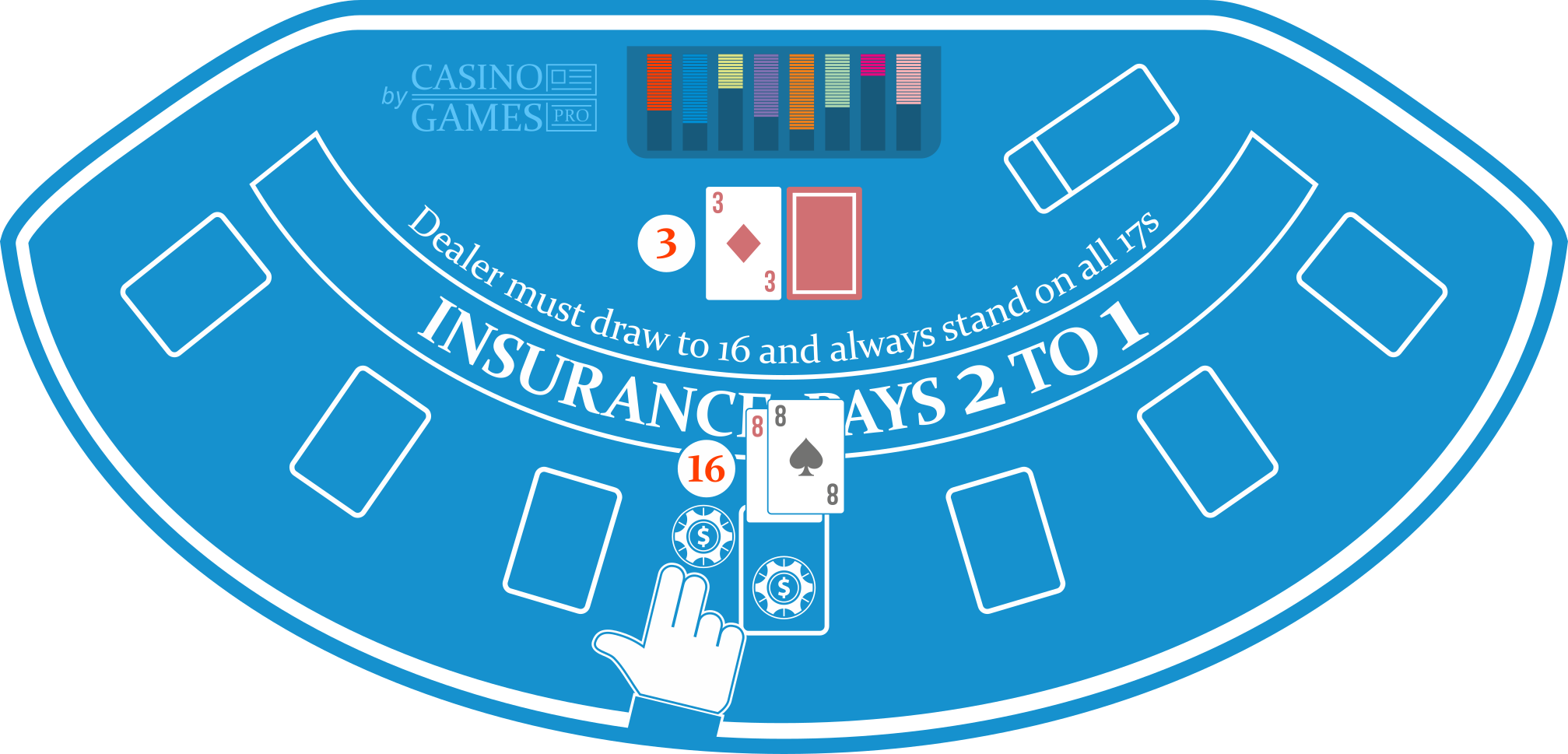
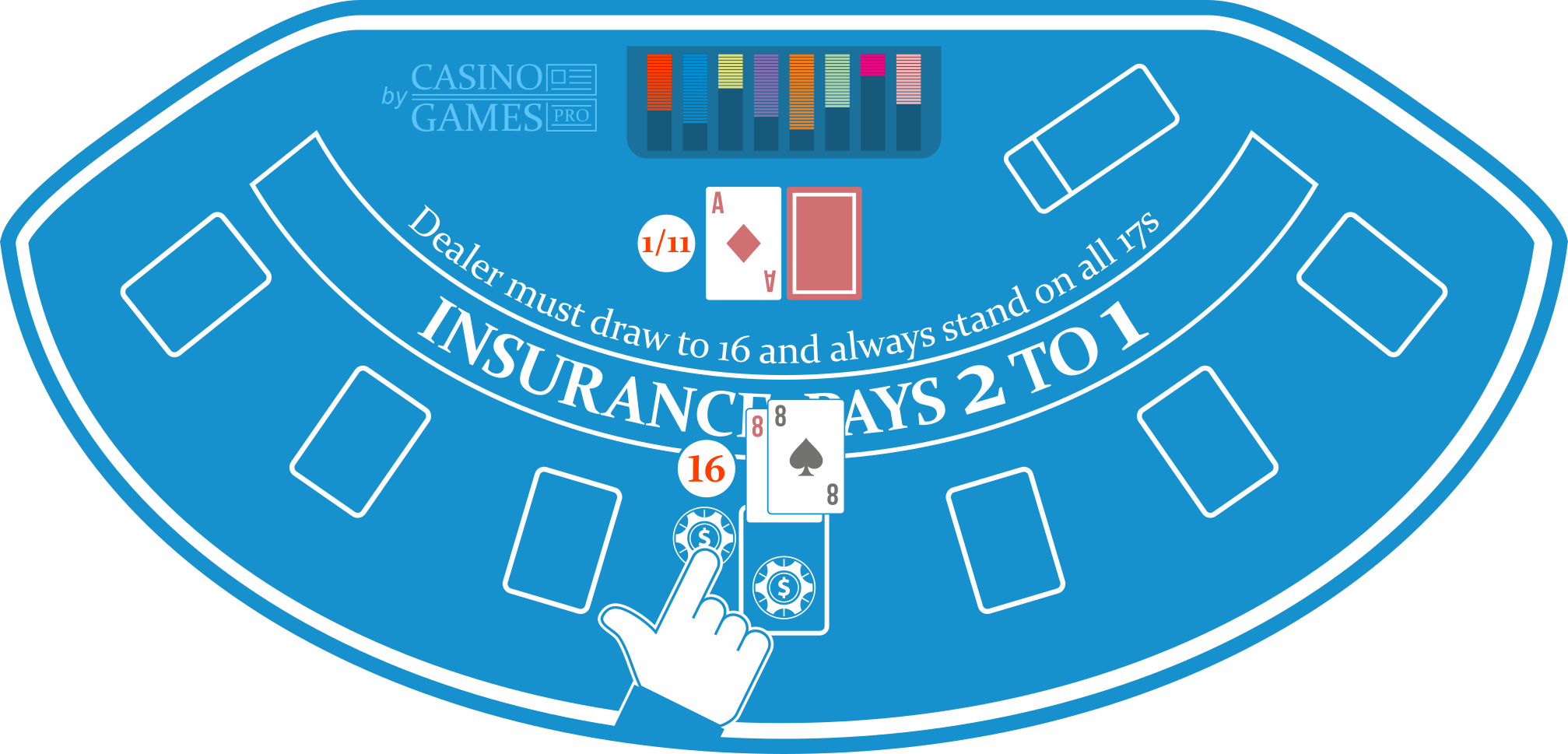
Players choose to hit when they want another card to improve their hand total. In face-up games, they usually indicate this move by pointing at their cards or tapping the table with their fingers.
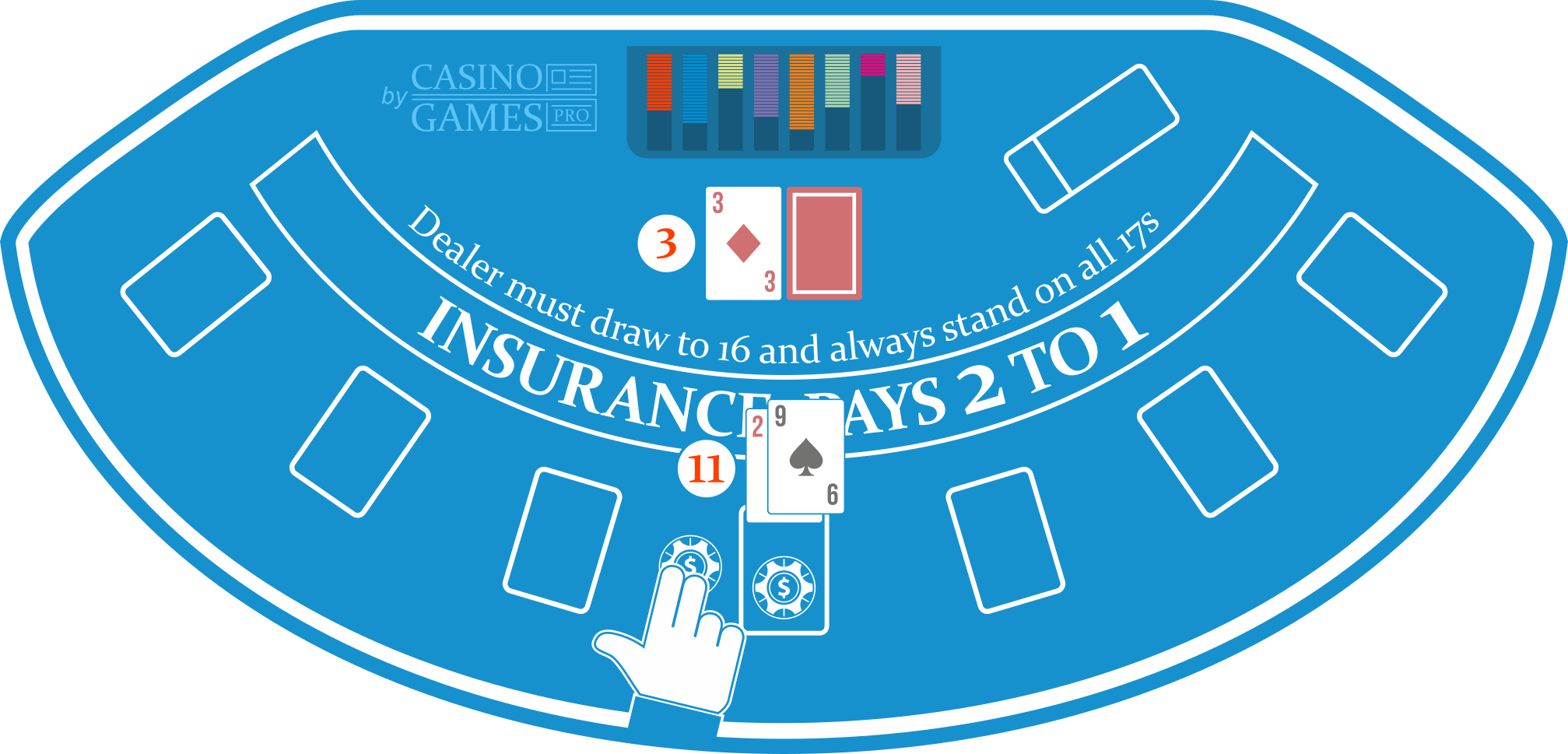
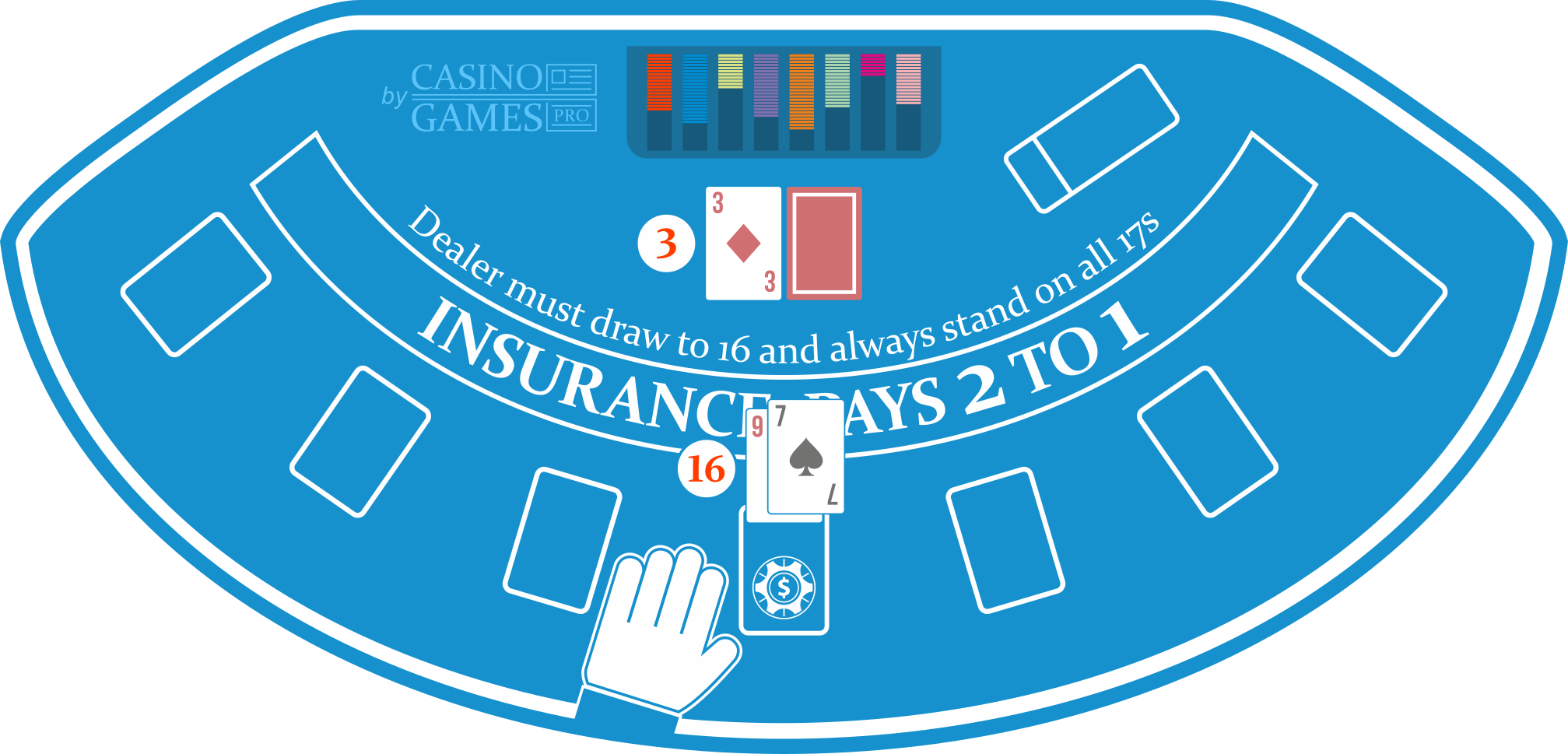
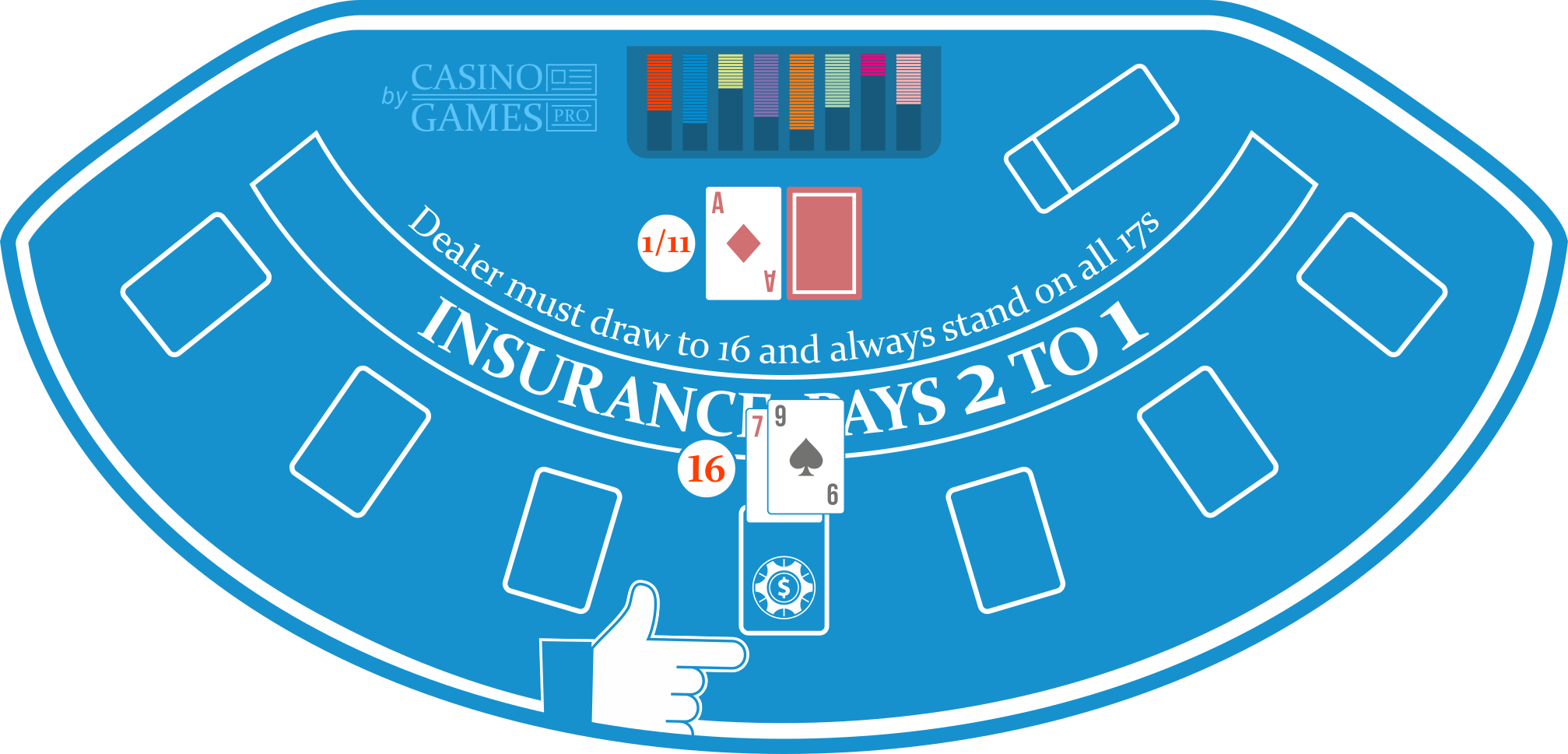
The opposite of hitting is standing, which means that the player does not receive any additional cards. To indicate this move, players usually wave their hand horizontally above the cards. Another available move is doubling down, which allows players to double their original wager and receive exactly one additional card. To signal this move, players place an extra bet equal to their initial wager beside it and point with one finger.
Players may receive a pair consisting of two cards of the same rank. In such cases, they may be able to split the pair and form two independent hands. To make this move, players must place an additional bet equal to the initial wager and spread two fingers to form the letter V. If they receive another pair after splitting, they may be able to resplit it. However, some casinos restrict the number of permitted splits.
Besides these main options, players may have access to two additional moves: surrender and insurance. Their availability depends on the casino and the blackjack variation. When surrender is available, players can forfeit their current hand and recover half of their original bet. The casino keeps the other half. As there is no universal hand signal for surrender, players should clearly state their decision to the dealer.
Although beginners may be tempted to insure their hand, insurance is generally considered an unfavorable bet. If the dealer has blackjack, you lose your original wager, win the insurance bet, and break even. On the other hand, if the dealer does not have blackjack, you lose the insurance bet and continue playing your original hand. You may still lose the original wager if you bust or if the dealer finishes with a stronger hand.




The Gameplay
Once all bets are placed, the dealer usually gives one face-up card to each player. On some occasions, the players’ first cards are dealt face down. This is common in certain single- and double-deck blackjack variants. The cards are dealt clockwise, meaning that the player seated to the dealer’s left receives the first card. After each player has one card, the dealer takes a card. Every player and the dealer then receive a second card in the same order.
In a hole-card game, one of the dealer’s cards is face up and the other is face down. The exposed card is known as the dealer’s upcard, while the face-down card is called the hole card. Some blackjack variations do not use a hole card. If you play blackjack at a land-based casino, you should not touch cards that have been dealt face up on the table.
During the next stage, players must choose one of the available moves described above. Their decision should be based on the total value of their hand and the dealer’s upcard. To choose the best possible move, players can follow basic strategy consistently throughout the game.
While players can choose from several moves, dealers must follow the fixed rules established by the casino. They cannot split, surrender, or double down. They must either stand on all 17s or hit on soft 17, depending on the table rules.
Key Takeaway: Quickly calculating your hand total is an essential blackjack skill. Cards 2 through 10 count at their face value, face cards count as 10, and an Ace can count as either 1 or 11. Understanding these values is the foundation of blackjack gameplay.
The Process of Playing a Hand in Blackjack
- Buying In:
First, exchange your cash for chips. Place the money on the table rather than handing it directly to the dealer. The dealer spreads out the banknotes for the cameras, a supervisor confirms the amount when required, and you receive chips of the corresponding value. - Placing Your Bet:
Place your chips in the appropriate betting circle on the layout. The table sign displays the minimum and maximum permitted bets. - The Deal:
Once all bets are placed, the dealer deals the cards clockwise. In a typical face-up, hole-card game, players receive two face-up cards, while the dealer receives one face-up card and one face-down card. - Making Your Move:
Calculate the total of your starting hand. If you have an Ace and a ten-value card, you have a natural blackjack, which wins unless the dealer also has blackjack. If you do not have blackjack, choose your next move:- Stand: If you are satisfied with your hand, signal that you want to stand.
- Hit: If you want another card, signal for a hit.
- Double Down: Double your wager to receive exactly one additional card.
- Split: If you have an eligible pair, split the cards into two hands and place another bet.
- Surrender: If surrender is available, forfeit the hand and recover half of your original bet.
- Dealer’s Turn:
Once all players have acted, the dealer reveals the hidden card. Dealers must draw on totals of 16 or lower and follow the table’s rule for 17. Depending on the game, the dealer either stands on all 17s or hits soft 17. - Payouts or Busts:
If the dealer busts, players who remain in the game win. If the dealer stands, higher hand totals win, equal totals result in a push, and lower totals lose.
Different Blackjack Games
 As mentioned above, the dealing procedure and position of the cards can differ between casinos and game variations. Games in which the dealer receives a face-down card are called hole-card games. In these games, the dealer may check for blackjack before the players make additional wagers. This can protect players from committing extra bets when the dealer already has blackjack.
It is also possible to play no-hole-card blackjack variations in which the dealer does not check for blackjack before the players act. Players can also try handheld games, in which their first two cards are dealt face down. In contrast, players’ first two cards are usually dealt face up in shoe games.
Additionally, the number of decks varies between blackjack games. All other rules being equal, games with fewer decks generally favor players. However, casinos may adjust other rules to compensate for the lower number of decks and maintain their advantage.
Common Rule Changes
 An important rule is whether the dealer stands on all 17s or hits soft 17. If the dealer must stand on all 17s, they do not draw another card and have no opportunity to improve the hand. Therefore, blackjack variations in which the dealer must stand on all 17s are more advantageous for players. If the dealer must hit soft 17, they receive another card when their hand includes an Ace counted as 11 and totals 17. This rule favors the house.
Several other rule variations affect the moves available to players. Most casinos allow players to double down on their first two cards. A smaller number of casinos allow players to double down after drawing additional cards.
Splitting rules can also vary. When players split Aces, many games deal only one additional card to each newly formed hand. Some casinos permit additional draws, which is a player-friendly rule. Although most casinos allow players to split a pair of cards with the same value, some allow splitting only when the cards are of the same rank. For example, a King and a Queen may not be eligible for a split even though both cards count as 10.
Rules may also differ regarding resplitting. When resplitting is allowed, players can split an eligible pair formed within a previously split hand. Some casinos limit the number of times a player may resplit.
Surrender is not available in every blackjack variation. There are two types of surrender: early and late surrender. Early surrender allows players to give up their hand before the dealer checks for blackjack. Late surrender is more common and allows players to forfeit their hand only after the dealer has checked for blackjack. When surrendering, the player recovers half of the original wager, while the house keeps the other half.
In most cases, blackjack pays 3:2, but players should remember that the payout can differ between casinos and game variations. Some games pay 6:5 for a natural blackjack, increasing the house edge and reducing the player’s winnings. For example, a $10 bet returns $15 in winnings under a 3:2 payout but only $12 under a 6:5 payout. Players are therefore advised to avoid blackjack variations that pay 6:5.
Conclusion
 Blackjack is a card game with basic rules that are fairly easy to learn. To play properly, beginners should understand the assigned card values, the available moves, and the sequence of play. Knowing the rules alone does not guarantee a win because blackjack also requires skill and a sound strategy. However, every expert was once a beginner, and learning the fundamentals is an important first step.
FAQ: Blackjack Rules and Strategic Play
The main goal is to form a hand as close to 21 as possible without going over, competing solely against the dealer. Achieving a “natural blackjack” with an Ace and a Ten and obtaining a “soft hand” with an Ace valued as 11 or 1 are the ideal scenarios for the player.
An Ace can be either 1 or 11, providing flexibility in forming winning hands. Its dual value allows players to adjust their strategy dynamically, making it the most coveted card in the deck.
Games with more decks generally have higher house edges. Casinos use multiple decks to counteract card counting, which makes single-deck games more favorable to players but less common.
Players can hit (take another card), stand (decline drawing additional cards), double down (increase the bet for one additional card), split pairs (form two new hands), or surrender (forfeit the hand for half the bet). Each move is signaled to the dealer with specific gestures, preferably accompanied by verbal commands.
Dealers must follow the casino’s fixed rules, typically standing on all 17s or hitting soft 17 (Ace and six). They cannot split, surrender, or double down, which strategically limits their options compared to players.