
The Any Seven Bet
 | Updated:
And the Title of Worst Bet in Craps Goes to… Any Seven
Any Seven is one of the many betting options available to craps players, and it is fairly straightforward. It is a one-roll wager resolved after a single toss of the dice, making it suitable for gamblers looking for fast-paced action. As the name suggests, the shooter must roll a total of 7 for this bet to pay out. Seven has the highest number of possible combinations when two dice are in play.
This is where the advantages of the Any Seven wager end. Experienced players generally avoid this bet, and there is a very good reason for doing so. Despite its relatively high number of possible winning combinations, Any Seven offers some of the poorest odds not only in craps but also among table game wagers in general.
The house edge for this wager exceeds 16%, which is another compelling reason to avoid it. This article explains how Any Seven works, along with some betting systems that gamblers commonly use with this wager. However, no strategy can overcome the extremely high house edge of the Any Seven bet.

-
 Sign Up Bonus
Up to $100
100% Bonus!9.7 -
Sign Up Bonus
Up to $30000
100% Bonus!9.4 -
Sign Up Bonus
Up to $1000
200% Bonus!9.3







Any Seven Bet Explained
 The Any Seven bet is easy to understand. It is a wager on whether the next roll of the dice will produce a total of seven. Any of the six possible dice combinations that add up to seven will win this wager. This may appear appealing because seven is the most common total rolled with two dice.
Chips for this wager are posted in the corresponding box at the center of the layout, though the bet itself is placed by the stickman rather than the player. It is also commonly announced as “Big Red,” a nickname it has acquired over the years. Saying the word “seven” at a craps table may ruffle feathers because it is traditionally considered a breach of etiquette, so this nickname is often used instead.
This is one of the simplest bets in craps and is accessible to inexperienced players. However, there is more to the wager than meets the eye. The next section covers the casino’s statistical advantage and the difference between the true odds and casino payout odds for the Any Seven bet.
Odds and House Edge
 In terms of odds, Any Seven is hardly an attractive wager compared with other bets available at the craps table. The main reason is the discrepancy between the true odds and the payout awarded by the casino. For starters, there are 36 possible dice combinations in craps, while only six produce a total of 7: 1-6, 6-1, 2-5, 5-2, 3-4, and 4-3. The probability of winning is therefore 1 in 6, while the odds against winning are 5 to 1. These are the true mathematical odds, which differ from the casino’s payout odds.
The payout for a winning Any Seven bet is 4 to 1, which is lower than the true odds of 5 to 1. This discrepancy gives the house a long-term edge over players and is a source of revenue for both online and land-based casinos. Although the house may lose money in the short term, the statistical advantage favors it over a sufficiently large number of wagers. This advantage enables casinos to pay large prizes to lucky gamblers while remaining profitable in the long run. It is also the basis for sayings such as “The house always wins” and “Quit while you’re ahead.”


This statistical advantage is represented by the house edge, and a lower percentage is generally better for the player. The significant gap between the true odds and payout odds for Any Seven gives the casino a substantial advantage. House edges vary by game and wager. Under favorable conditions, blackjack can have a house edge of around 0.5%, making it close to a break-even game. American roulette has a standard house advantage of 5.26% on most wagers. The Any Seven bet is considerably worse, carrying a house advantage of 16.67%.
This number is calculated using the following formula:
(Odds Against Winning – Casino Odds) * Probability of Winning * 100 = House Edge %
This number represents the expected percentage of money that players will lose on the Any Seven bet over the long term. For every $100 wagered, the expected long-term loss is $16.67. The house edge does not predict the result of an individual roll or short session, but this wager still offers some of the worst odds at the craps table. Several other craps bets share the same house edge.
Strategies with the Any Seven Bet
 Many gamblers use betting systems when playing casino games, and some of these systems can also be applied to the Any Seven bet. Many were designed for even-money wagers, such as those on the Pass Line, so they may require adjustments for a bet that pays 4 to 1. Keep in mind that these systems do not reduce the house edge or improve the probability of winning. The only reliable way to avoid losing money on this bet is not to place it.
The Martingale System
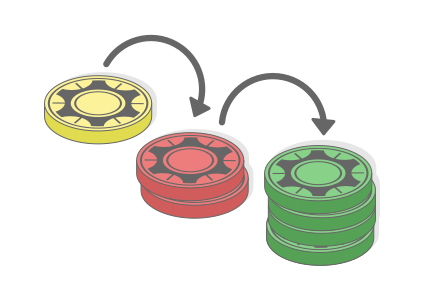 The Martingale is one of the world’s best-known betting systems and can be used across a range of casino games. It is most commonly associated with even-money wagers, although some players adapt it when betting on Any Seven in craps. The standard Martingale involves doubling the size of an even-money bet after each loss, with the aim of recovering previous losses after a win. Since Any Seven pays 4 to 1 rather than even money, applying the standard progression unchanged does not follow the system’s conventional structure.
The Martingale can cause stakes and losses to rise rapidly during a prolonged losing streak. You may reach the table limit or run out of money before you can continue increasing your bets. These are realistic possibilities, especially when a bet has only a 6/36 chance of winning. If you decide to use a Martingale-style progression, practice self-control and proper money management.
d’Alembert
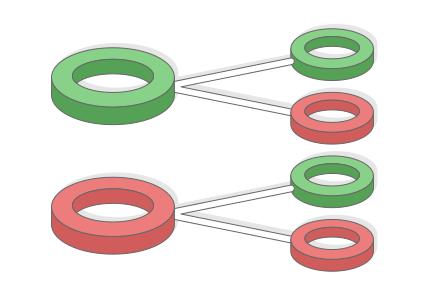 The d’Alembert is another betting system that uses a negative progression, but it is flatter than the Martingale and causes stakes to increase more slowly. The basic principle is to start with a bet of one unit, the value of which you determine yourself. After each losing bet, you increase the size of your next wager by one unit. After a win, you reduce your stake, usually by one unit.
This betting system is more conservative than the Martingale and may help recover some losses during a favorable run. Because the progression is flatter, the likelihood of reaching the table limit before a win is lower than with the Martingale. However, the d’Alembert does not change the probability of winning or reduce the house edge. You should still be mindful of table limits and end your session before your losses become unaffordable.
Oscar’s Grind
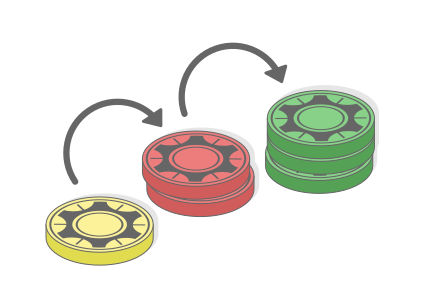 Oscar’s Grind is a betting system primarily associated with roulette, although gamblers also apply it to other casino games. It can be adapted to non-even-money wagers such as the Any Seven bet in craps.
The system uses cycles in which you begin by betting a single unit and continue until you win. After a win, you increase the stake by one unit and continue betting until you achieve a profit of one unit for the cycle. Once you reach this target, you end the cycle and start again.
The main drawback of Oscar’s Grind is that you may continue placing the same wager through an extended losing streak while targeting only a modest profit. Short-term profits are possible, but the system does not change the underlying house edge. Applying it to craps bets with lower house edges reduces your exposure to the casino’s mathematical advantage, but disciplined bankroll management remains essential.
Is the Any Seven Bet Worth It?
 The question is whether the Any Seven bet is worth placing. Based on the calculations above, it is easy to conclude that this wager offers poor value. The house edge is extremely high by table game standards. Even a 7.89% house edge in double-zero roulette does not come close to the 16.67% advantage attached to Any Seven.
The payout does not adequately reflect the risk involved in placing this bet. A house edge of 16.67% represents a substantial disadvantage, so players should seriously consider placing other wagers. Betting on Any Seven once or twice is unlikely to have a major effect on your bankroll, but repeated wagers increase your exposure to its high house edge. Craps offers many alternatives with better payout rates and lower house advantages. Taking and laying free odds are two good examples because these wagers have no house edge. Pass Line wagers also offer better odds, with a house edge below 1.5%.
Conclusion
 Having considered all the points above, the conclusion regarding the Any Seven wager is clear. Placing this bet is generally a poor choice, given its high house edge of 16.67% and the level of risk involved. Although Any Seven offers a higher payout than even-money wagers, its mathematical disadvantage can lead to greater long-term losses. If you choose to bet on Any Seven for entertainment, consider doing so only occasionally and with small amounts. Short-term wins remain possible, but repeated play increases your exposure to the house edge.
Our recommendation is to stick to other types of bets that offer better odds and lower house edges. Be sure to check the other articles in the craps guide featured on our website.