
How to Play Craps
 | Updated:
 The Ins and Outs of Playing Craps
 Many inexperienced players assume that craps is easy to play simply because the outcomes of the dice rolls are determined by chance. However, as soon as they join a craps table, they often find themselves overwhelmed by the number of betting options and the game’s fast pace.
While craps is indeed a game of chance and players cannot influence the outcome of the tosses, understanding the rules, the table layout, and the types of bets is essential for making informed betting decisions. If you are new to craps, we suggest reading the following article to learn more about the game and the betting options it offers.

-
 Sign Up Bonus
Up to $150
100% Bonus!9.7 -
Sign Up Bonus
Up to $100
100% Bonus!9.4 -
Sign Up Bonus
Up to $150
100% Bonus!9.3






The Table Layout
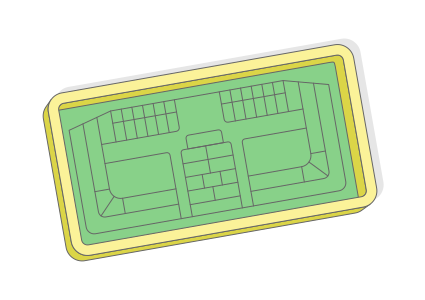 The game is played on an oblong, baize-covered table with high sides. Most craps tables are similar and have a padded rail for players’ comfort. Wooden troughs run along the entire length of the padded rail, where players can place their chips.
Typically, a craps table can accommodate up to sixteen bettors, with eight players positioned on each of the two sides. The layout consists of three sections. The two identical side sections, which are managed by the dealers, are located at each end of the table. Each side section can be divided into two areas: the self-service area and the dealer’s area. The self-service area allows players to place Pass Line and Don’t Pass bets, Come and Don’t Come bets, Field bets, and Big 6 and Big 8 bets.
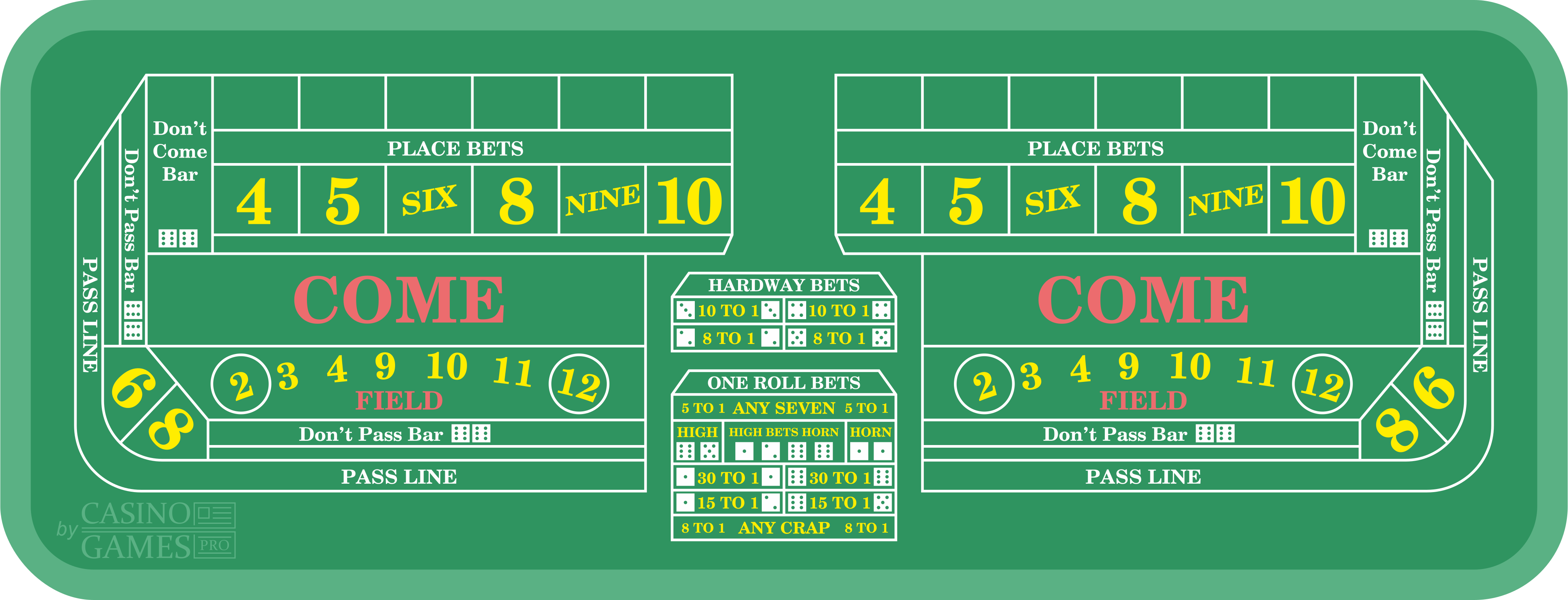
The dealer’s area has six square “point” boxes containing the numbers 4, 5, 6, 8, 9, and 10. The numbers 6 and 9 are written as “six” and “nine” to prevent confusion. After a point is established, the dealer places a puck on the corresponding number to indicate the point.
The craps table has “off” and “on” stages. When the table is “off,” the shooter has yet to make the come-out roll and establish a point. Pass Line and Don’t Pass bets can be placed before the come-out roll. Once the shooter rolls a point, the table is “on.”
The center section of the layout is where the chips for the so-called Proposition and Hardway bets are placed. Whether you are playing in a brick-and-mortar casino or betting online from the comfort of your home, you will find that online and land-based craps tables have practically identical layouts.
To choose a suitable craps table, remember to check the betting limits and odds. The minimum and maximum amounts players can wager vary greatly from one craps table to another, but the available variety should help players find a game that suits their requirements.
Risk-averse craps players should know that low-limit tables are not uncommon, and some variants offer minimum bets of $5, $3, or even less. The upper betting limits also vary greatly. While most online variants have relatively low maximum bets, some brick-and-mortar casinos allow players to stake up to $1,000.
- With proposition bets, the minimum wager is determined by the smallest chip denomination available at the table. The maximum is based on the casino’s highest permitted payout. Thus, if we assume that players have joined a table where bets of up to $1,000 are accepted, the upper limit on proposition bets would be $3,000.
- Another point to note is that the maximum odds bet is determined by a multiple of the flat bet. It can reach $4,000 for Don’t Come and Don’t Pass bets, although it might also be limited to $2,000.
However, the same calculation does not apply to Don’t Come and Don’t Pass bets because players lay odds rather than take them when placing these bets.
At a brick-and-mortar casino, players can usually choose from several betting ranges, making it easier to find a table that suits their bankroll.
The Table Staff
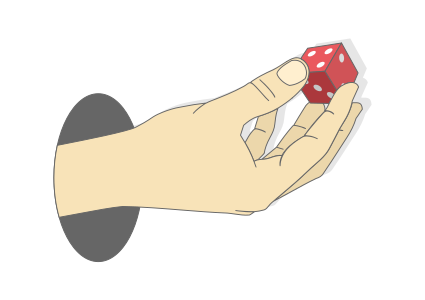 Each craps table is typically staffed by four people. The stickman handles the dice and controls the pace of the game. This individual is not allowed to touch the dice with bare hands. Instead, the stickman moves them with a flexible stick that has a curved end, hence the name. The stickman also announces the outcome of each dice roll. Another important duty is placing the chips for Proposition and Hardway bets on the layout.
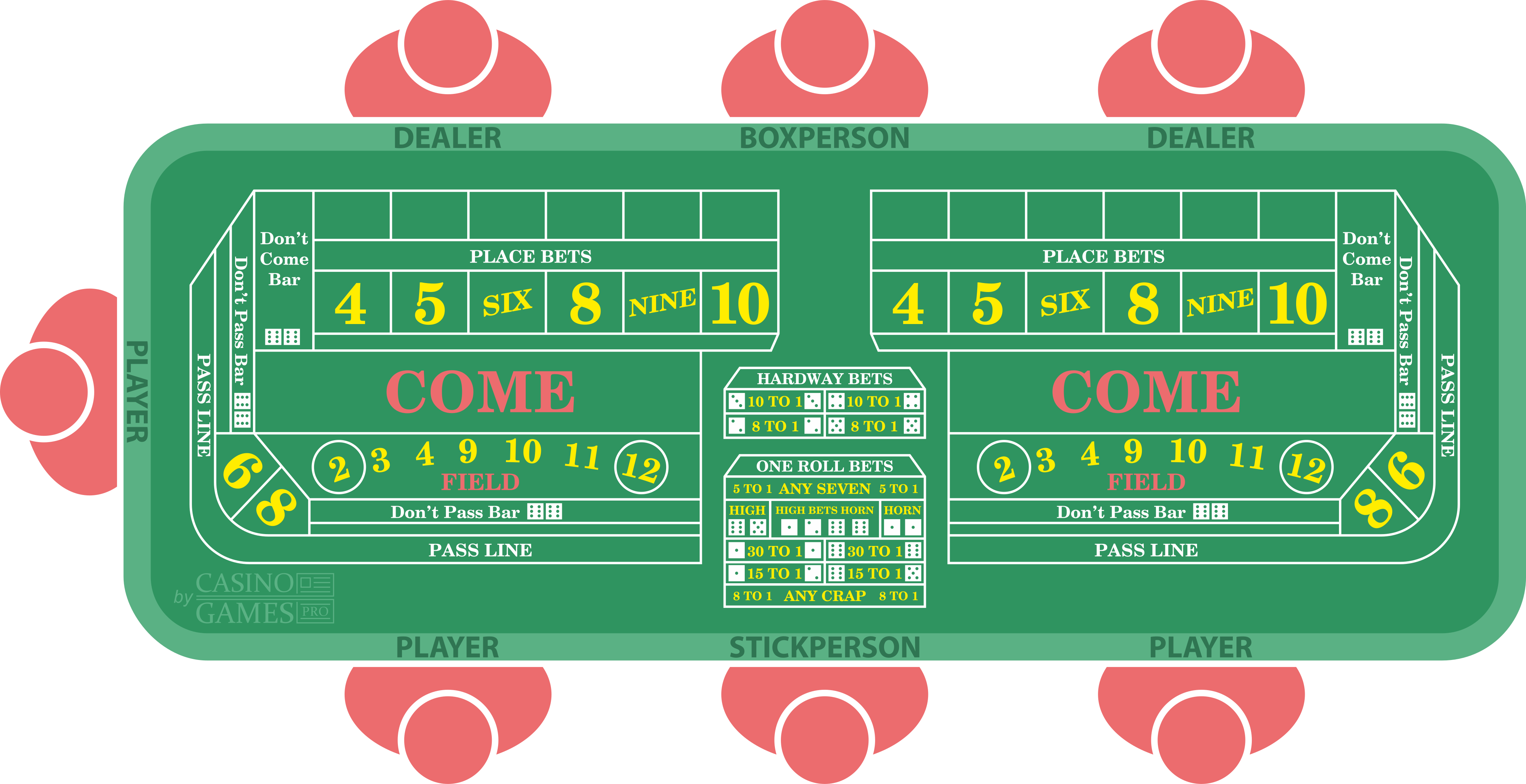
A dealer is positioned on each side of the layout to exchange players’ money for chips and ensure that bets are paid correctly. Dealers are not allowed to touch the dice under any circumstances.
The fourth person is the seated boxman, who observes the action, supervises the dealers, and keeps track of the house’s bankroll. If a dispute arises between a player and one of the dealers, it is the boxman’s job to settle the issue and enforce the standard rules of play.
Buying Credits When Playing Craps
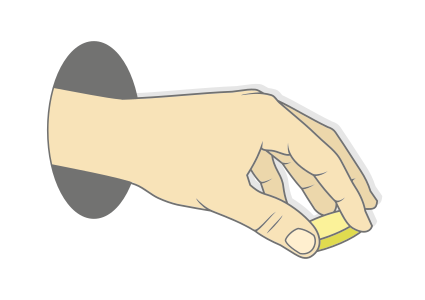 Players who prefer land-based casinos need to buy chips before they start betting. If you are new to craps, remember that you will need to buy in at the craps table.
To do so, players must place their money on the betting layout and ask the dealer to exchange the amount for chips. Remember to leave the desired amount on the layout rather than attempting to hand it directly to the dealer. Handing money to the dealer is against casino rules, and dealers will not accept cash directly from a player’s hand.
Even if a game is already in progress when you join the table, you do not need to wait for the current round to end before buying chips. Instead, try to get the dealer’s attention while the stickman keeps the dice in the middle of the craps table. Players should clearly state that they want to exchange the money for chips and that the cash is not intended as a wager.
Once the boxman counts the money, the dealer will give you your chips, and you can begin your betting session. Before picking up the chips, make sure that play is still paused and that the stickman continues to hold the dice in the middle of the table. If so, collect your chips carefully to prevent them from rolling across the table.
One way to distinguish a newcomer from an experienced player is to look at how the chips are arranged. As soon as players receive their chips, they should place the higher-denomination chips in the middle of the stack and position the lower-value chips on both sides.
This arrangement makes it easier for players to place their bets because their chips remain neatly organized.
The Actual Process of Playing Craps
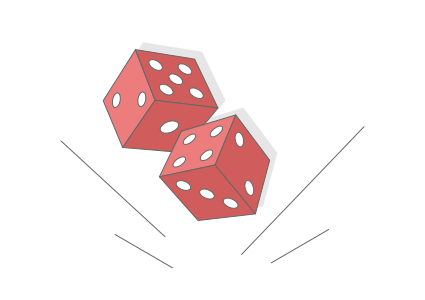 Once players have exchanged their money for chips, they are ready to begin playing. There are several additional points to understand when placing bets in a brick-and-mortar casino.
First, craps players should know that many of the bets available at the table require the assistance of the dealer. Craps bets are often classified according to the number of rolls required to determine their outcome. Based on this distinction, they can be single-roll or multi-roll wagers.
Craps bets can also be distinguished by how they are placed. Depending on this criterion, there are bets handled by the dealer and self-service bets. Players place their chips directly in the marked areas of the layout when making self-service bets.
For dealer-handled wagers, players must place their chips in front of themselves and tell the dealer which bet they have chosen and how much they would like to stake. Once the dealer moves the chips to the corresponding area of the layout, players must wait for the outcome of the current round.
The shooter also plays a crucial role in craps, which we will discuss in greater detail in the following sections.
In craps, the first toss of the dice is known as a come-out roll. Depending on the total rolled, the come-out roll can be resolved in three ways. If a 7 or 11 appears, Pass Line bettors win, and the round ends. If a 2, 3, or 12 appears, Pass Line bettors lose, while Don’t Pass bettors win on 2 or 3 and push on 12. If the shooter rolls 4, 5, 6, 8, 9, or 10, the outcome is not determined immediately because a point is established. We will examine this process more closely in the following sections.
These rules might sound complicated, especially to players who are new to craps. Fortunately, playing online can make it easier to review the available betting options at your own pace.
Table Etiquette
 One important rule is to place your bets while the dice are in the center of the table. Tossing chips onto the layout while the dice are in mid-air is considered a breach of etiquette.
You should also follow the instructions of the table personnel, especially if you are new to the game. The staff are there to ensure that the game runs smoothly, so there is no need to become argumentative when they enforce the rules.
Inexperienced craps players should learn the basics before they begin playing because the game moves quickly and involves a high degree of complexity. If you are uncertain about what to do next, it is fine to ask the dealer for assistance, but try not to interrupt the game repeatedly.
When shooting the dice, do your best not to throw them off the table. Shooters should try to hit the opposite wall of the table with both dice. Players are not allowed to remove the dice from the sight of the boxman and stickman. Avoid hitting the chips on the layout with the dice, as many superstitious players consider this bad luck.
When the shooter is standing on the opposite side of the craps table, make sure that your hands are outside the playing area because the dice may bounce and hit you.
Playing craps at an established online casino allows you to enjoy the game at your own pace and avoids the need to follow elaborate table etiquette. This is one of the main advantages of playing craps online.
Basic Rules of Play
 In craps, each player makes individual bets against the house. The person who throws the dice is called the shooter. Every player has the opportunity to become the shooter when their turn arrives. Turns proceed clockwise. The shooter surrenders the dice after sevening out. Only the shooter and the stickman may handle the dice.
Each new round begins with a come-out roll, which is the first toss of the dice. If this roll establishes a point, the shooter aims to roll the point number again before rolling a 7. If a 7 is rolled after a point has been established, this is called a seven-out, and the shooter must surrender the dice to the next player.
Only the numbers 4, 5, 6, 8, 9, and 10 can establish a point on the come-out roll. The numbers 2, 3, and 12 are called craps numbers. When the shooter rolls one of these totals, the throw automatically results in a loss for the Pass Line. When the come-out roll results in a 7 or 11, it is considered a “natural.” Bets on the Pass Line win, while Don’t Pass bets lose. When a point is established on the come-out roll, the shooter must continue rolling until the point number appears or the shooter sevens out. All other numbers rolled in the meantime are called “waiting” numbers and do not determine whether the shooter wins or loses the round.




Types of Bets in Craps
 There are more than 30 possible bets on the outcome of a throw, meaning the combined value of the two dice. Wagers can also be made for or against the shooter. Payouts differ depending on the type of bet. The wagers can be divided into two major categories: one-roll bets and bets involving multiple throws of the dice.
Pass Line Bets
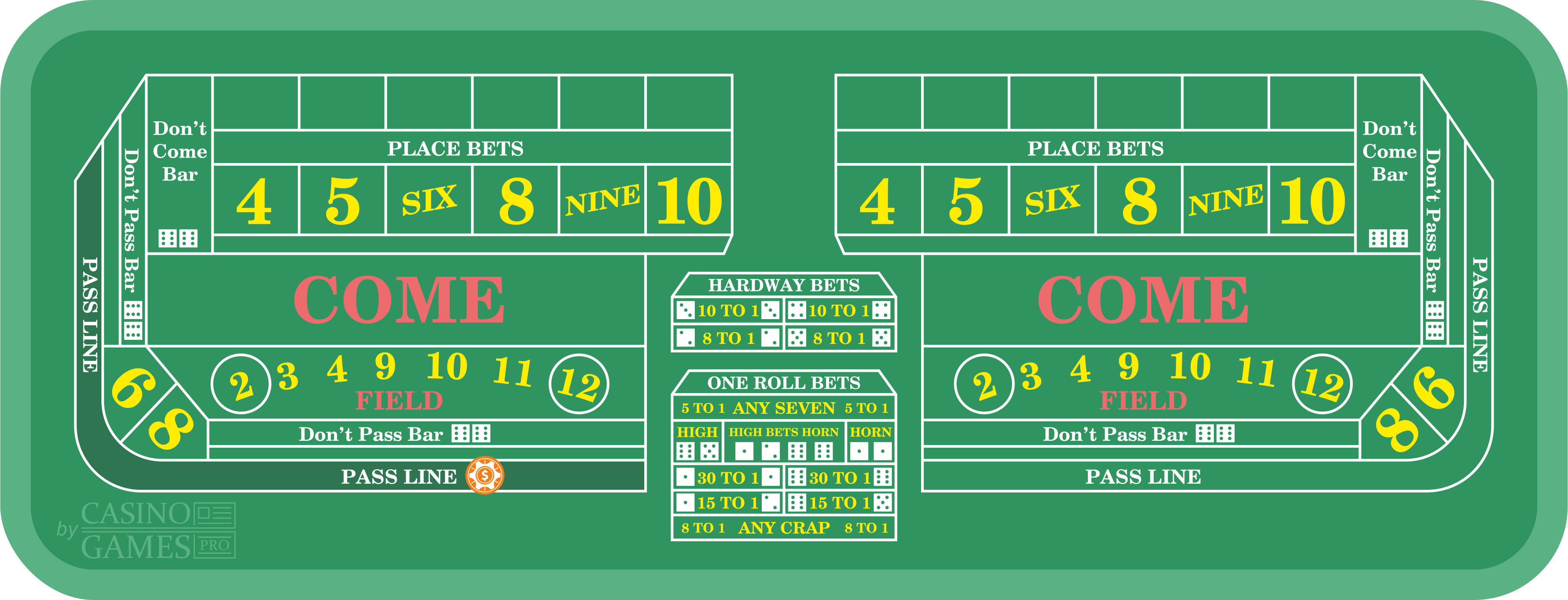
Pass Line bets are among the most important wagers in craps. Players who understand how the Pass Line works should find it easier to follow the game. These bets are made before the come-out roll.
Key facts about Pass Line bets include:
- A come-out roll of 7 or 11 wins and pays even money.
- If the shooter establishes a point and rolls that number again before a 7, the bet wins and pays even money.
- A come-out roll of 7 or 11 is called a “natural” and immediately wins all Pass Line bets.
Don’t Pass Bets
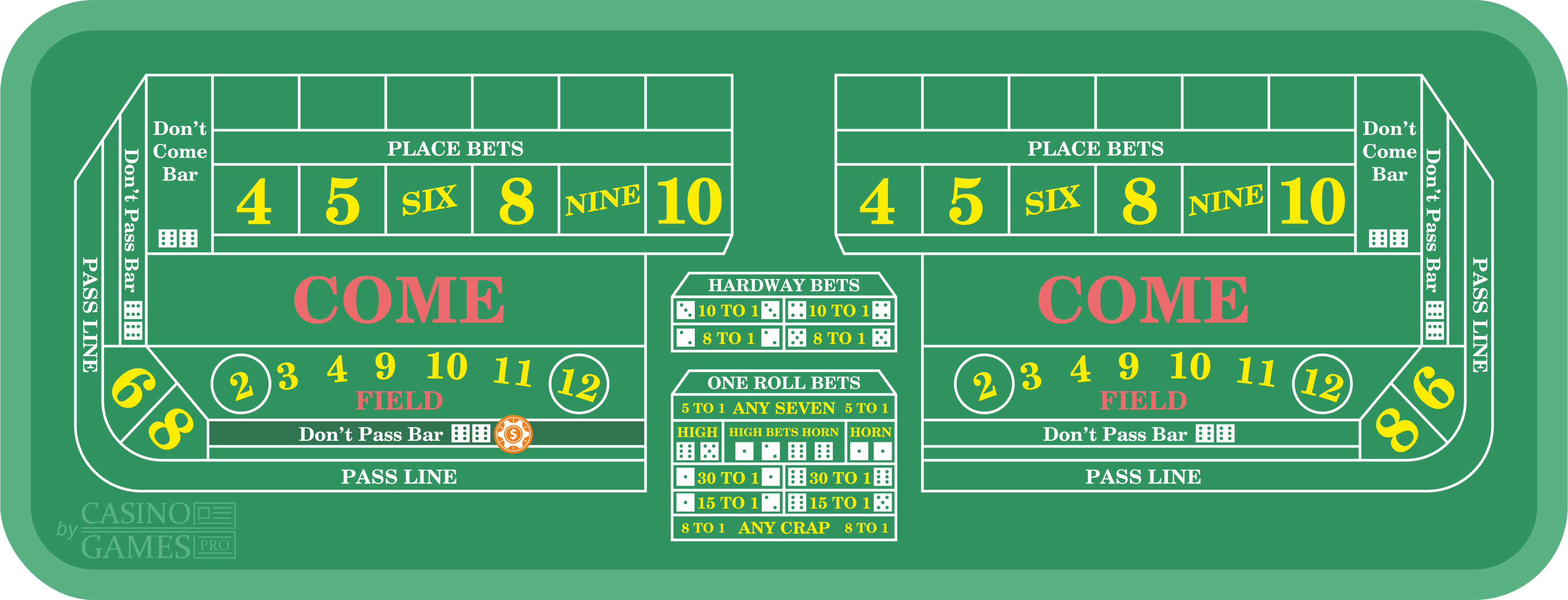
Don’t Pass wagers involve betting against the shooter, meaning that the player is betting that the shooter will lose. In other words, Don’t Pass bets are the direct opposite of Pass Line bets. These bets win when:
- The shooter rolls 2 or 3 on the come-out roll. A roll of 12 results in a push for Don’t Pass bets.
- The shooter establishes a point on the come-out roll but sevens out before rolling the point number.
Come Bets
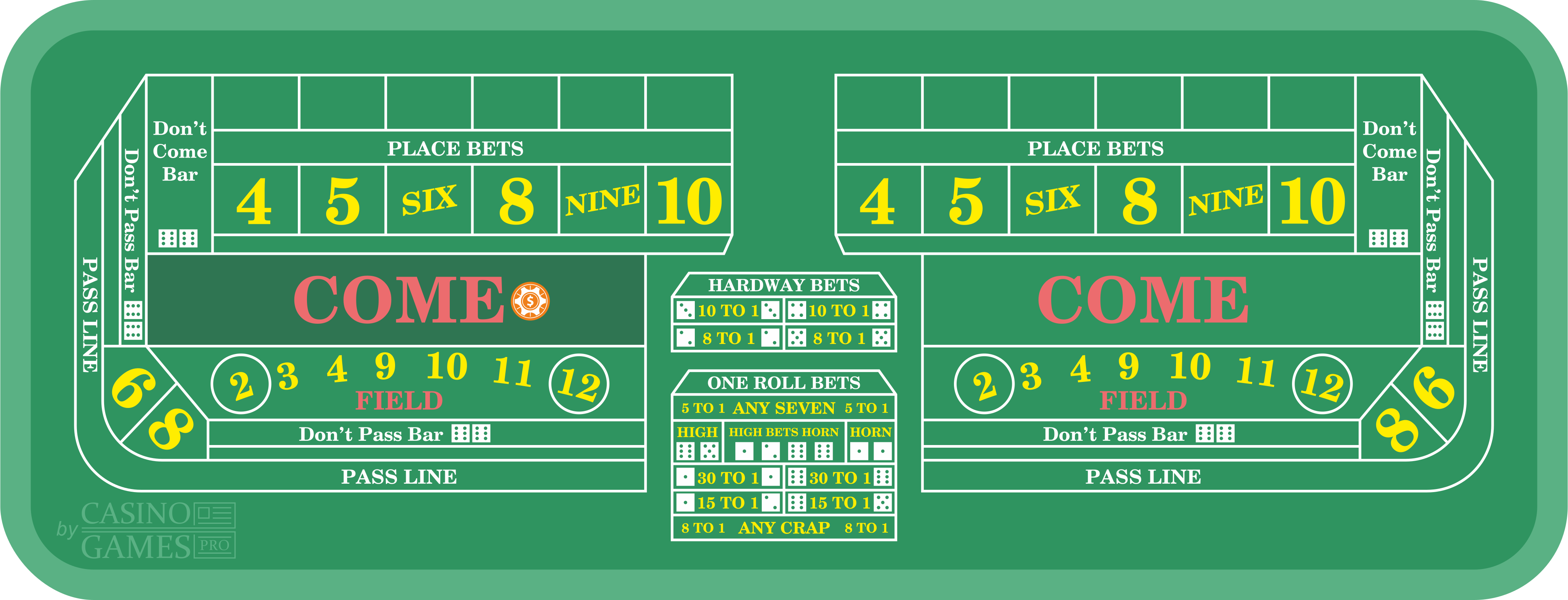
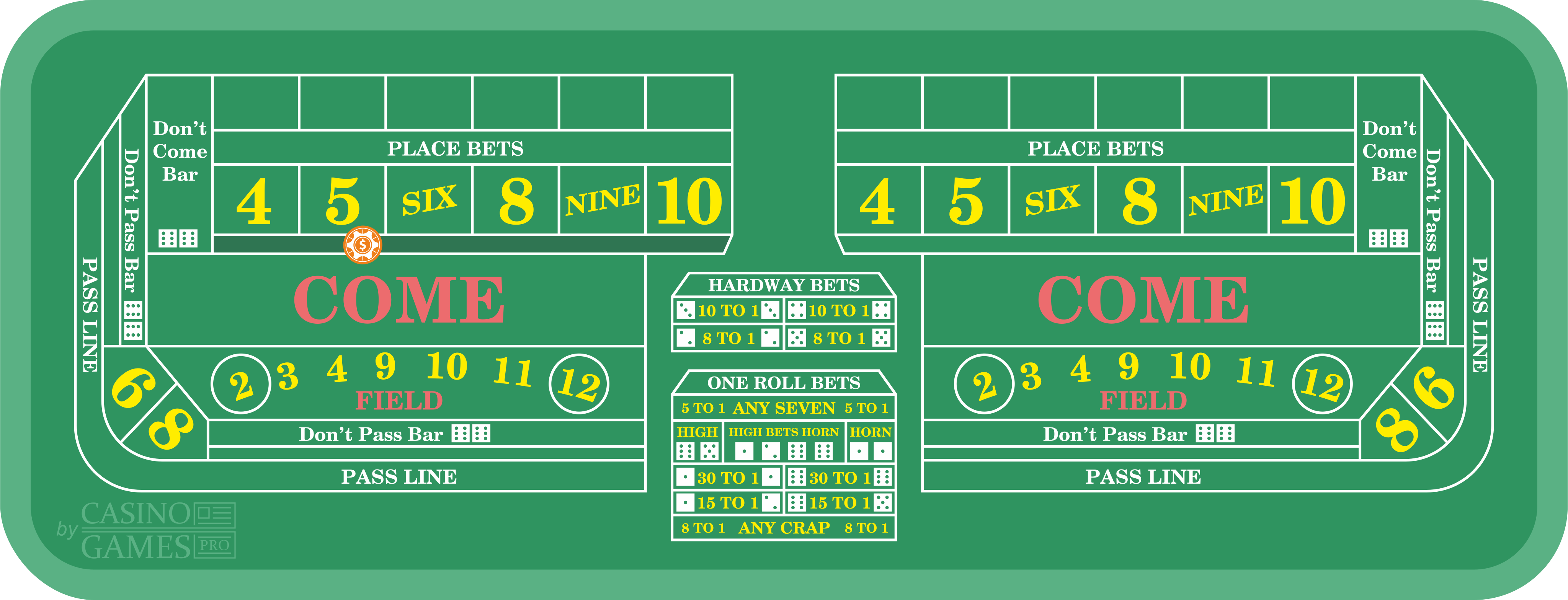
This wager functions as an extension of the Pass Line and can be placed after a point has been established on the come-out roll. The Come bet pays even money if the shooter rolls a 7 or 11. If the shooter rolls a craps number of 2, 3, or 12, the Come bet loses.
When the shooter rolls a point number such as 4, 5, 6, 8, 9, or 10, the chips for the Come bets are moved to the box corresponding to that number. The Come bet wins if the number is rolled again and loses if the shooter rolls a 7. Players can make Come bets on every throw if they wish, provided that a point has been established.
Don’t Come Bets
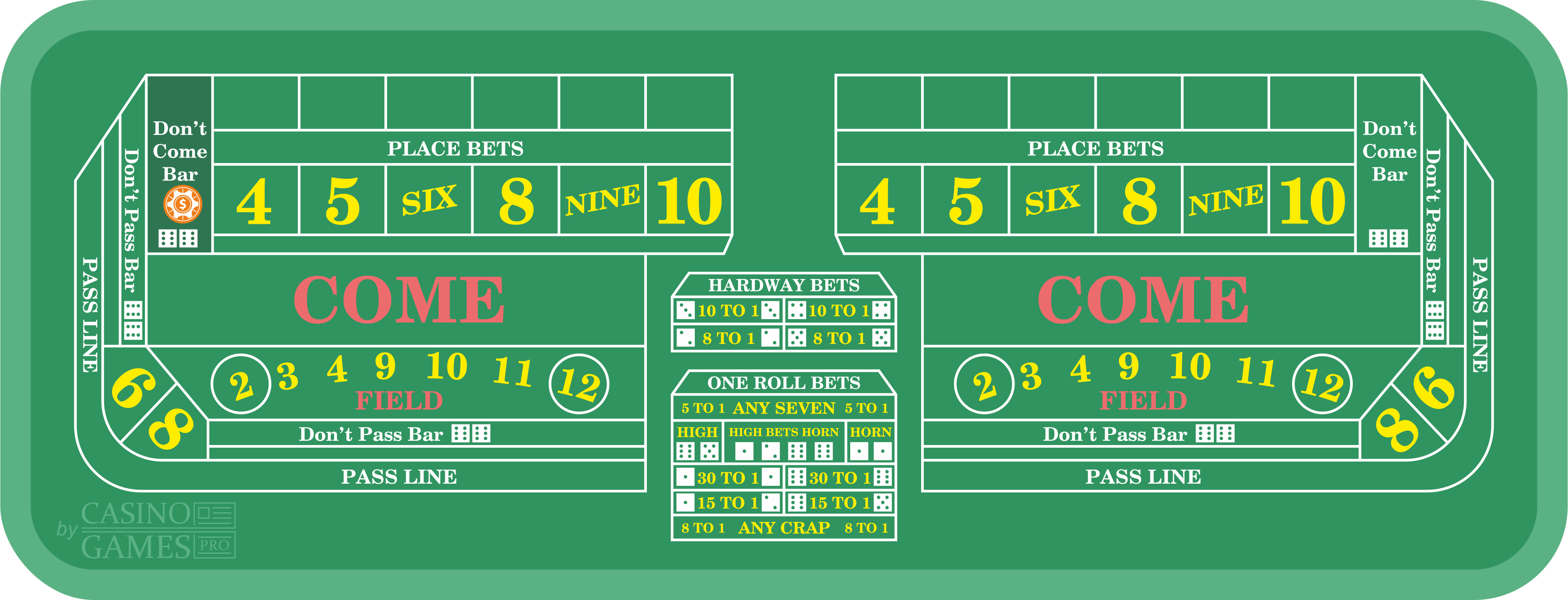
These wagers are the opposite of Come bets and function as an extension of Don’t Pass bets. They can be placed only after a point for the Pass Line has been established. Don’t Come bets win on rolls of 2 or 3 and lose on a roll of 7 or 11. A roll of 12 results in a push for all Don’t Come bets. All winning wagers of this type pay even money.
If a point number is rolled, the chips for the Don’t Come bets are moved behind the corresponding point number box. If the shooter rolls this number again, the bet loses. If the shooter rolls a 7, the Don’t Come bet wins.
Taking the Odds
If a point has been established on the come-out roll, a player can bet up to twice the amount of the original Pass Line bet that the point number will be rolled before a 7. This is considered one of the most favorable bets because it has a zero percent house edge and can increase the winnings from the original Pass Line wager. Players can take odds on their Pass Line bets while the point remains active.
Laying the Odds
This is the opposite of taking the odds. The player bets that a 7 will be rolled before the point number. Because the odds for Don’t Pass bets are reversed, the player collects fewer chips than the amount originally wagered.
Place Bets to Win
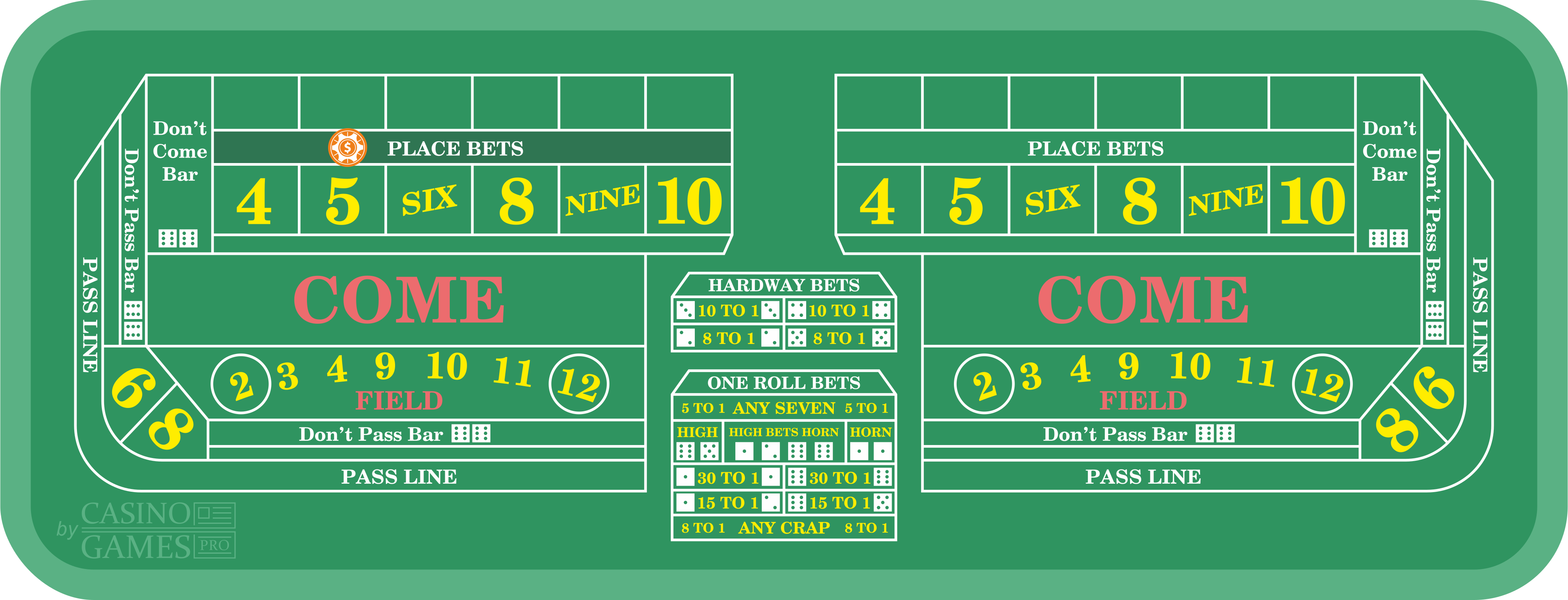
Place bets involve multiple rolls of the dice. These side wagers can be made at any stage of the game as long as a point has been established. They involve betting that a chosen number of 4, 5, 6, 8, 9, or 10 will be rolled before a 7. Winning Place bets pay less than the true odds. Players can raise, reduce, or remove their Place bets whenever they wish. These wagers are also automatically taken off during the come-out roll for the Pass Line. Their payouts are as follows:
- Rolls of 4 or 10 pay 9 to 5.
- Rolls of 5 or 9 pay 7 to 5.
- Rolls of 6 or 8 pay 7 to 6.
Place Bets against 4, 5, 6, 8, 9 or 10
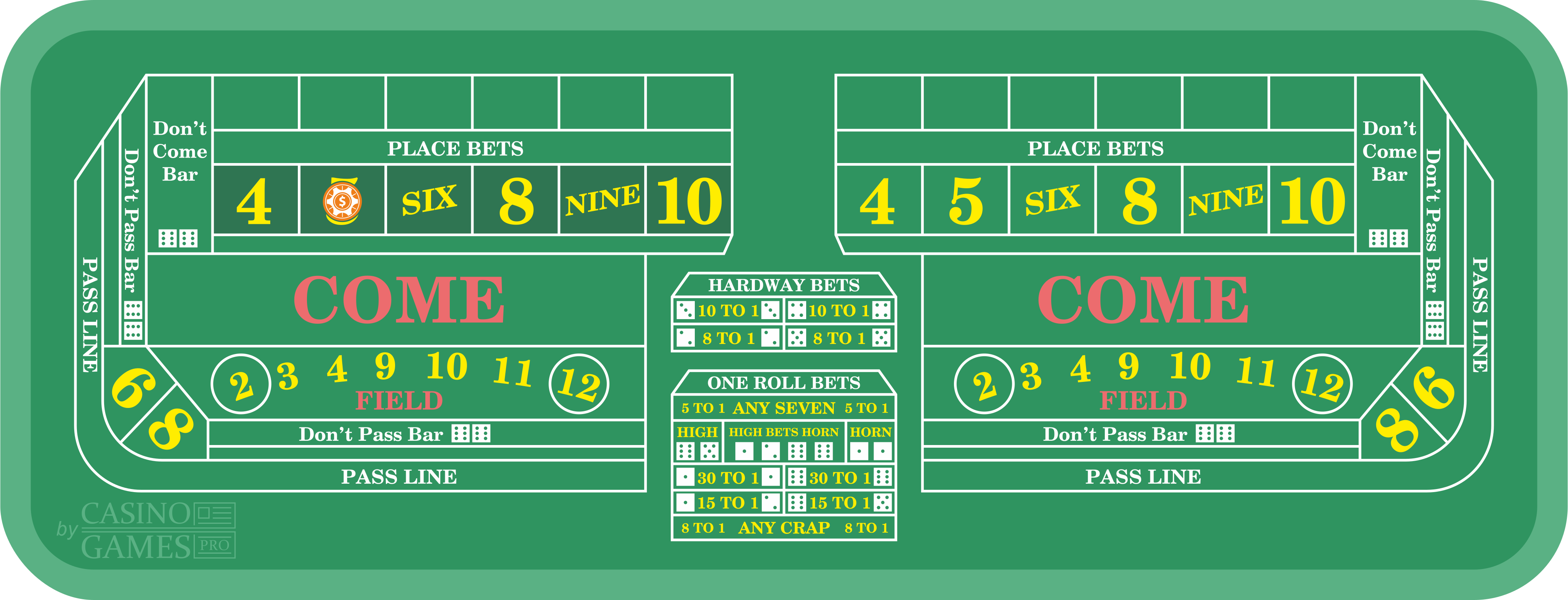
These wagers are the opposite of Place bets because the player is betting that a 7 will appear before the shooter rolls the selected number. The payouts for winning bets of this type are as follows:
- A roll of 7 before 4 or 10 pays 5 to 11.
- A roll of 7 before 5 or 9 pays 5 to 8.
- A roll of 7 before 6 or 8 pays 4 to 5.
Buy Bets
This type of wager resembles a Place bet. The main difference is that it pays true odds. Buy bets pay true odds because the player pays a 5% commission, known as “juice” or “vig,” to the house. If the player loses a Buy bet, both the commission and the original wager are lost. The juice is returned to the player if the Buy bet is removed before the dice are rolled. The payouts are as follows:
- A roll of 4 or 10 before 7 pays 2 to 1 with a 5% commission.
- A roll of 5 or 9 before 7 pays 3 to 2 with a 5% commission.
- A roll of 6 or 8 before 7 pays 6 to 5 with a 5% commission.
Lay Bets
Lay bets mirror Buy bets because they win when a 7 is rolled before the shooter rolls the selected point number. The player must pay a 5% vig on the winnings. Winning Lay bets have the following payouts:
- A roll of 7 before 4 or 10 pays 1 to 2.
- A roll of 7 before 5 or 9 pays 2 to 3.
- A roll of 7 before 6 or 8 pays 5 to 6.
Big 6 and 8
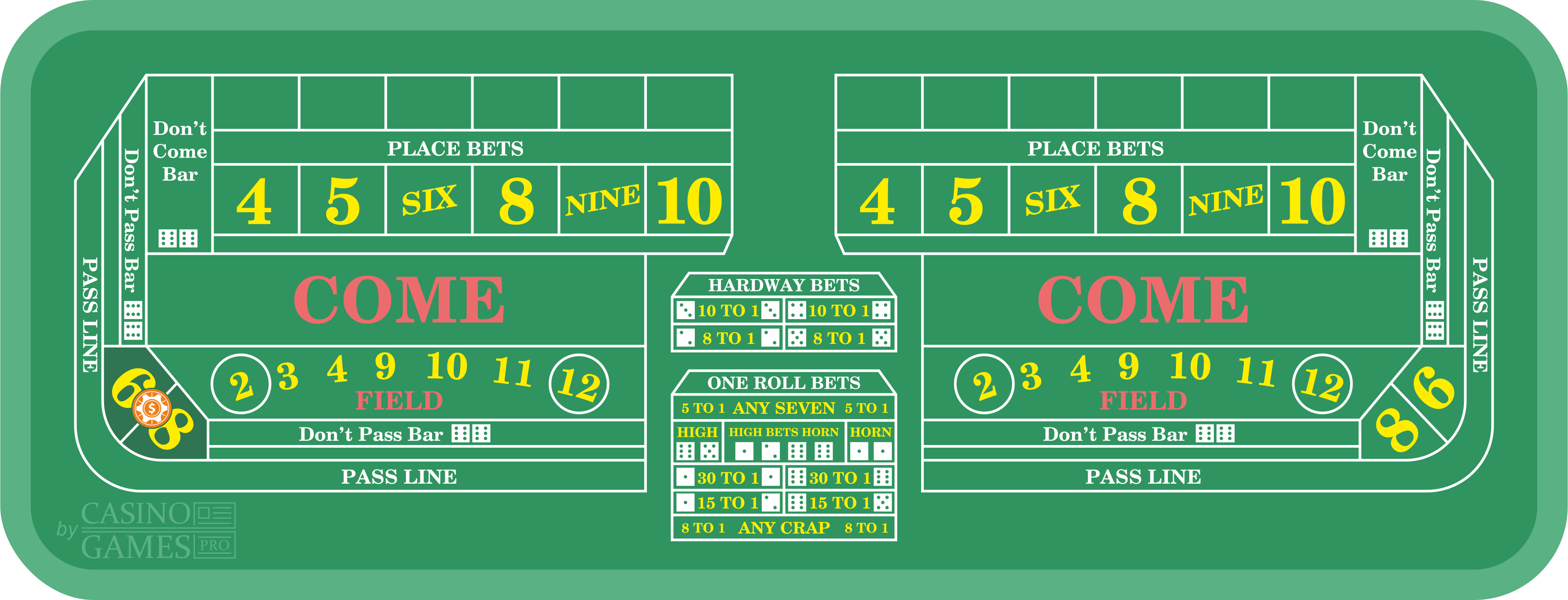
These wagers involve betting that a 6 or 8 will be rolled before a 7. Winning Big 6 and Big 8 bets pay even money. However, players are generally advised to avoid them because of their high house edge.
Field Bets
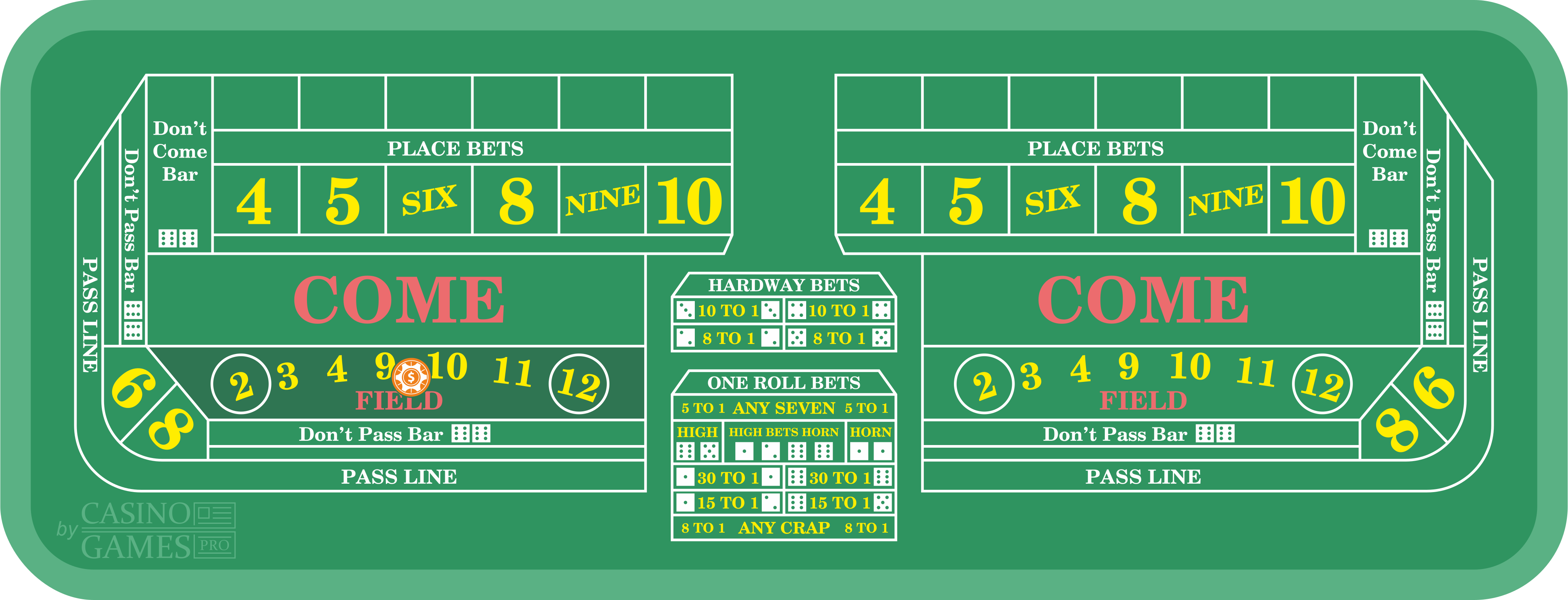
These are one-roll bets that can be made at any stage of the game. The player bets that 2, 3, 4, 9, 10, 11, or 12 will be rolled on the next throw rather than 5, 6, 7, or 8. If 3, 4, 9, 10, or 11 is rolled, the Field bet pays even money. When 2 is rolled, the payout is 2 to 1. A roll of 12 results in a payout of either 2 to 1 or 3 to 1, depending on the casino. The numbers 5, 6, 7, and 8 are outside the field and result in a loss when rolled.
Hardway Bets
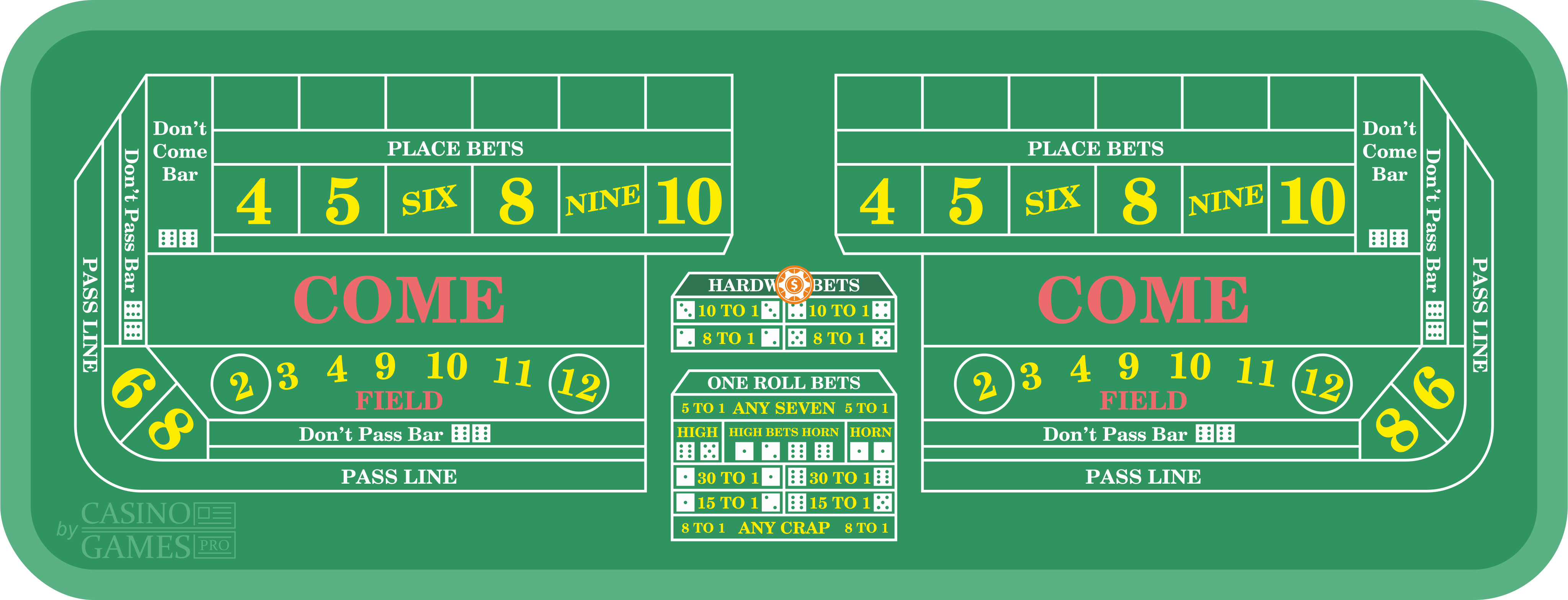
The chips for Hardway bets are placed in the center section of the layout and handled by the stickman. This is a subclass of Proposition bets consisting of Hard 6, Hard 8, Hard 4, and Hard 10 wagers. The player is betting that the selected number will be rolled the “hard way” (both dice show the same value; for example, 3 plus 3 produces a Hard 6) before a 7 appears. Hard 4 and Hard 10 pay 8 for 1. Hard 6 and Hard 8 pay 10 for 1.
Proposition Bets
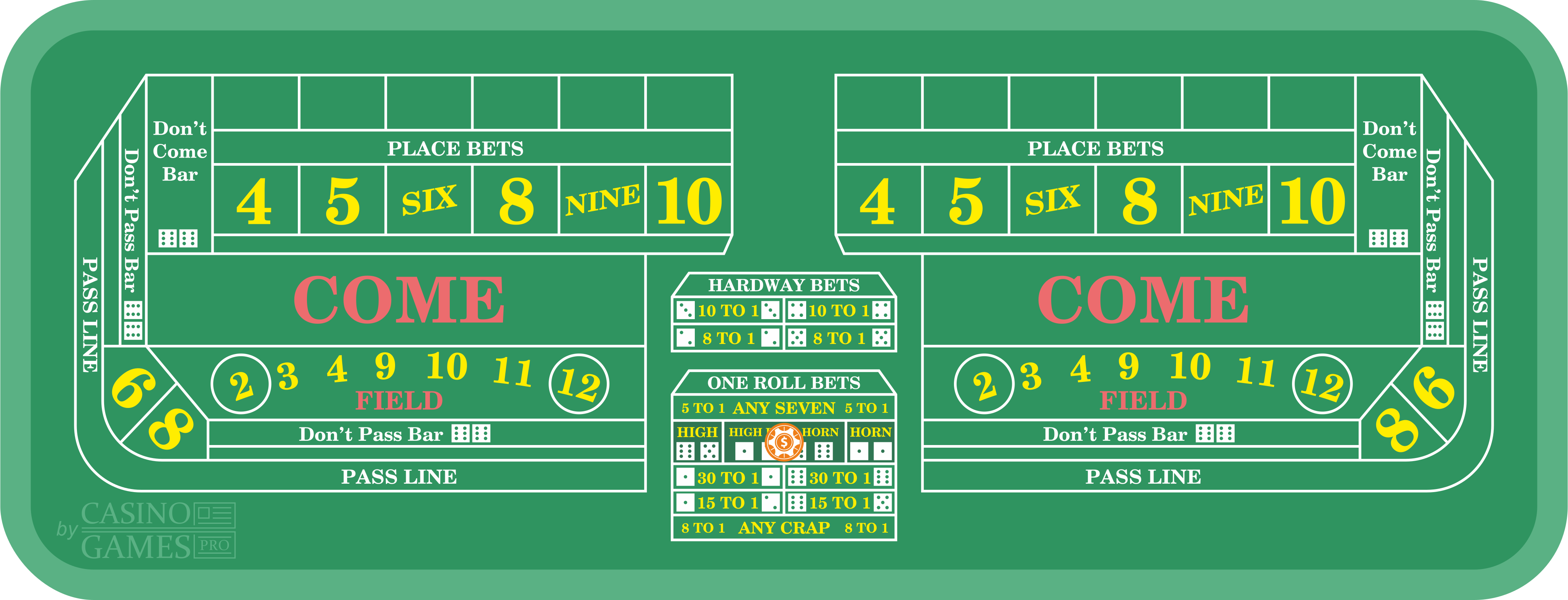
Proposition bets involve a single toss of the dice, offer higher payouts, and are handled by the stickman. The chips for these wagers are placed in the center section of the layout. These wagers are resolved after one toss of the dice. There are several subtypes of Proposition bets:
- Any Seven: A roll of 7 pays 4 to 1.
- Any Craps: A roll of 2, 3, or 12 pays 7 to 1.
- Horn on Craps 2: A roll of 2 pays 30 to 1.
- Horn on Craps 3: A roll of 3 pays 15 to 1.
- Horn on Craps 12: A roll of 12 pays 30 to 1.
- Horn on 11 (Yo-leven): A roll of 11 pays 15 to 1.
- Whirl Bets: These involve wagering four units on the numbers 2, 3, and 12 and one unit on 7. A roll of 7 results in a push for this bet.
- Three-Way Craps Bet: This is a three-unit bet on craps numbers. Rolls of 2 and 12 before a 7 pay 30 to 1, while rolls of 11 pay 15 to 1.
- High-Low Bet: A roll of 3 results in a payout of 15 to 1. This wager is also known as the Ace Deuce bet.
- Three-Way Seven: This is a bet that a 7 will be rolled on the next toss. It requires players to wager three units, one on each of the three combinations that add up to 7: 5-2, 4-3, and 6-1. The payout is 15 to 1.
If you want to play craps for real money, you can choose one of the established online casinos reviewed on this page. The listed casino operators provide a secure gaming environment. The outcomes of the dice rolls are determined by independently audited random number generators (RNGs) to support fair play. Craps players can benefit from welcome bonus offers and ongoing promotions. Players who need assistance have access to customer support around the clock. The online casinos reviewed on this website are also known for their reliability and quick, hassle-free payouts.