
Hit or Stand
 | Updated:
 Hit and Stand: Important Blackjack Moves
 Although blackjack can be played by simply trusting your gut, relying on luck is not the best approach in the long run. Blackjack games often offer some of the lowest house edges, but this is true only when players use the basic blackjack strategy. It helps them make the optimal decision about whether to hit or stand in situations where intuition may not be a reliable guide.
To reduce the house edge and improve your chances of winning in the long run, it is crucial to know when to hit and when to stand. Before you start learning any strategy, however, we would like to familiarise you with these two essential blackjack moves so that you can better understand the card game of 21.

-
 Sign Up Bonus
Up to $500
400% Bonus!9.7 -
Sign Up Bonus
Up to $3500
350% Bonus!9.4 -
Sign Up Bonus
Up to $3000
300% Bonus!9.3




The Hit and Stand Moves
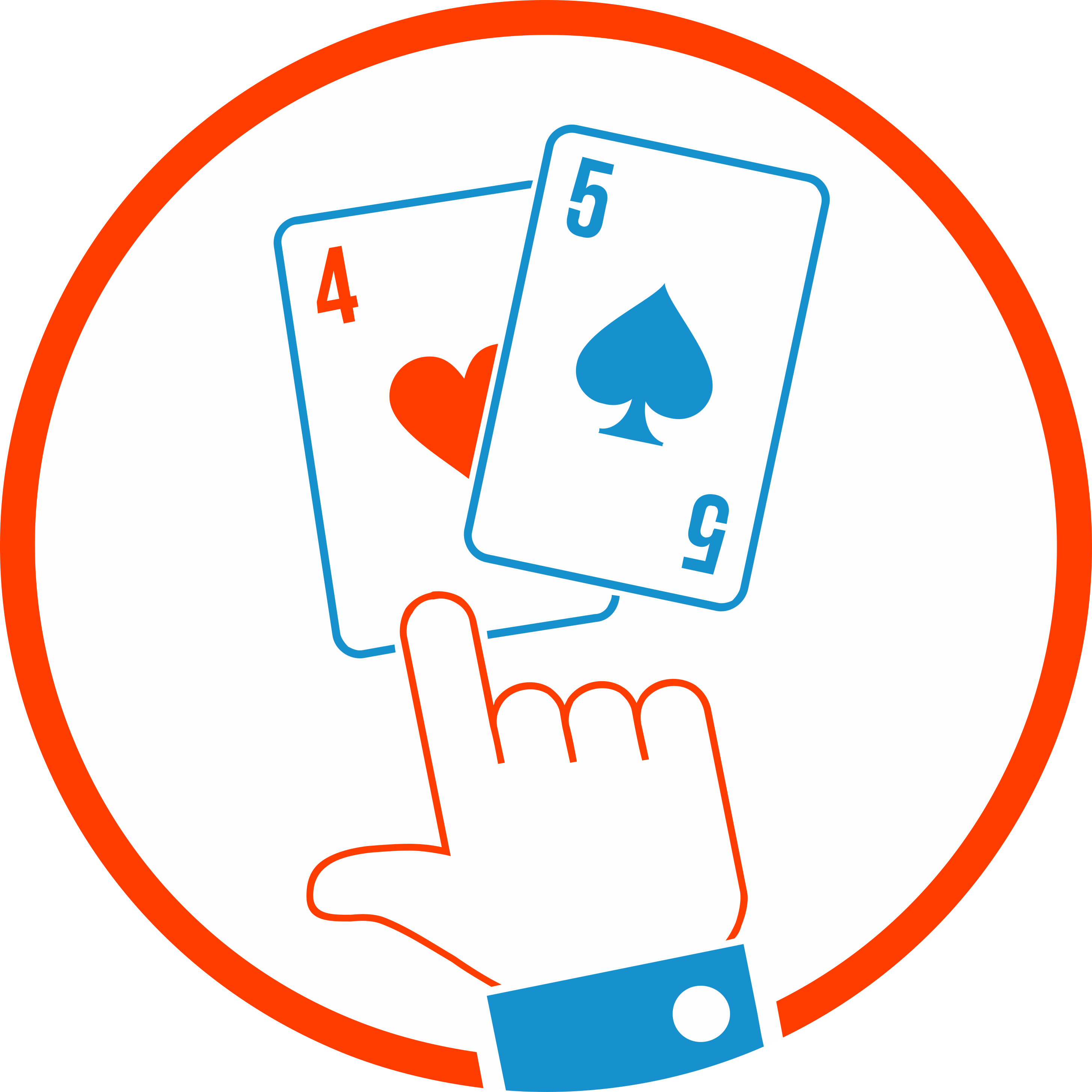
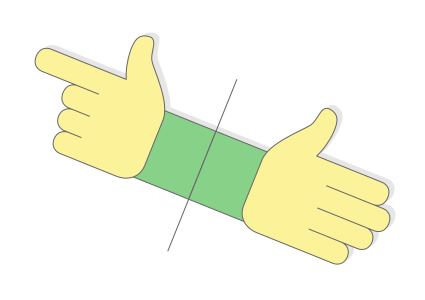 One decision you will inevitably face in every blackjack game, after placing your bet and receiving your first two cards, is whether to hit or stand. In blackjack, hitting simply means drawing another card and adding it to your hand.
If you play blackjack at an online casino, you do not need to learn any gestures. However, if you prefer the traditional casino experience, you should know the hand gestures used in blackjack. Before we continue, it is important to mention that the hand gestures depend on whether you are playing a shoe or hand-held blackjack variation. In shoe blackjack variations, players’ cards are dealt face up from a shoe, while in hand-held games, players’ cards are dealt face down and the dealer holds the deck.
If you play a shoe blackjack variation, you can indicate that you want to hit by tapping the table with a finger. Hand-held blackjack variations follow different etiquette; players who want to hit gently scratch their cards across the felt. Players usually make this move when their hand is weak and they want to improve its total and beat the dealer.
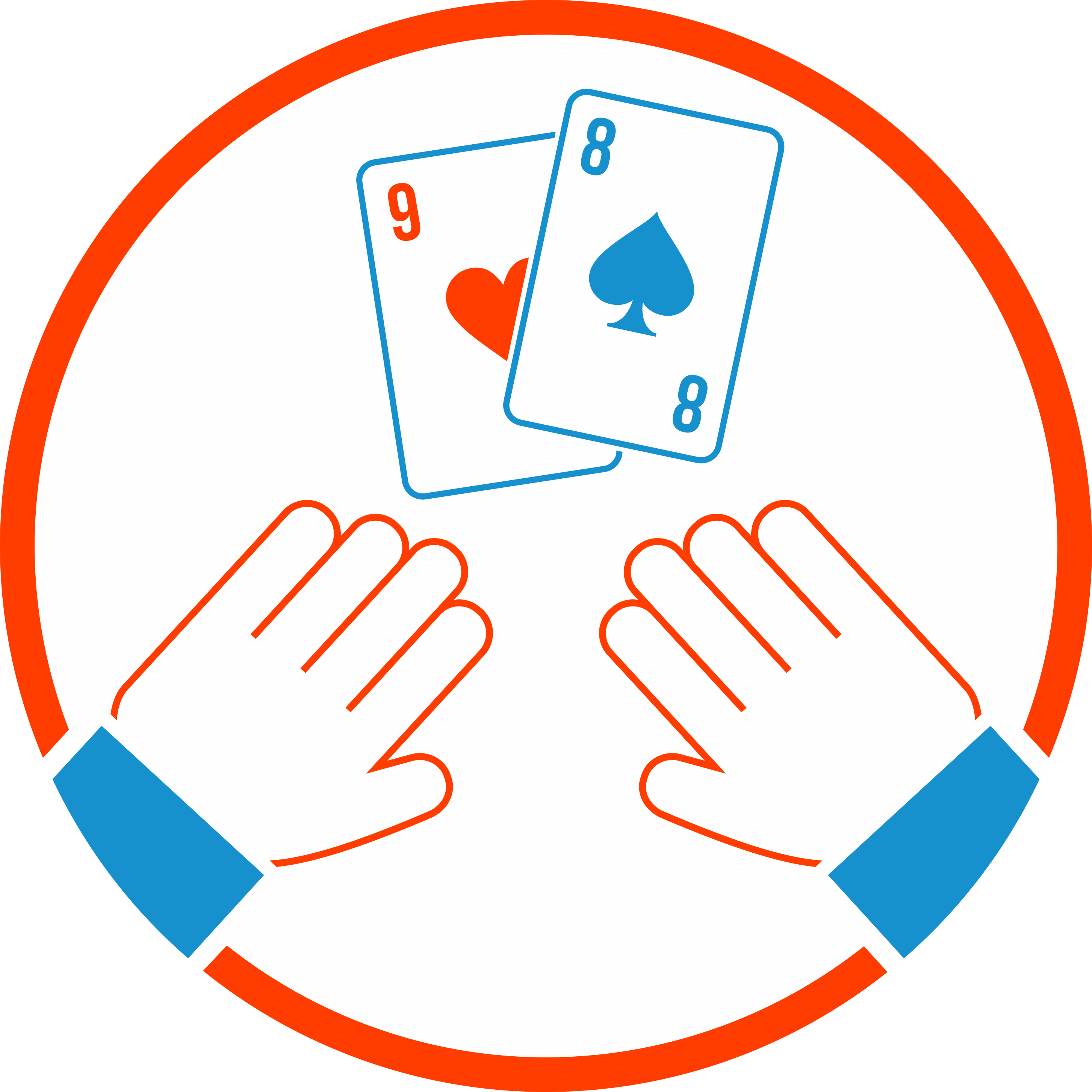
The second option you have when playing blackjack is to stand, which means ending your turn without drawing another card. If you choose this move, the total value of your hand remains the same, and the game continues accordingly. Players usually stand when they are satisfied with their hand total or when the risk of busting is high.
To indicate that you want to stand in shoe blackjack variations, move your hand horizontally above your cards. In hand-held games, simply slide your cards under your bet to indicate the same move.
These two basic moves play a crucial role in every game, as you are usually required to choose one of them, and that choice can determine whether your hand results in a win or a loss. Unlike other moves, such as splitting and doubling down, hitting and standing are always available, regardless of the variation or casino.
When to Hit
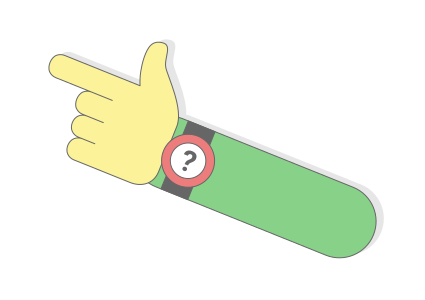 As mentioned above, the main reason to hit is to improve your hand total. Your objective is to reach 21, or a total as close to it as possible, without going over it, as doing so results in an immediate loss. Another point worth noting is that the average winning hand in blackjack totals 18.5, meaning that you do not always need exactly 21 points to win.
When deciding whether to hit, it is also important to consider your odds of busting. For instance, if you choose to hit when your hand totals 17, your chances of busting are 69%. If your hand totals 11 or less, however, the odds are 0%. This is because no card in the deck can cause your hand to exceed 21, so you cannot lose immediately.
Drawing another card can improve your hand and increase your chances of beating the dealer. At the end of the round, a hand with a higher total than the dealer’s wins, provided it does not exceed 21. Hitting is one of the most frequently used moves in blackjack because it allows players to form a higher total by drawing an additional card. However, there are situations in which this move is not beneficial and should be avoided.
When to Stand
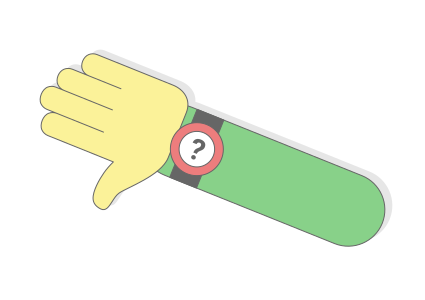 In general, you should stand when you believe your hand total is high enough to win. Your decisions should always be based on your total and the dealer’s up card. If the dealer shows a low-value card and has a greater chance of busting, standing may also be a good choice. Many players forget that the dealer can bust and take unnecessary risks by drawing another card in an attempt to improve their hand, only to achieve the opposite result.
According to basic strategy, there are situations in which it is better to stand regardless of the dealer’s up card. If you have an ace and an eight or an ace and a nine, you should stand. These combinations are among the strongest hands you can receive in blackjack and are difficult to improve without weakening your position.
In these situations, standing allows you to make the most of your strong hand. It is important to know how to act in these cases and avoid misplaying them, as they give you a strong chance of winning.
Another situation in which it is best to stand is when you have a total of 12 and the dealer’s up card is a four, five, or six. Standing is also recommended if your hand totals 13, 14, 15, or 16 and the dealer’s up card is between two and six.
In other situations, the best choice may be to hit. However, basic strategy calls for standing in two additional cases. The first is when you have a soft 18 and the dealer’s up card is a two, seven, or eight. The second is when you have a pair of 9s and the dealer’s up card is a seven, ten, or ace.


Soft 17 Rule
 In blackjack, you can decide whether to hit or stand by considering your hand total, the dealer’s up card, and the number of decks in the game. The dealer, however, must act according to the established rules. Their play is automatic, meaning that the moves they must make are determined by the rules of the game.
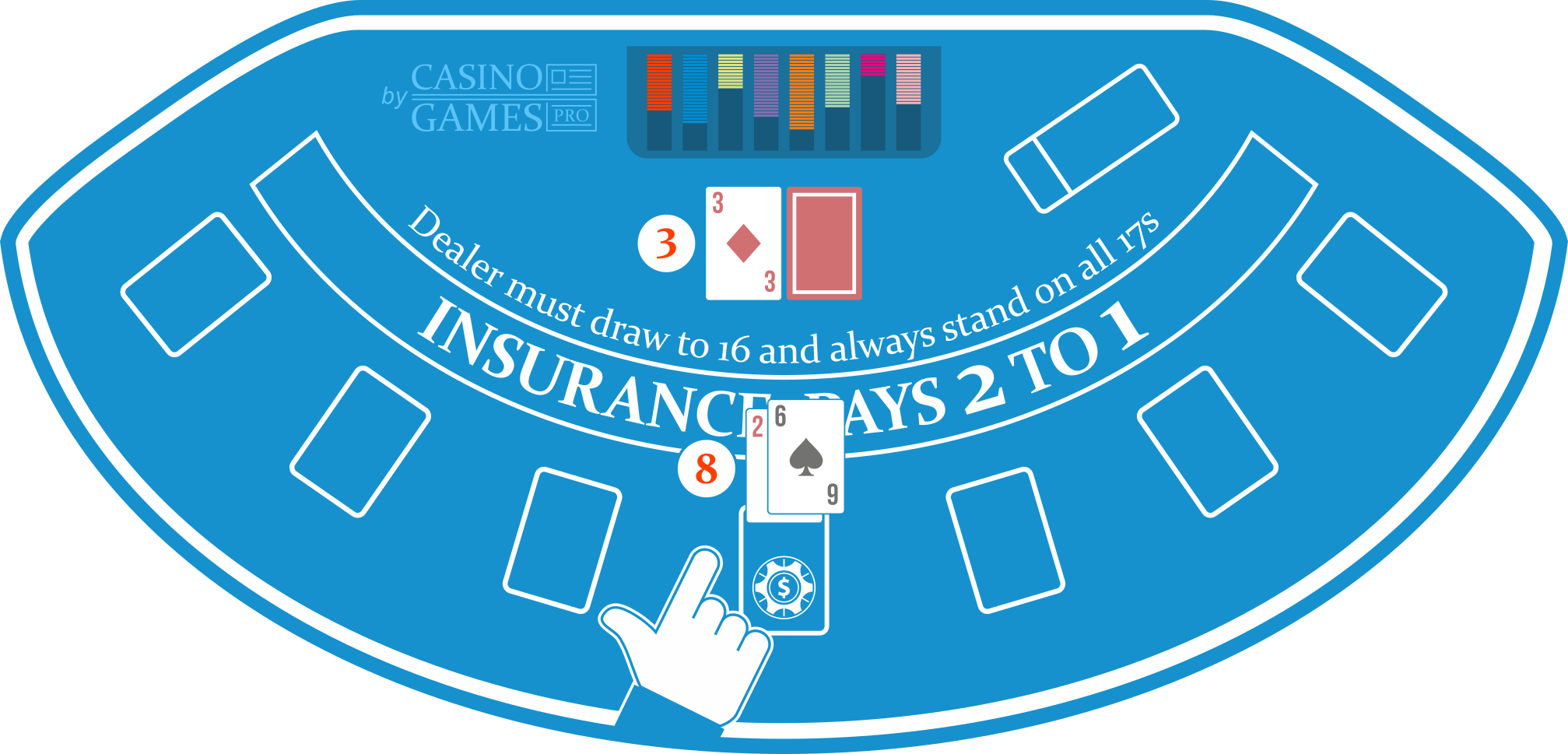
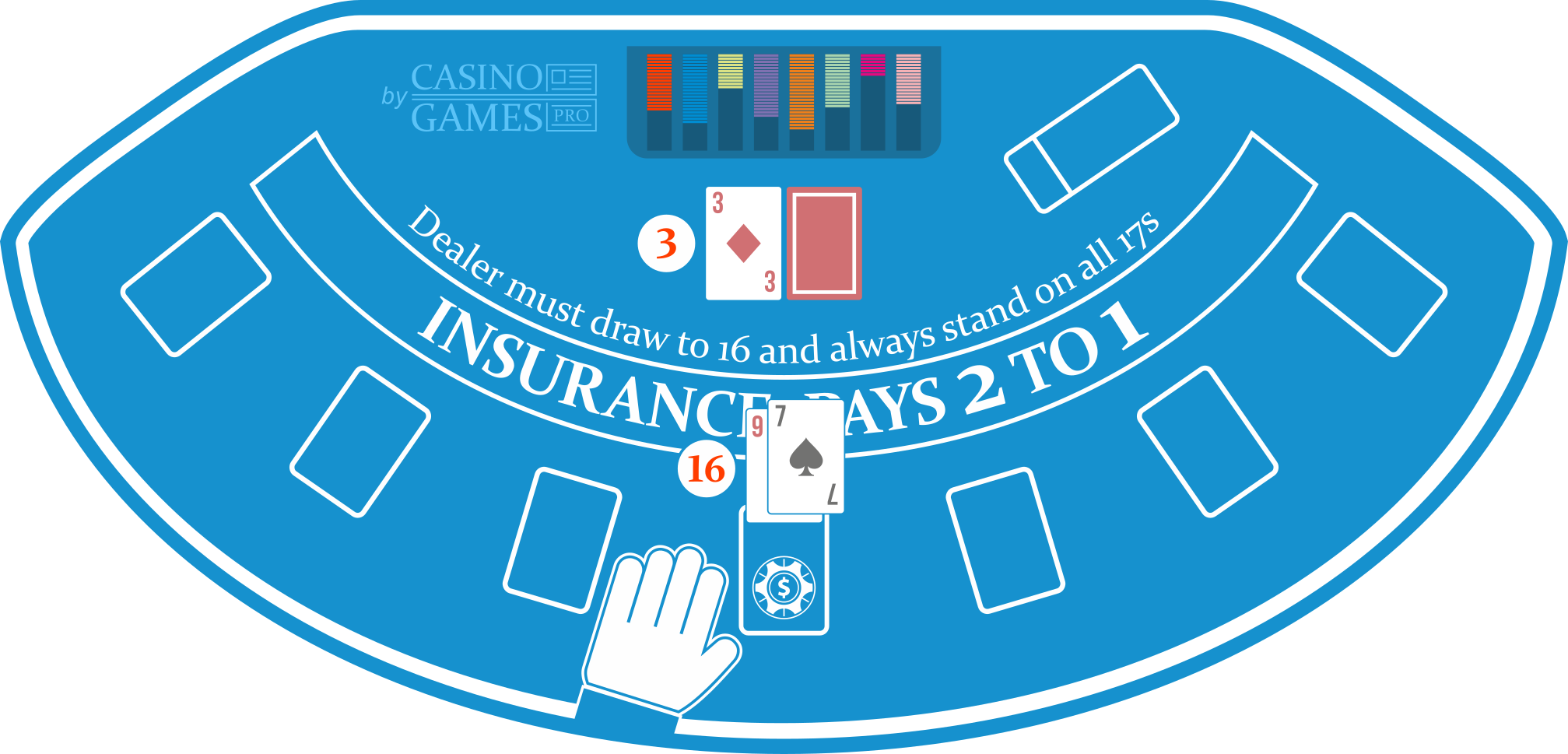
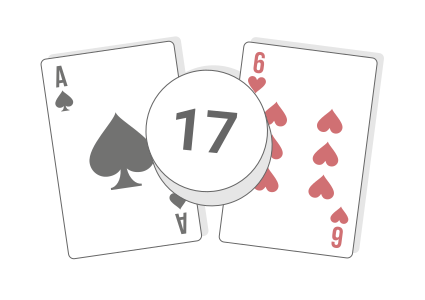
The soft 17 rule dictates how the dealer must act when they have a soft 17, which is a hand containing an ace and totaling 17. This rule can differ from one casino to another. However, it is easy to determine whether the dealer stands or hits on this card combination, as the rule is usually displayed on the table along with the blackjack payout.
It is important to know whether the dealer is required to hit or stand on soft 17 because this rule has a significant effect on the house edge. In most cases, the dealer stands on soft 17 or higher and hits on 16 or lower. This works in the players’ favour because the dealer cannot attempt to improve a soft 17.
However, some blackjack variations require the dealer to hit on soft 17. This rule increases the dealer’s chances of winning. With this in mind, blackjack players are advised to select variations in which the dealer stands on soft 17.
Conclusion
 Knowing when to hit and when to stand can significantly improve your game and increase your chances of winning. Blackjack already has a fairly low house edge. By applying basic strategy correctly, you can make more informed decisions and reduce the house edge over time. To choose the best move, it is not enough to know the rules of the game and consider your hand total. You should also assess your odds in each situation and account for the dealer’s up card, as both factors play a crucial role in the outcome of the round.