
Profit From Casino Games
 | Updated:
  Casino games such as roulette and poker have fascinated players for decades, and even centuries. Today, destinations such as Las Vegas and Macau have completely transformed the image of gambling. Once regarded as a questionable hobby practiced in shady establishments, gambling has become a glamorous form of entertainment for successful and adventurous people. But is it possible to profit from casino games in the long run? Are stories about casino players making a living from gambling true? Most importantly, does the house always win?
There are no simple answers to these questions, particularly after the rise in popularity of online casinos and players’ attempts to devise effective and reliable strategies to win. The potential for success in casino gambling varies depending on the individual and the type of game. Some successful poker players have won millions while developing their skills in a game where luck, knowledge, and experience all matter. However, thousands of people also visit Las Vegas only to lose a few hundred dollars over the weekend.

-
 Sign Up Bonus
Up to $500
400% Bonus!9.7 -
Sign Up Bonus
Up to $3500
350% Bonus!9.4 -
Sign Up Bonus
Up to $3000
300% Bonus!9.3



In reality, it is possible to profit from casino games over a limited period. However, the opposite is also possible. You could lose your life savings while trying to recover money you have already lost. To improve their chances when playing casino games, gambling enthusiasts should learn how to avoid the most common mistakes and make informed decisions. Before doing so, there are several basic concepts every roulette, poker, or slot player should understand.
Chance and the Probability of Winning
 The first and most important rule of gambling is simple: the house always wins in the long run. This does not mean that every player always loses. Casinos are successful businesses that profit over thousands of games and millions of bets placed on roulette, baccarat, blackjack, and slot machines. Their profits come from the collective activity of casino patrons, although some players may still win over a particular session or period.
Players can sometimes profit from skill-based games such as poker, rummy, or spades when competing against other players. In such games, the casino usually charges a fee for facilitating play. Skill and strategy can give you an advantage over opponents who make mistakes. Playing against the casino is much more common, however, and the odds are generally stacked against you. This applies even to skill-based games such as blackjack.
Chance
 Most casino games are based primarily on chance. In these games, the outcome does not depend on the player’s decisions but on a random event, such as spinning reels in slot machines or the movement of the ball and wheel in roulette. In fact, many games involve elements of both skill and chance, including blackjack and poker. Whenever an outcome is strongly influenced by chance, probability and odds become important. Although these concepts may sound complicated, they are essential for understanding how likely you are to win or lose.
Consider roulette, where every bet has fixed odds and each number has approximately a 2.70% chance of appearing on a single-zero wheel. Single-zero roulette has 37 numbers, each of which is equally likely to win on a given spin. This does not mean that all 37 numbers will appear during 37 rounds. Some numbers may not appear at all, while others may be hit several times. Over a very large number of spins, however, the results tend to become more evenly distributed among red and black, even and odd, and high and low numbers.
Since the odds are generally in the casino’s favor, players have a better chance of finishing ahead in the short term. Over longer periods, actual results tend to move closer to the game’s theoretical probabilities.
House Edge
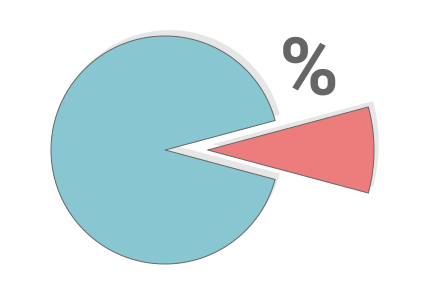 The odds of each game and the payouts offered by the casino determine the house edge. Also known as the house advantage, the house edge shows what portion of each wager the casino expects to retain on average. In other words, it indicates how much players can expect to lose over a long period. This built-in advantage results from the rules and underlying probabilities of each game and is typically represented as a percentage.
For instance, the house edge in slot games varies considerably and may range from 2% to 10%. If we use 5% as an example, the theoretical expected return would be $95 for every $100 wagered over a very large number of spins. During a single $100 spin, however, you will either lose your wager or receive a payout. As this example shows, the house edge is a mathematical representation of the casino’s advantage over the player. It is a theoretical long-term percentage, and the results of any fixed number of spins may differ significantly from it.
Casinos also use another term to indicate how much a game returns to players. This is the Return to Player (RTP), which represents the portion of wagers that players can expect to receive back as winnings over time. RTP is the opposite of the house edge, so a game with a 5% house edge has a theoretical RTP of 95%.
Choosing the Right Casino Games
 Casino players who want to improve their results should understand that some games offer better odds than others. As explained above, the house edge can help players identify games in which the casino has a smaller advantage. In addition, skill-based games offer more opportunities to influence the outcome, provided that the player uses an appropriate strategy and minimizes mistakes.
The third aspect to consider is simplicity. When you play a relatively straightforward game or choose simple bets in games such as craps or roulette, you may be less likely to make costly mistakes. Complicated rules and betting options increase the risk of strategic errors. Combining a low house edge, a strong skill factor, and simple rules may improve your chances, although it cannot eliminate the casino’s mathematical advantage.
Blackjack
 As mentioned above, the casino has a built-in advantage in most games. This is why experienced players may prefer poker, where their skills and knowledge can give them an advantage over other players, or blackjack, where their decisions can significantly influence the outcome of each round. Discussing poker in detail here would make little sense because it is not played directly against the house, and much of a professional poker player’s success depends on reading opponents. While poker is in a league of its own, blackjack is considered one of the casino games with the most favorable odds.
Blackjack is based on both skill and chance, but players who choose a suitable blackjack table and play with minimal mistakes can reduce the house edge and improve their short-term chances. An important point some gamblers overlook is that blackjack does not guarantee winnings. Since you play against the casino under rules that favor the house, you are still expected to lose over the long run. This can be seen by checking the house edge in many versions of single-hand blackjack, where it is around 1% to 1.5%.
Video Poker
 Video poker differs from traditional table poker. It combines elements of five-card draw poker with the automated format of games such as slots. Video poker terminals are visually similar to slot machines but rarely feature the same flashing lights, bright colors, and loud sound effects. Experienced video poker players understand, however, that the game has little in common with slots and other games based almost entirely on chance.
Video poker uses standard poker rules and hand rankings. Instead of competing against other individuals, you play against the casino. You are dealt five cards and can choose which ones to keep or replace during a second deal. The computer then determines whether your hand qualifies for a payout. In this automated game, you make all the decisions because there is no opponent to beat. You can therefore follow a strategy without having to adjust to another poker player’s decisions.
Some video poker variations allow skilled players to gain a mathematical edge over the casino. One example is the full-pay version of Deuces Wild, which has an expected return of 100.76%. In other words, the theoretical house edge in this game is -0.76%, meaning that perfect play can produce a positive expected return over the long run. Strategy charts for video poker are available online and in various guides. Players should be aware, however, that full-pay versions can be difficult to find. Casinos often reduce the payouts for two or three hands to lower the RTP.
Craps
 Craps is a fast-paced game that is popular in many large casinos across Europe and Las Vegas. Because it is played with a pair of dice, it is widely considered a game of chance. While this is technically true, players do not simply bet on the exact numbers rolled. One fundamental option is the pass line bet, which is often suitable for first-time players and generally involves betting on the shooter’s success.
Craps offers many other bets, each with its own odds and house edge. A player who sticks to lower-risk options can play with a house edge of around 1.40%. Certain bets, on the other hand, may have a house edge of 10%, so they are generally best avoided. Overall, the basic pass line bet is straightforward because it focuses on the outcome of the dice, and it has a relatively low house edge. These features can make craps more favorable than many other casino games, although they do not guarantee long-term profits.
Slots
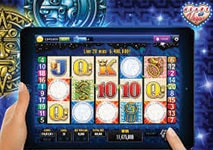 The slot area often attracts some of the largest crowds in a casino, even though many players know that these games can quickly consume their bankrolls. One major attraction is the possibility of winning a huge jackpot. Many slot machines feature lottery-like progressive jackpots that increase with every qualifying bet placed. However, hitting such a jackpot is similar to winning the lottery. You may play regularly for years without ever securing a major prize. The odds remain against you, and some slot machines have a house edge of around 10%.
In the past, slot outcomes were determined mechanically. Modern slots, including machines in brick-and-mortar casinos and virtual slots online, use software called a Random Number Generator. The outcome of each spin is random and is not affected by previous results or able to influence future outcomes. You could spend five hours betting on a game without receiving a large win, while another player could hit the jackpot on the first spin.
The expected return of slots varies dramatically between games. Many online slots offer an average RTP of 95% to 97%, although certain games have an RTP of around 99%. However, some game developers and online casinos do not publish return percentages. With slot machines in land-based casinos, players may have no practical way to determine the RTP, which can sometimes be as low as 90% or lower.
Roulette
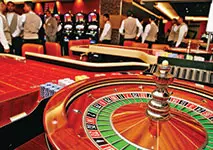 Another well-known casino game is roulette. It has been played for more than two centuries, and many people have claimed to have cracked it. Until a few decades ago, roulette wheels were entirely mechanical and could become biased because of manufacturing defects or wear and tear. Some players took advantage of these flaws by identifying numbers or groups of numbers that appeared more frequently.
Today, casinos usually monitor their wheels for bias or use electronic wheels powered by RNG software. In these versions, a random result determines where the ball will land. The idea that there is a meaningful relationship between independent spins is a misconception. No number is ever due to win, even if it has not appeared in 100 spins. This makes roulette systems based on previous results ineffective at changing the game’s underlying odds.
Winning at roulette can therefore be difficult. In the long run, the house maintains an advantage of 2.70% in European or French roulette and 5.26% in American roulette. Over a limited session, a player may still finish with a profit. More conservative bets, such as red or black, even or odd, and high or low, can reduce volatility but do not remove the house edge. Combination bets and call bets can cover larger sections of the wheel, but they also require a larger total stake and cannot overcome the casino’s mathematical advantage.
Mistakes to Avoid
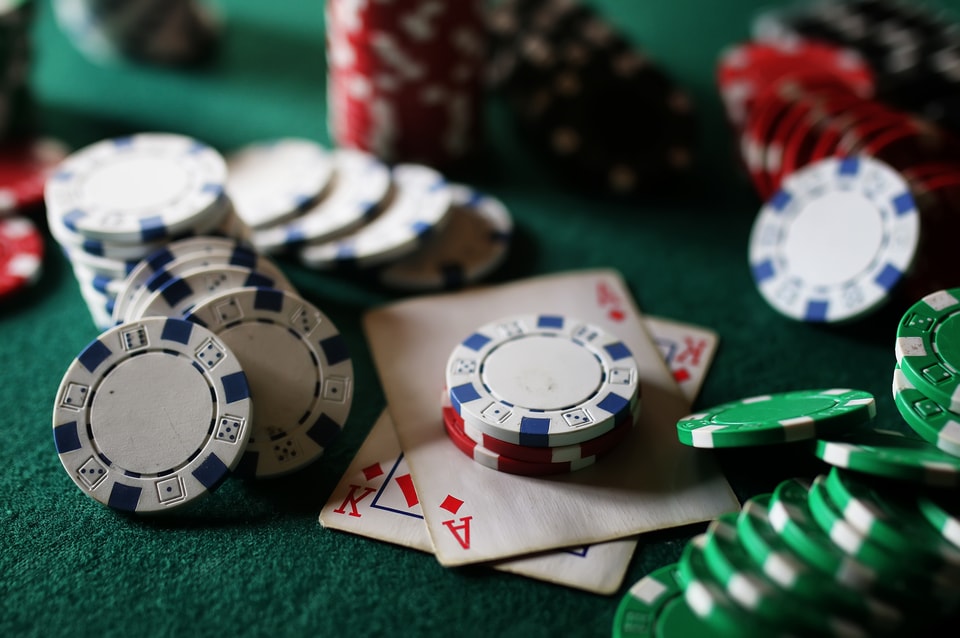 Many casino enthusiasts ignore gambling advice because they assume the house will always win in the end. Others simply accept losses and consider gambling a relatively costly form of entertainment. Both ideas contain some truth. The house has a long-term advantage, and gambling should be viewed primarily as entertainment rather than a reliable way to earn a living. However, it is still important to make informed decisions and limit financial losses as much as possible. The house edge operates over the long term, while the outcome of a short session can vary considerably.
These are just a few examples of how myths and misconceptions have entered the world of gambling. Some casino players may profit over certain periods, but earning consistent and sustainable returns is difficult. To improve your approach, you should avoid common mistakes such as believing in myths and superstitions or trying to recover money you have already lost.
Gambler’s Fallacy
 The gambler’s fallacy is the common belief that recent results affect the likelihood of independent future outcomes. It applies to various casino games but is fundamentally flawed. For instance, some players believe that a slot game that has not awarded a jackpot in a long time is due to pay. Similarly, some roulette players expect a black number to appear after five consecutive red numbers.
This concept does not apply to automated games in which the outcome of every round is random and independent. Modern casino games use RNG software, which stands for Random Number Generator. The software generates the value used to determine the outcome when a player presses the Spin button on a slot game. Each generated number corresponds to a symbol and a specific position on the reels, making the formation of winning combinations random.
A similar process is used in electronic versions of roulette, video poker, craps, baccarat, and poker. In fact, RNG software helps determine outcomes in automated casino games found online and in brick-and-mortar gambling establishments. When you play online roulette, there is no connection between the current wheel spin and the previous 100 spins. Each round is independent, meaning that there are no genuinely hot or cold numbers.
Winning and losing streaks do occur, but there is no way to predict how long they will last because the probability of each number remains the same on every spin. Some people believe slot machines are due to award a jackpot after a certain amount of time. Slots cannot be due, however, and they are not programmed to pay a jackpot after 10,000 spins or three months, for example.
Blindly Trusting the RTP
 Some casino players make the mistake of choosing games based only on their expected return. The RTP percentage shows what portion of the total amount wagered is theoretically returned to players as winnings. As explained above, this percentage applies over a very large number of rounds. Actual results on a casino floor or in a virtual casino can vary significantly because chance remains a factor.
Even when playing a video poker variation with an expected return above 100%, an individual player should not expect to achieve the exact RTP. Some players will win and others will lose, even if they play 100,000 hands of the same game. It would be incorrect to expect a game or its random number generator to adjust the ratio of wins and losses so that the actual payout matches the mathematical RTP. RNG software operates in the same manner regardless of whether you have played ten hands or ten thousand.
It is therefore a mistake to rely exclusively on RTP or house edge percentages when choosing a potentially profitable game. These percentages should be treated as long-term statistical guides to games such as roulette, blackjack, and video poker.
Relying on Questionable Strategies
 Another common mistake among gamblers is using a strategy that has not been properly tested or shown to be effective. There are many strategies for blackjack, for instance, and players can compare their effectiveness. Poker strategies are even more complicated and require time and experience to master. When playing against a highly skilled opponent, basic strategy alone may not be enough to win.
Strategies for roulette and slots are very different. Since these games are based primarily on chance rather than skill, players cannot make decisions that directly influence the outcome. So-called strategies are more accurately described as betting systems. These methods adjust the size of a wager depending on whether the player won or lost the previous round. They may also indicate when to increase, decrease, or maintain the size of a bet. The goal is to maximize winnings or recover previous losses by placing larger bets.
Although the logic behind these systems may initially appear sound, it is flawed. Most roulette betting systems are ineffective over the long run. Professional gamblers and mathematics experts warn that using them for an extended period can lead to considerable losses. A betting system may structure wagers during a limited session, but it cannot change the game’s underlying odds or guarantee a profit.
Chasing Losses
 One of the most common and dangerous gambling mistakes is chasing losses. Many players try to recover lost money because they believe the next bet will be successful. As explained above, however, there is no guarantee that you will win after a losing streak. Both winning and losing streaks can continue unpredictably, potentially encouraging you to wager your entire bankroll.
Players should understand that losing is an inherent risk of casino gambling. You are betting money on an outcome that cannot be predicted, and while the possibility of a substantial payout can be compelling, financial loss is always possible. Knowing when to stop is essential for responsible gambling. If you lose a large amount of money, you should end the session. Doubling your bet in an attempt to recover previous losses does not guarantee that you will win.
Tips for Successful Gambling
 The previous sections outline several principles for making more informed gambling decisions. Players should carefully choose which casino games to play, focusing on games with a low house edge, games in which skill and knowledge can influence the outcome, and games with rules they fully understand. Gambling should also be treated as entertainment, with the money spent regarded as part of the cost of participating. Players should consider a few additional points if they want to improve their long-term approach to casino games.
Bankroll Management
 Bankroll management is one of the foundations of a disciplined approach to gambling. It includes setting a fixed daily budget and establishing a predetermined limit for losing sessions. You should set either a limit on the number of losing bets or a maximum amount you are prepared to lose during each session. Once you reach that limit, stop playing instead of chasing your losses.
Taking Advantage of Casino Bonuses
 Las Vegas casinos often offer food vouchers, room discounts, and other bonuses to their patrons. Various gifts may also be available to reward regular or VIP players. Online casinos, on the other hand, usually provide welcome bonuses to players who open an account and make a real-money deposit. Gambling sites may also run regular promotions and offer reload bonuses, free spins, and other rewards.
Taking advantage of promotional offers can be beneficial, but players should carefully review the conditions and requirements that apply before claiming a bonus or withdrawing bonus-related winnings.
Casino enthusiasts should read the accompanying terms and conditions of any bonus offer to determine how much value they can realistically obtain from it. Important factors include eligibility, the bonus amount, the promotional period, minimum deposit requirements, wagering requirements, and maximum permitted bets.
Getting an Edge over the Casino
 There are only a few forms of gambling in which players can gain a mathematical advantage over the casino. This approach is known as advantage play and is most commonly associated with blackjack. Skilled and experienced players may be able to count cards even in games that use multiple decks. However, card counting is difficult and requires concentration and strong mathematical knowledge. More importantly, casinos do not tolerate card counting and usually ban players they identify as card counters.
Other forms of advantage play include highly skilled poker play, attempts at dice control in craps, and exploiting a demonstrably biased roulette wheel. Gaining an edge over the casino is not easy. It generally requires considerable skill and a thorough understanding of the rules, probabilities, and intricacies of the chosen game.