
Play or Pass Baccarat Shoe
 | Updated:
 Basics of Shoe Handling in Baccarat Games
 Land-based casinos know how to give a baccarat table a sophisticated look, which can sometimes intimidate casual casino visitors. Because the game is often played in secluded areas of the casino floor and attracts many high rollers, it is understandable if you feel hesitant to join. While the history of the game indicates that baccarat was once reserved for the upper class, it now welcomes all types of players, with betting limits often suitable even for low-stakes play.
If you have visited a casino offering American-style baccarat, you have probably noticed that the cards are handled by the players, with everyone at the table taking turns dealing. While this may seem intimidating, it is simply part of the experience, as everyone at the table has the chance to play the Bank in baccarat. Of course, if you are new to the game or do not feel confident, you can pass the shoe to the next player. However, if you want to join the baccarat action during your next casino visit, we can help you learn the correct way to handle the shoe.

-
 Sign Up Bonus
Up to $3500
350% Bonus!9.7 -
Sign Up Bonus
Up to $500
400% Bonus!9.4 -
Sign Up Bonus
Up to $30000
100% Bonus!9.3






The Baccarat Shoe
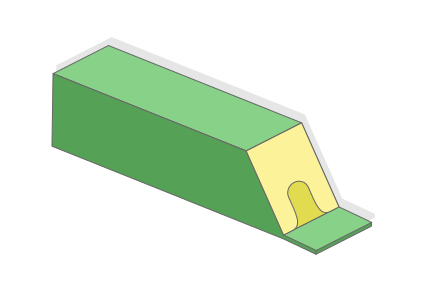 The shoe used in baccarat resembles any other card shoe, but it has a distinctive role in the game. You can experience player-controlled shoe handling only in brick-and-mortar casinos, as this feature is not included in standard online versions of the game. Online games may remain faithful to the original rules, but passing a virtual shoe between players would serve little practical purpose.
In baccarat, the shoe is passed from player to player around the table, from seat 1 through seat 12, or however many seats the table has. The player holding the shoe assumes the role of the Bank. However, this does not make that person the opponent of the other players. Being the Bank also does not prevent you from betting on the Player’s hand. While the Bank keeps winning, the shoe remains with the same player. When the Player side wins, the shoe passes to the next player. This shoe rule applies only to Punto Banco variations of baccarat, while other versions of the card game may not allow players to take the Bank’s role.
Passing the shoe from player to player has little purpose in an online game. Most online versions already provide a “Deal” button, and the software draws and distributes the cards. Even in a multiplayer game, allowing only one player at a time to activate that function would not replicate the physical experience of holding and dealing from the shoe.
Number of Decks in a Baccarat Shoe
 A baccarat shoe usually contains 8 decks, although you may also find games that use 6. This information can be important when following a baccarat strategy and is one reason players are allowed to track game results. In fact, the casino provides players with a scorecard and pen, at least in most cases. If you join a game after play has started, it is also acceptable to ask discreetly to check another player’s scorecard. Scorecards are also available in live versions of the game.
Your chances of winning may increase or decrease depending on how many decks the shoe contains. Your approach may also depend on how many shoes you have played. Many betting strategies consider whether the Bank or the Player has won more hands. Knowing this information does not enable you to predict the predetermined order of the cards in the shoe, but it can help you make more informed decisions while playing.
Who Handles the Shoe
 As mentioned above, players handle the shoe and assume the role of the Bank. However, you may choose to pass the shoe to the next player. Anyone handling the shoe should know the correct procedure because mistakes can disrupt other players’ strategies. It is important to learn exactly what to do and what to avoid before accepting the shoe.
Every player at the table has the opportunity to be the Bank and deal, but doing so is not mandatory. If you do not feel confident or simply do not want to deal, you can pass the shoe to the next player. In some cases, you can also ask the croupier to deal.
The Bank handles the shoe, but every player can take on this role. You can still place bets while acting as the Bank, and you do not have to bet on the Bank’s hand. Regardless of how many people are at the table, baccarat has only two hands: the Bank’s hand and the Player’s hand. These are simply labels for the two sides of the game. The Player is not an individual participant, and the Bank is not the casino.
As previously stated, the shoe does not have the same function in live casino games. In live baccarat, the shoe is handled by the designated dealer shown on the screen. This simplifies the experience, although some players consider handling and passing the shoe to be an appealing part of traditional baccarat. In this respect, baccarat can provide two distinct experiences in land-based and online casinos.
How to Handle the Shoe
 The player holding the shoe, known as the Bank, must gently, slowly, and carefully remove the cards and slide them toward the dealer, who is referred to as the caller in this game. If the Bank does anything that could disturb the order of the cards in the shoe, the caller will instruct them to stop. More serious action may be taken if the card order has already been affected. Make sure you follow the correct procedure, and look to the caller for guidance if you are unsure about anything. The caller will understand and help you.
The player acting as the Bank does nothing more than remove the cards carefully and keep them face-down. The actual dealer, referred to as the caller, announces the cards and winning hand. The caller will also usually signal when you need to draw more cards if you overlook a rule.

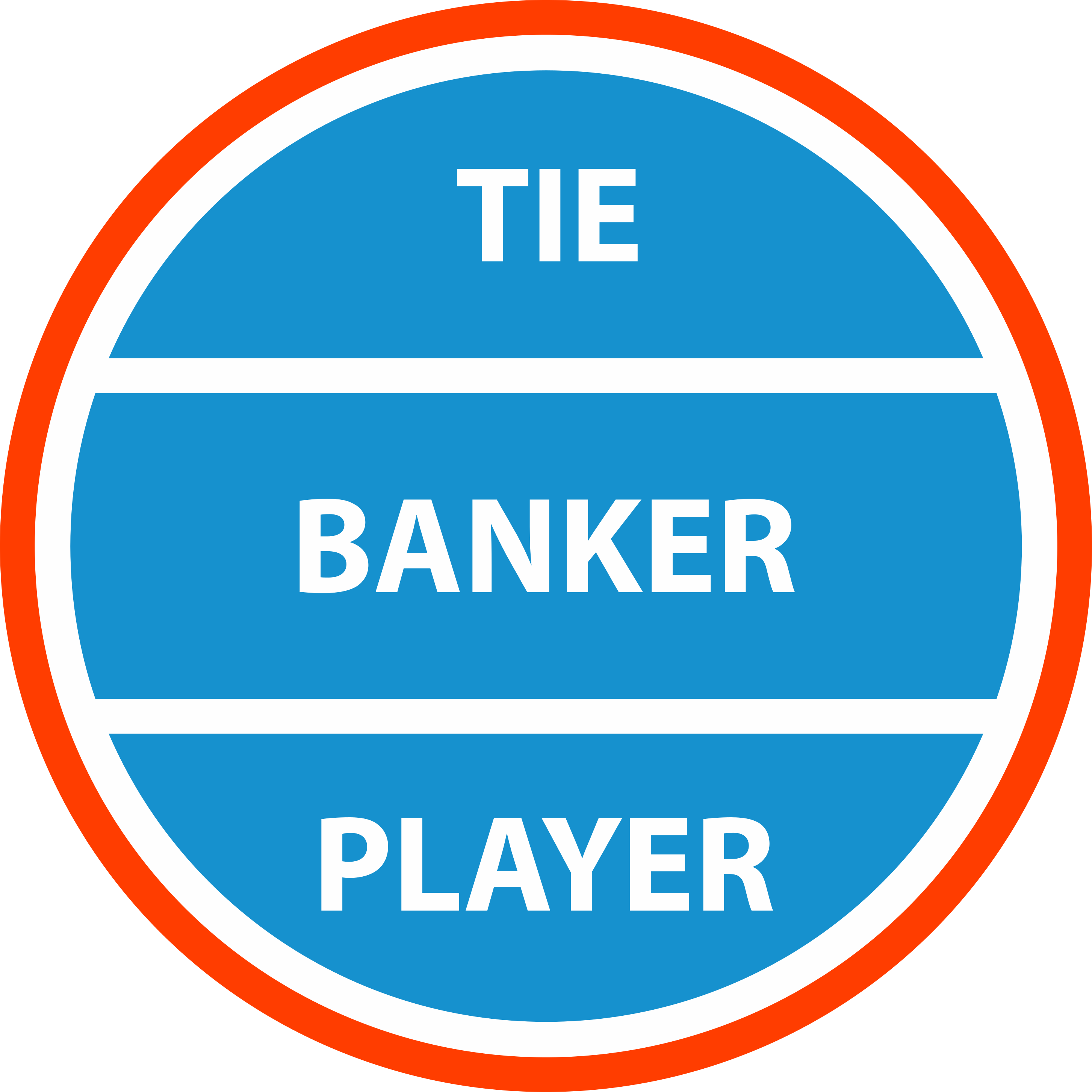

The role of the player holding the shoe is purely mechanical. You do not make dealing decisions because the rules have already determined what must happen. The main actions available to you are betting on the Player’s hand, betting on the Bank’s hand, betting on a Tie, and keeping or passing the shoe.
Put simply, the player holding the shoe must understand what they can and cannot do, as well as the applicable rules. Procedures may vary depending on where you play, so it is always advisable to check them before joining a baccarat game. If you accidentally remove even one card more than required, it is covered and burned. This can be a problem for players because it introduces another variable into their calculations.
When to Pass the Shoe
 You must also know when to pass the shoe. As long as the Bank keeps winning, the shoe remains with the same person. However, if the Bank’s hand loses, the shoe passes clockwise to the next player. Every player gets the opportunity to deal. This is the standard progression of the game, but there may be other situations in which a player must pass the shoe.
Some casinos follow a different procedure. You may be required to pass the shoe to the player with the highest winning bet. This depends on the casino’s rules, providing another reason to review them before joining the game.
As noted above, players who do not know how to handle the shoe properly should pass it. Even a simple beginner’s mistake can disrupt the strategies of experienced players and interrupt the flow of the entire table. Many players who use a betting strategy may choose not to bet again until the next shoe. The key point is simple: if you do not know what to do with the shoe, politely pass it to the next player.
This does not mean that you should never try handling the shoe. It simply means that you should become familiar with the rules first. You may also want to gain some experience before dealing so that you feel more confident. The role is straightforward, but a small mistake by the Bank can disrupt the game.
Simple Mistakes to Avoid
 The most obvious mistake to avoid is removing more cards than required. Although the procedure is simple, a momentary lapse can still cause an error. Always remain attentive. If you have been playing for hours and feel exhausted, take a break or pass the shoe. It is a bad idea to assume the role of the Bank when you cannot concentrate fully.
Never remove the plastic shoe from the cushioned rail. You may remove cards only when the rules require it and the caller has given you permission. Trying to do anything beyond that could bring the game to an immediate stop.
Another common beginner’s mistake is looking at the cards immediately after drawing them. Even though you are dealing the cards, they cannot be revealed at any time. You need to know when they may be revealed and whether you are responsible for doing so. Understanding the basic rules of the game is essential. You will usually have the opportunity to look at the cards at the appropriate time and confirm what you need to do in each situation.
As you can see, there are only two hands, regardless of how many people are playing. The Player and the Bank are simply names for the two sides of the game. Unlike blackjack, each participant does not receive an individual hand. Your primary decision is where to place your bet. The only other choice is whether to keep or pass the shoe.
Card-Handling Techniques
 When discussing card handling, we must clarify that this section concerns the player with the highest bet rather than the Bank. This is worth understanding if you plan to play baccarat in a land-based casino. The player with the highest bet may be given the chance to view the hand they selected before everyone else. How that player handles the cards matters, especially in games where the highest bettor receives the shoe.
There are two main card-handling techniques to examine. The first is the standard American or European technique, while the second is the Asian technique. The standard technique is quick and efficient. The player looks at the cards promptly and may call out the count, react to the result, or respond in another way appropriate to the setting. The key is speed and efficiency. If many players have placed substantial bets on the same hand, some excitement and noise are understandable.
The Asian technique is designed to create suspense. The player takes the cards and examines them individually and very slowly, revealing clues about the cards through body language. Different methods can be used to reveal the cards gradually and build suspense.
Not many casinos allow this technique because bent or damaged cards may require the casino to use new decks for every game. Some casinos specifically prohibit the practice. However, players who place extremely large bets, such as bets in the range of $10,000, may be allowed to use this technique. Whether it is permitted depends on the casino and its rules.
At tables intended for lower-stakes players, with minimum bets of $5 or $10, card handling is not usually an option. In many such games, the caller announces the result without handing the cards to a player.
Conclusion
 Although the shoe does not play the same role in online baccarat, it remains an important feature of the land-based casino experience. You should consider this difference if you plan to switch from online baccarat to a brick-and-mortar casino.
Even in live casino games, the shoe has a different role because the on-screen dealer handles and distributes the cards. The number of decks it contains may still be relevant, but players cannot deal the cards themselves.
Learning how to play baccarat in a land-based casino largely involves understanding the shoe. There is no reason to feel intimidated because the procedure is relatively easy to grasp. The rules are precise, and much of the game proceeds automatically. Whether you choose to accept the shoe and deal the cards does not affect your chances of winning, but it can contribute to the overall casino experience.