
Maintaining Etiquette in Poker
 | Updated:
 Poker, like other classic casino games, requires players to follow certain rules of conduct while at the table. Unlike games of chance such as craps and roulette, however, poker is a game of skill and strategy in which players must carefully read their opponents and gather as much information from them as possible.
Before joining a poker game, you should first ask yourself, “Am I a good sport?” If the answer is “no,” you should reconsider your behavior and follow some general rules of conduct that will help you maintain proper etiquette, especially if you wish to avoid coming across as rude or unsportsmanlike. After all, poker is a competitive game played with a group of people, so it is wise to remain on amicable terms with your fellow players.

-
 Sign Up Bonus
Up to $100
100% Bonus!9.7 -
Sign Up Bonus
Up to $30000
100% Bonus!9.4 -
Sign Up Bonus
Up to $1000
200% Bonus!9.3



Treat Fellow Players with Respect
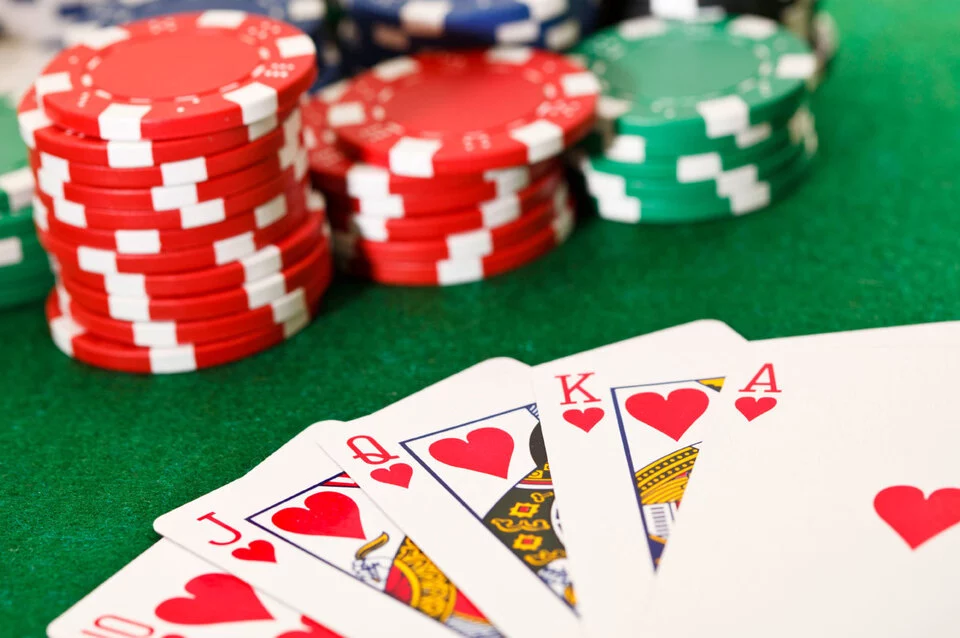 One of the basic rules of conduct that poker players should follow is to remain polite to their opponents. Mutual respect should always be present at the poker table. It is possible to play aggressively and bluff your opponents while still maintaining good etiquette. Players who resort to ridicule, verbal abuse, or intimidation are unlikely to be welcomed back to the table.
Do Not Gloat
 Showing modesty when you win is another aspect of good poker etiquette. Few people enjoy losing a hand and saying goodbye to a sizable pot. If you emerge as the winner, do your best to contain your excitement and consider how you would feel if you had lost.
Furthermore, in such situations, it is generally considered poor etiquette to pressure fellow players into showing hands they have folded, especially if they are reluctant to do so. Similarly, players who have folded should avoid openly discussing their hole cards with competitors who are still in the hand.
Muck Your Cards Carefully
 The same rule applies to controlling your reactions to the board after you have mucked your cards. This is important because your reactions may provide players who are still in the hand with additional information that they can use to their advantage.
Care is also required when folding your hand. Players should muck their cards carefully into the discard tray to prevent one or both cards from landing face-up. If players who are still in the hand glimpse your discarded cards, they may gain an unfair advantage.
Never Slow Roll
 Slow rolling is among the most frowned-upon behaviors at a poker table and is regarded as a sign of very poor taste. Although no specific rule prohibits this move, it should be avoided because it adds unnecessary drama to the game and can offend fellow players.
The term applies when a player who believes they have the best hand at the table, or the “nuts,” deliberately delays revealing their hole cards during the showdown or reveals them very slowly to upset players holding weaker hands. The proper and less offensive way to reveal your cards during a showdown is to turn them over immediately.
Always Wait Your Turn and Protect Your Hand
 Acting in turn is another aspect of proper etiquette at the poker table. Players should avoid reaching for their chips or mucking their cards before it is their turn to act. Wait until it is your turn, then announce whether you wish to check, bet, call, fold, or raise.
It is every player’s responsibility to protect their hole cards as carefully as possible. When you are dealt your two hole cards, you should not pick them up or remove them from the table. The cards should remain face-down. Good practice is to cover the two cards with one hand and slightly lift their corners with the other. It is also best to peek at your hole cards only once rather than studying them repeatedly.
Keep Your Chips Organized
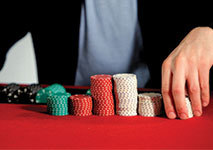 Another key aspect of good poker etiquette is to keep your stack of chips well organized, as this benefits both you and your fellow players. First, it becomes easier to place bets, especially if you arrange your chips in columns according to their values. If you decide to move all-in and have organized your chips in advance, it will also be easier for the dealer to determine how much you are adding to the pot.
Organizing your chips is also fair to your opponents because they can clearly see the value of your stack. The highest-value chips should be positioned on the outside of your stack to prevent the dealer and your opponents from mistakenly assuming that you have the shortest stack at the table.
When betting, calling, or raising, players should never scatter the pot by recklessly tossing their chips into the middle of the table. Doing so can cause confusion because the chips may become mixed up, making it difficult for the dealer to determine which chips belong to each player and how much you have contributed to the pot.
Do Not Leave the Table for Prolonged Periods of Time
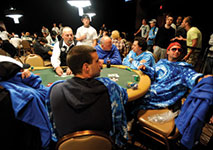 From time to time, players may need to take a break to visit the restroom or make a phone call. Although they are allowed to leave the table, proper etiquette dictates that players should avoid being absent for prolonged periods, as this leaves the table short-handed, with one fewer person contributing to the pot.
The purpose of maintaining proper table etiquette is to help the game run as smoothly as possible. Failing to follow good etiquette negatively affects the game and benefits neither the player responsible nor their opponents.