
How to Win at Slot Machines
 | Updated:
 Few casino games are as mesmerizing and appealing as slots, which attract large numbers of players to casino floors worldwide every day. Part of this appeal can be attributed to their exciting, fast-paced gameplay. Slots have a way of attracting players with their constant sounds, flashing lights, and vibrant symbols. Most of all, they entice players with the promise of big, easy wins that can change lives with a simple push of a button.
Gamblers have been chasing the elusive dream of earning consistent profits from these constantly buzzing machines ever since one-armed bandits first appeared in land-based casinos. Following the launch of the first online casinos in the late 1990s, slots gradually took the gambling community by storm, establishing themselves as the most popular casino game of all time.

-
 Sign Up Bonus
Up to $100
100% Bonus!9.7 -
Sign Up Bonus
Up to $30000
100% Bonus!9.4 -
Sign Up Bonus
Up to $1000
200% Bonus!9.3



A few lucky players have managed to turn their dreams into reality by winning huge jackpots on the slots, causing many others to ask, “Can I win consistently on these machines and, if so, what is the secret to success?” In this article, we will answer this question as comprehensively as possible, explain how slots work, and provide practical advice that can help you maximize your return.
Can You Really Beat the Slots?
 The short answer to this question is “No,” but let us elaborate. The first thing you must understand about slots is that the outcomes of all spins are based on chance. Like other games of chance, such as craps, baccarat, and roulette, slots are governed by independent trials. This means future results are completely separate from previous results. What happened in the past has no impact on what will happen on the next spin.
This is why the odds in chance-based games like slots never change. The secret to casinos’ long-term profitability lies in the fact that the house structures its games to skew the long-term theoretical return in its favor. Players cannot change this mathematical structure.
No playing strategy or betting system can help you overcome the advantage the casino has in games governed by independent trials. The more time you spend hitting the spin button, the greater the chance that these unfavorable odds will catch up with you and the greater the likelihood that you will suffer serious losses.
Many scammers claim they can consistently beat the slots and attempt to profit at the expense of unsuspecting players by selling books and instructional materials. What they fail to mention is that each slot is programmed to return less money than it takes from players over time. It is impossible to win consistently at slots in the long run because the games are designed to give the house a mathematical advantage.
This does not mean you will lose money every time you spin the reels. Almost any outcome is possible over the short term, including winning a progressive jackpot on your first press of the spin button. The most important thing to remember is that there is no reliable way to beat slots in the long term. The best you can do is view these games as a potentially profitable form of entertainment in the short term. That is why we advise you to have fun and stay within the limits of your budget.
The Odds of Hitting Winning Combinations
 Before discussing theoretical return percentages and the house edge in slots, let us explain how you can calculate the likelihood of hitting a payout on a given slot machine. The probability of scoring a winning combination is related to the number of reels the slot has and the number of symbols each reel contains. But how do you calculate this probability?
Determining the Total Number of Possible Combinations
 We will illustrate this with the simplest fruit machine imaginable: one that has 3 reels and 6 symbols on each reel. The first thing we must do is calculate the total number of possible symbol combinations in the game. This is done by multiplying the number of symbols on each reel by the number of symbols on each of the remaining reels.
For the example above, the calculation is as follows: 6 * 6 * 6 = 216 possible symbol combinations on a 3-reel slot with 6 symbols per reel: a lucky 7, a lemon, a watermelon, a cherry, a plum, and an orange. Remember that this is the total number of possible combinations, but not all of them will result in a win.
Figuring Out the Number of Winning Combinations
 You can determine the number of winning combinations by examining the slot’s paytable. Suppose it looks like this for the slot in our example, assuming there is only one payline across the middle of the reels and you bet a single coin per spin:
- Triple 7s pay 20 coins.
- Triple oranges pay 10 coins.
- Triple lemons pay 10 coins.
- Triple cherries pay 10 coins.
- Triple plums pay 10 coins.
- Triple watermelons pay 10 coins.
- Two 7s pay 4 coins.
- One 7 pays 1 coin, meaning you break even on this bet.
Accordingly, the hypothetical winning combinations on this fruit machine are as follows:
- 1 combination of three 7s for the maximum prize of 20 coins.
- 5 combinations of three matching fruits, one for each of the lemons, watermelons, plums, cherries, and oranges.
- 15 combinations containing exactly two 7s, since one of the three reels will contain a fruit symbol.
- 75 combinations containing exactly one 7, since the remaining two reels will contain one of the five fruit symbols.
You can determine the total number of winning combinations by adding the figures above. Therefore, there are 96 winning combinations on this 3-reel slot with a single payline and 6 symbols per reel. You can use this number to calculate the probability of hitting a payout by dividing the number of winning combinations by the total number of possible combinations, as follows: 96 / 216 = 44.44%.
Calculating Your Theoretical Return
 The information we have about the hypothetical slot in the example above allows us to determine the game’s theoretical return. The long-term payout percentage of a slot is calculated by adding all possible payouts and dividing the result by the total number of possible combinations. The calculation is as follows: ((1 * 20) + (5 * 10) + (15 * 4) + (75 * 1)) / 216 = 205 / 216 = 0.9490 * 100 = 94.90%.
This number indicates that the machine would return approximately $94.90 for every $100 wagered over the long term and retain the remaining $5.10. No matter how you play, the expected long-term loss is $5.10 for every $100 wagered on this hypothetical game. If you flat bet $2 on every round and play 150 spins per hour, your expected loss would be approximately $15.30 from every $300 wagered because 94.90% of $300 is approximately $284.70, with the house retaining the rest. In other words, the machine would return approximately $0.95 for every $1 collectively wagered on it over a very long period.
The House Edge on Slot Machines
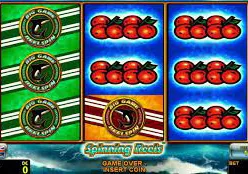 The number of reels directly affects the number of possible combinations, as more reels result in more potential outcomes. For instance, if the fruit slot above had 5 reels with 20 symbols each, the number of possible symbol combinations would increase drastically to 3.2 million.
Calculating the number of winning combinations and the average return percentage of a simple mechanical fruit machine with 3 reels and a limited number of symbols is relatively straightforward.
As more symbols are added to the reels, the calculations become increasingly difficult and may be impractical to perform manually. Keep in mind that mechanical slot machines are now largely a thing of the past. Today, most slot machines use microprocessors to control the outcomes, making it possible to add many more symbols to the reels. Many 5-reel video slots have up to 256 symbols per reel, making it extremely difficult for the average player to calculate the theoretical return percentage independently.
The good news is that there is no need to perform complex calculations for advanced slots because many online casinos list their slot games’ average payout percentages.
As you may have noticed from our fruit machine example, the return percentage is directly related to the house edge. You can determine the house advantage on a given slot by subtracting its return percentage from 100%.
Slots are generally negative-expectation games because their average long-term return to players is below 100%, causing players to lose money over prolonged periods. If the payout percentage exceeded 100%, the casino would lose money to players over the long term on a positive-expectation game. Gambling establishments generally do not offer games that give patrons a lasting advantage over the house.
Many inexperienced slot players misinterpret payout percentages and believe they can play for an hour at a 97.80% slot and lose only $2.20 if they wager $100 over the next 60 minutes. This reasoning is incorrect because these average percentages are calculated over millions of spins made by many players on the same game.
If you play only 20 rounds on a given slot, your results may deviate significantly from the advertised return percentage. You could win a large amount or incur serious losses. There is no reliable way to beat the slots, but you can choose games with a high theoretical return, preferably above 96% or even 97%.
Making Sense of Slots’ Variance
 Variance is inherent in all casino games, and slots are no exception. In statistics, variance measures how widely values are spread around the average. In the context of slots, variance, sometimes called volatility, refers to the level of risk to which players expose their bankrolls when betting on a given game.
Variance does not affect a slot’s theoretical long-term return. Over a large number of spins, actual results may move closer to the corresponding average return, although short-term deviations can be substantial. Variance primarily affects the swings players experience in the short term.
At a basic level, slots can be compared as lower-variance or higher-variance games. Low-variance slots are generally less volatile for your bankroll because they produce frequent but smaller wins. These payouts may reduce sharp bankroll swings but are unlikely to generate large profits.
High-variance slots have the opposite characteristics. Wins are generally less frequent, but winning spins can produce much larger payouts that may help you recover from losing streaks. These high-volatility games are better suited to players with sufficient bankrolls. High-variance slots can wipe out a small bankroll within minutes because you may run out of money before landing a large win.
When volatility information is unavailable, one way to assess a slot’s variance is through personal experience. However, many slot developers provide volatility details about their games, making it easier to understand the risk level before wagering real money. Our advice is to find a gambling website where slots can be tried in demo mode with play money and spin the reels until you understand how your selected games behave.
Advice on Maximizing Your Long-Term Slot Returns
 These explanations show why attempting to “beat” casinos at negative-expectation games such as slots is unrealistic. You can, however, approach slots carefully to make more informed decisions, limit your long-term losses, and have fun in the process. Here are several tips that can help beginners manage their play when spinning the reels.
Scout for Higher-Denomination Machines if Your Budget Allows It
 In some casinos, slots with higher coin denominations tend to have better average payback percentages. This can partially be explained by the fact that the total amount of money wagered on high-denomination slots is larger, allowing gambling operators to offer higher theoretical returns for these games. Higher returns may also provide an incentive for players to wager more on these slots.
For comparison, the Mississippi Gaming Commission released the average slot returns of casinos across the state in October 2015. The figures showed that machines with a coin denomination of $0.01 offered a return of approximately 92%, while those with a denomination of $5 returned more than 96%.
We should warn you, however, that you should choose high-denomination slots only if your gambling budget allows it. If your bankroll is too small, your playing session may be short and costly, especially if you are playing high-variance slots.
Another factor to consider is that slots with multiple paylines may require you to bet one coin of your desired value on every line you activate. This increases the amount wagered per spin, so these machines can make a greater dent in a small bankroll.
Finally, remember that a higher coin denomination does not directly determine a slot’s payout percentage. Because every outcome in this type of game is random, placing higher bets does not by itself guarantee higher returns. You are simply risking more money on each spin in the hope of receiving a larger payout.
Research the Theoretical Return Percentages
 All slot players should do their research, even if they play only occasionally. Not all slots are created equal, especially when it comes to their theoretical returns. Make sure you conduct some research before wagering money on any slot machine.
This may be difficult if you play in land-based casinos. The minimum return-to-player percentage for slots varies by jurisdiction, yet most brick-and-mortar casinos do not release the exact percentages of their machines because doing so may not be in their interests. However, many trusted online casinos publish the theoretical returns of the slots they offer, making it easier for players to identify games with higher RTP percentages.
Licensed online casinos may have their gaming libraries audited for fairness by independent authorities and may publish the results on their websites. When available, this information can often be found near the bottom of the casino’s homepage.
As a general rule, online casinos tend to offer higher return percentages on their slots than their land-based counterparts. The figures usually vary between 93% and 99%, so playing slots online for entertainment may be worthwhile.
One thing to remember about online slots is that the same title may be available with different RTP settings at different online casinos. Some software providers offer casino operators several RTP variants of the same slot. We advise you to check a slot’s RTP carefully on the specific website where you intend to wager, as the potential return on your favorite title may be lower than expected.
If playing online is not an option because regulated online gambling is unavailable in your jurisdiction, you can search for independent websites that publish the average return percentages of slots at different land-based casinos. Casino insiders sometimes obtain this information and provide it through online newsletters or specialized magazines.
The bottom line is that you should choose games with the highest RTP you can find. The casino will have a smaller edge on these games, reducing your expected losses over the long term.
Play for Shorter Periods of Time
 Discipline is crucial for all gamblers, whether they are playing slots or another casino game. You should view slots as a form of entertainment and play responsibly, preferably for shorter periods.
The reason is simple: the house holds a constant edge over every slot player, and this advantage becomes more significant over long periods. Many gambling venues limit visible clocks and outside cues, making it easier for players to lose track of time. The longer you play, the more bets you make. As you place more bets, the house edge has more opportunities to affect your bankroll.
Anyone can win a large amount over half an hour if luck and variance are on their side. However, over a very large number of spins, results are more likely to reflect the machine’s payout percentage, especially if it has a lower RTP.
This raises the following question: if players are expected to lose only a small percentage to the house, why do so many people lose their entire session bankroll after hours of play? The answer is that the casino advantage applies to the amount wagered per spin, not merely to the amount initially brought to the casino.
Suppose you take $100 to a casino and sit at a slot machine with a 94.50% payout percentage and a house edge of 5.50%. If you wager $1 per spin and complete 150 spins during the next hour, you will have wagered a total of $150, even though your starting bankroll was only $100.
This is possible because you will win on some spins and then wager some of those winnings. If you continue playing for 12 hours at the same rate, you will have wagered a total of $1,800. The expected loss at a house edge of 5.50% would be $99, which is almost equal to your starting bankroll.
Approach gambling in the same way you approach alcohol: in moderation and with responsibility. Play slowly and keep your sessions short to reduce the amount of your bankroll exposed to the house edge.
Play Max Bets When Shooting for the Progressive Jackpot
 Many slot players dream of winning a progressive jackpot but reduce their chances by ignoring the fact that many of these games require players to wager the maximum number of coins per spin to qualify for the top prize.
Betting less than the required maximum on these games may offer poor value because progressive slots usually have lower payout percentages to compensate for their massive jackpots.
In some online games, such as Microgaming’s progressive Mega Moolah, your chances of landing the top prize are proportionate to the amount wagered per spin. In other words, the bigger the bet, the better the odds of triggering the jackpot.
A similar principle applies to many classic 3-reel slots, even when they offer fixed jackpots. If you examine the paytable of one such game, you may notice a significant difference between the maximum payouts offered for winning bets of one, two, and three coins. In these cases, betting the maximum number of coins increases the slot’s payback percentage.
Consider another example involving the Microgaming slot Cash Clams, where the highest-paying combination awards 2,000 coins for a one-coin wager and 5,000 coins for a two-coin wager. If you hit this combination with a two-coin bet, the return consists of 2,000 coins for the first coin and 3,000 coins for the second.
The average payout for this winning combination with two-coin bets would be 2,500 coins per coin wagered, giving you an additional 500 coins on average. A higher average return on maximum-coin bets increases the overall payout percentage when you wager the maximum. However, you should consider whether your bankroll can sustain larger bets because wagering the maximum exposes more of your money to risk.
Have Your Slot Play Comped
 Earning comp points in exchange for your betting activity is one way to increase the value you receive from your play. Land-based casinos reward players for their play by awarding comp points. When you sit at a table or slot machine, a staff member may approach you and offer a player’s card.
The card is inserted into the slot machine each time you play, allowing the casino to track the amount wagered and your results. The number of comps you receive depends on how much you bet and your rate of play. If a casino staff member does not approach you with this offer, there is no harm in asking for a player’s card yourself.
Online casinos may also reward players with comp points after they register and begin betting real money. Play is usually rated in increments. For example, a casino may award one point for every $10 wagered on casino games. You may be able to exchange these points for additional credits or cash. Always familiarize yourself with the casino’s comp-point policy, as some operators offer twice as many points for wagers on selected casino games. Other casino incentives, such as deposit bonuses or free spins, may also benefit you if the wagering conditions are reasonable. These perks can add value to your play.
Stay Within Your Budget’s Limits
 This is the most important advice we can give you. It is essential to set aside a separate bankroll for slot play and manage it carefully. This money must be kept separate from the funds used for everyday expenses and bills, which should always remain off-limits.
You determine how much to allocate to slot play, but you should never gamble with money you cannot afford to lose financially or emotionally. Slots should be played for entertainment, and you should stop as soon as betting is no longer enjoyable. Never become fixated on recovering losses, as this can lead to disastrous results.
If you have a limited budget, coordinate the amount wagered per spin with the size of your bankroll. Variance should also be considered. If you play high-variance slots with a very small bankroll, your risk of ruin, or ROR, will be substantial. This refers to the likelihood of losing your entire bankroll during the session. Your money may not be sufficient to carry you through the longer losing streaks associated with high-variance games.
Choose your bet per line carefully. You cannot reasonably expect to earn significant profits by wagering $10 per spin with a $100 bankroll. You could be wiped out before you have a chance to recover. As a general rule, gamblers are advised not to risk more than 1% to 2% of their session bankroll on a single bet. Accordingly, you should not wager more than $2 per spin with a $100 bankroll.
Finally, one way to improve your chances of leaving as a short-term winner is to set a profit goal and a loss limit for each session. Loss limits protect you from being wiped out by requiring you to stop playing after losing a predetermined percentage of your session bankroll. This percentage varies between players, but authors such as professional gambler John Patrick have advised setting it at 50% or 60%.
Similarly, you must decide on a realistic win goal. Your aim is to leave the casino with a net profit, not to break the bank. If you are fortunate enough to double your starting bankroll by hitting a high-paying combination or unlocking bonus features, you can pocket half of your net profit and continue betting with the remainder. This approach allows you to keep half of your net winnings even if you lose the other half.
Settling for smaller, consistent profits is sensible advice. Do not allow greed to take over, as you may lose all your winnings to the house and then some.